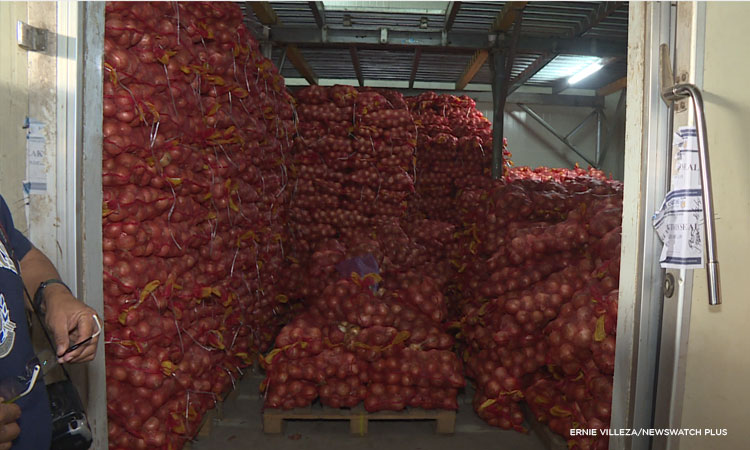


Metro Manila, Philippines — Authorities inspected a warehouse in Navotas which concealed over 300 tons (or 300,000 kilograms) of smuggled vegetables valued at nearly ₱50 million on Monday, Aug. 19.
The Department of Agriculture and the Bureau of Customs, along with law enforcement agencies, raided the warehouse in Brgy. Bangkulasi last Aug. 15.
Agriculture Secretary Francisco Tiu Laurel Jr. said this was a case of misdeclared goods. Commodities were declared as egg tart skins and kimchi.
He said the products do not have sanitary and phytosanitary permits.
In its notice of violation, the Navotas City government also said the warehouse did not have a business permit.
The warehouse has two cold-storage facilities that housed 225,000 kilograms (kg) of imported white onion, worth almost ₱36 million, and nearly 90,000 kg of imported carrots.
Other imported products confiscated were tomatoes, enoki mushrooms, jars of kimchi, and even noodles.

“Red onion ang oversupply, white onion medyo short,” Laurel said. “ Mino-monitor din siguro ng mga smuggler na magsho-short na ‘to kaya sila nagpasok na ‘to.”
[Translation: We have an oversupply of red onion but some shortage in white onion. Maybe the smuggler was monitoring the supply situation that’ s why they imported the products.]
In the DA’s Thursday statement on the warehouse raid, Laurel was said to have ordered the Bureau of Plant Industry (BPI) to halt the issuance of permits for the importation of onions and carrots.
Laurel said the BPI’s options were to return the goods to the sender or country of origin, destruction, or send to a third country.
But the secretary said the DA is eyeing a fourth option: to sell the agricultural products in Kadiwa outlets for them not to be wasted. He added it would need a court order to do so.
The BPI is set to test samples for food safety.
“Ang ating premise hindi siya safe dahil wala nga siyang import clearance,” BPI director Gerald Glenn Panganiban told reporters. “Kung food safe siya, pwede kami mag-certify ng ating sinample.”
[Translation: Our premise is that the products are not safe because they don’t have the import clearance. If they are food-safe, we can certify the samples.]
Laurel said they still have to “dig deep” into the details about the consignee, giving assurances that authorities will chase the errant.