

Metro Manila (CNN Philippines, September 9) — Farmers and policymakers should think beyond rice as they seek to raise incomes and pull more Filipino families out of poverty, a new World Bank report said.
“Transforming Philippine agriculture into a dynamic, high-growth sector is essential, not only because of its connection to food security and the agri-food system, but also for poverty reduction,” read the report named Transforming Philippine Agriculture during COVID-19 and Beyond released Wednesday.
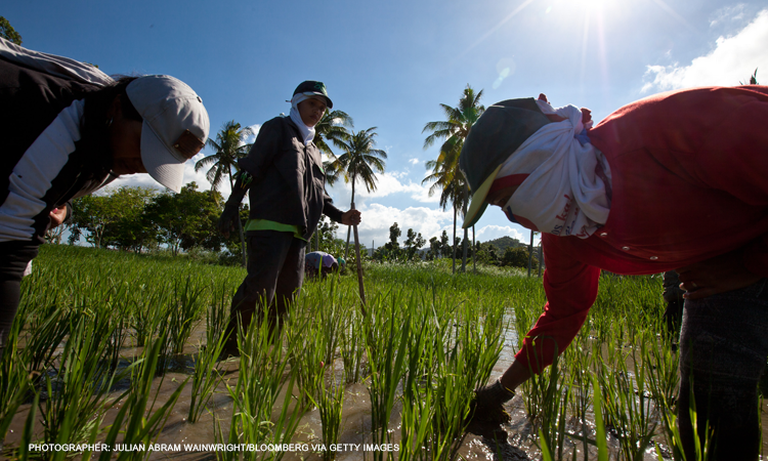
World Bank Senior Agricultural Economist Eli Weiss said that while rice remains the country’s staple, other high-value produce would be the source of bigger incomes and more job opportunities. The report pointed out that yields are low in rice, which should trigger local planters to diversify or shift to high value-added products that are also in demand here and abroad.
What to plant should be driven by demand rather than supply, which will prove to be more rewarding, it added. Contract farming, where farms supply the needs of companies, may also be considered.
Despite this, rice growing remains the target of the Department of Agriculture, which the bank dubbed as a “legacy” project.
“The vast majority of the budget of the National Irrigation (Administration) is devoted to single-crop rice production schemes. All of this support is for a crop that comprises only about 18 percent of the value of production,” the study pointed out, saying it was inefficient.
Policy shifts mean investing more into agricultural research and development, infrastructure, innovation systems, market information systems, and biosecurity systems beyond current support given to farmers.
To justify the shift, the DA should do cost-benefit analyses to guide policies. Farmlands can also be consolidated to boost production and make it easier to modernize.
The multilateral lender also pointed out how the Rice Liberalization Act – which replaced import quotas on the crop with tariffs – has proven to be a game-changer, which would level the playing field among non-rice farmers.
The agriculture sector has become a laggard in terms of productivity, growing only by about 32 percent in the past 20 years against neighboring Vietnam, Thailand and Indonesia.
Meanwhile, the World Bank lauded how the Philippines was able to keep the farm sector growing even during recession, with agriculture being the only industry to expand during the first six months.
Authorities should go beyond rice self-sufficiency towards nutrition security. “Availability and affordability of food are key, not self-sufficiency,” the report added.
RELATED: Farming is sexy: Agribusiness owner encourages youth to go into farming