

Metro Manila (CNN Philippines, June 8) — More Filipinos were out of work in April after a surge in COVID-19 cases forced government to tighten quarantine restrictions, the Philippine Statistics Authority said Tuesday.
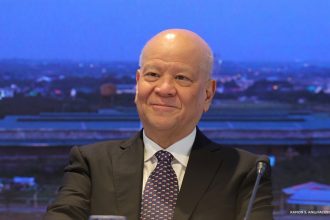
National Statistician Dennis Mapa reported a national 8.7% unemployment rate among residents aged 15 and up, worse than March’s 7.1%. This means 4.14 million Filipinos are without jobs, higher than 3.44 million the month prior.
The PSA chief noted that the joblessness rate went up as the National Capital Region Plus reverted to tighter quarantine restrictions on that month. More women were unemployed in April than men, with both sexes logging unemployment rates of 9.1% and 8.5% respectively.
NCR Plus — composed of Metro Manila, Bulacan, Cavite, Laguna, and Rizal — was placed under enhanced community quarantine (ECQ) from March 29 until April 11 due to a surge in COVID-19 cases. The area shifted to the more relaxed modified ECQ (MECQ) from April 12 to 30.
However, the recent figure is still lower than the record high of 17.6% or 7.23 million jobless in April 2020, a month into the first round of strictest lockdowns in Luzon.
The national employment rate this April also plummeted to 91.3%, given tighter quarantine rules, from 92.9% in March. This is equivalent to 43.27 million individuals with work, lower than 45.33 million in March.
These figures bring the latest labor force participation rate to 63.2%, translating to 47.41 million Filipinos who were employed or actively seeking jobs. The turnout is weaker than the 65% rate or 48.77 million people in the labor force tallied in the previous month.
Meanwhile, underemployed persons — or those seeking additional hours or job opportunities — reached 7.45 million in April. This corresponds to a 17.2% underemployment rate, up by a percentage point from March’s figure.
Results of the April labor force survey, which is part of the PSA’s quarterly series, may be compared with monthly turnouts such as the one in March on the national level. However, regional data could only be contrasted quarter-on-quarter — in this case, January’s figures, officials said.
Given the return to stricter lockdown measures, NCR logged the highest unemployment rate among the regions at 14.4% in April, way up from the 8.8% figure recorded three months ago. Zamboanga Peninsula, on the other hand, had the lowest joblessness rate at 3.3% compared to the past quarter’s 3.6%.
All regions saw unemployment rates go down except for Metro Manila, Cagayan, Central Luzon, Calabarzon and Central Visayas.
Services, the sector with the biggest chunk in total employment as of April, contributed 57.4% to the overall workforce. Agriculture and industry, meanwhile, comprised 24.4% and 18.2% of employed Filipinos, respectively.
Education saw the biggest month-on-month increase in employment this April, adding 187,000 jobs to its total workforce. Accommodation and food services, real estate, mining along with electricity, gas, steam and air conditioning also logged higher employment figures during the month.
Meanwhile, construction lost 805,000 workers in April compared to March, Mapa said. Agriculture; wholesale and retail trade and repair of motorcycles and motor vehicles; manufacturing; and financial and insurance activities also saw month-on-month declines in employment.
Employed Filipinos worked shorter hours on a weekly basis this April with an average of 38 hours, lower than 39.7 hours in March.
In line with the national turnout, lockdowns were the top reason individuals with jobs were unable to report for work in April. This was followed by health limitations and lesser clients or work.
Economic managers noted a “temporary reversal” in employment gains given April’s figures, but said the latest outcomes are “substantially better” than last year’s considering the more “risk-based approach” in quarantine restrictions in 2021.
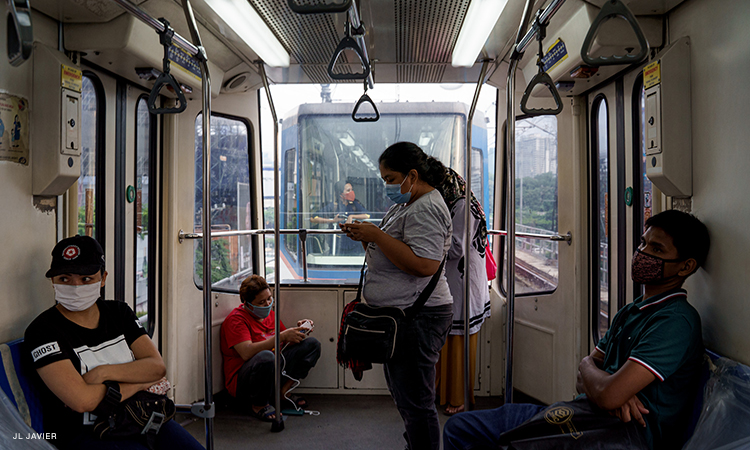
This year, the government allowed more sectors to operate and public transport to run despite the reimposition of lockdown measures.
“Our experience this year shows that we can reduce cases while helping people recover their jobs and income at the same time,” the team said in a joint statement.
Economic officials called anew for a shift towards modified general community quarantine, along with allowing people of more ages to go out and gradually resume face-to-face classes in low-risk areas “at the appropriate time” with necessary safeguards.
They also echoed the need for a timely implementation of the state’s recovery package, along with a speedier COVID-19 vaccine rollout.
“With 27.7 million vaccine doses arriving from May to July 2021, we are confident that we can bring more Filipinos safely to work, inoculate 70 million Filipinos or the entire adult population by the end of the year, and recover strongly in the next two years,” the statement read.
In a separate briefing, World Bank economist Kevin Chua emphasized the importance of mass vaccination, noting it has “become a precondition” in other Southeast Asian countries like Thailand and Malaysia in further opening the economy.
Given the urgent need to reopen the economy as people are already losing jobs and income opportunities, he added that “effective pandemic management” is also key to this.
The Washington-based lender once again slashed its 2021 growth forecast for the Philippine economy to 4.7% from the previous 5.5%. The latest projection falls further from the economic team’s downscaled 6-7% growth target range for this year.
CNN Philippines correspondent Melissa Lopez contributed to this report.