

Metro Manila (CNN Philippines, June 25) — The Philippines might see investments exit and currency weaken if it maintains an accommodative policy stance amid the global health crisis, a global think tank warns.
In an analysis on Friday, Moody’s Analytics said the country “could face capital outflows and weaker foreign exchange rates if accommodative policies must remain in place” – a forecast applied similarly to India, Indonesia, and Thailand. These countries have likewise encountered difficulties in curbing the spread of COVID-19.
Under an accommodative policy stance, the central bank expands the money supply to boost the economy. Such policies include lowering key interest rates to make borrowing less expensive and encourage spending.
RELATED: FDI flows strengthen in March amid gradual return to economic activity, vaccine rollout
Countries with strict social distancing measures, partial lockdowns, and tight border controls will “struggle” with these policies in place while developed economies across the world reopen and “expand an environment of policy normalization” as investors start seeking higher yields, it further explained.
The Philippines – which the research firm calls the “laggard of the region” with its near-record high daily coronavirus infection tallies, persisting quarantines in Greater Manila, and “modest” fiscal spending – has observed an accommodative monetary policy stance in the past months.
READ: Palace still hopeful for 2021 recovery despite PH tag as ‘laggard’ in Asia
The Bangko Sentral ng Pilipinas has kept the policy rate to a record-low 2% again this June. This has been in place since the surprise rate cut in November last year.
The peso, meanwhile, eased back anew in mid-June to the ₱48 level against the US dollar, after lingering in ₱47 territory for the most part in May and earlier this month.
While India’s rupee and Indonesia’s rupiah have “remained weak” since the pandemic’s onset and risks are evident with Thailand’s baht, Moody’s Analytics said the peso “oddly” looks quite strong.
However, as Manila’s import inflows return to “a more normal trend, its current account with likely ease, and the peso with it,” said the firm.
Moody’s Analytics likewise warned that the six months ahead will be uncertain and volatile for the Asia-Pacific. It said parallel efforts are needed across the region to ramp up vaccination and improve COVID-19 testing and contact tracing given the threat posed by the more transmissible Delta variant.
“China, Japan, Taiwan, Korea and Singapore will not be able to ease up in their efforts, and others such as India, Indonesia, the Philippines and Thailand will have to ramp theirs up on both fronts,” said Moody’s Analytics.
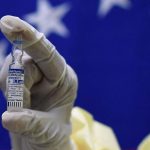
The Philippines has administered 8.92 million COVID-19 vaccine doses as of Tuesday, latest government data showed. Of this figure, 2.24 million have already been fully inoculated against the disease.