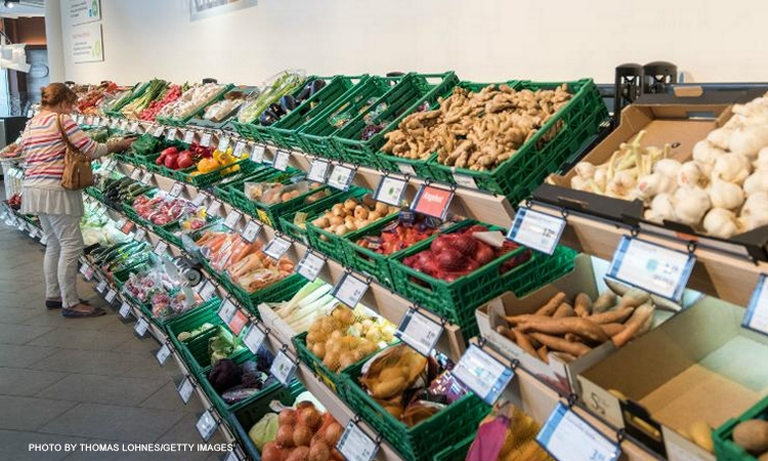


Metro Manila (CNN Philippines, October 18) — Some senators called on the Department of Agriculture (DA) to implement programs that will improve the production of root crops as a possible alternative to rice.
“Isla-isla tayo at mas marami rin tayong slopes compared sa flat lands… Why not develop yung ating substitute to rice, yung mga root crops like kamote, cassava, gabi, ube,” Sen. Ronald “Bato” Dela Rosa said during DA’s budget hearing.
[Translation: We are composed of islands and we have many slopes compared to flat lands. Why not develop our substitute to rice, which are root crops like sweet potato, cassava, gabi, and ube.]
He pointed out that the country is always hit by typhoons, making rice farming very vulnerable.
This was supported by Minority Leader Koko Pimentel.
He also asked the DA officials if the department already has a program that will determine what could be an alternative to rice.
“We are starting to look into those crops that are substitute to rice, but we cannot replace rice as a major food item of a Filipino. We are trying to look at some of these commodities to be initially implemented and see if it can be a national program in the future,” DA Senior Undersecretary Domingo Panganiban said.
The root crops that could be best developed by the Philippines are sweet potato and cassava, Domingo noted.
Currently, the DA official said, they are implementing crop diversification among rice farmers. This allows them to use their idle lands by planting crops that can be harvested within 2-3 months before the next season comes, he noted.
For 2023, the DA is proposing a ₱163.8 billion budget which is 39.62% higher than the 2022 allocation. Of this, some 80% will be used to fund the department’s programs and projects
In DA’s presentation, there was no specific entry for the production of root crops.
Data from the Philippine Statistics Authority showed that production of sweet potato increased by 1.9%, 278,330 metric tons (MT), while cassava production declined by 0.5% to 1.16 million MT as of June 2022.
In the same period, palay (unhusked rice) production declined by 0.6% to 8.74 million MT.