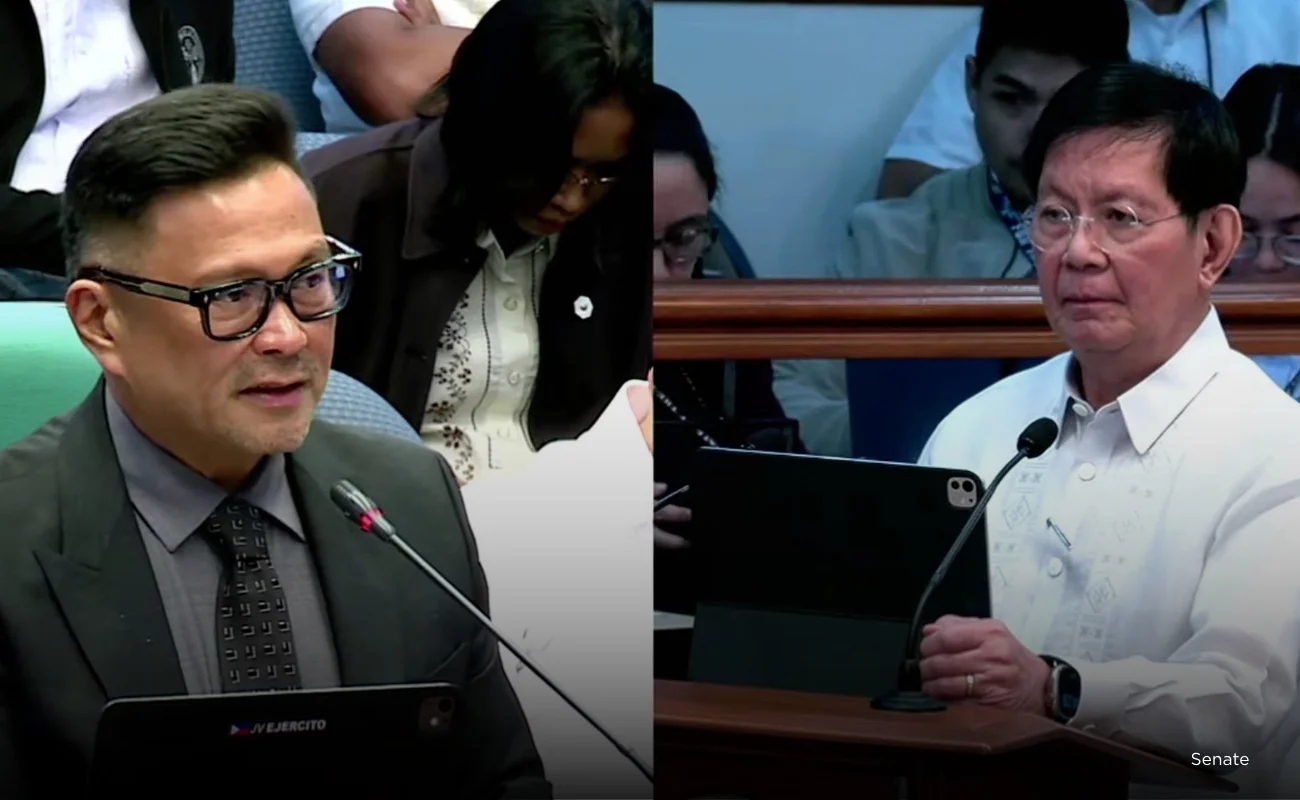


Metro Manila, Philippines – Senators urged agencies for more growth-oriented and long term projects, while clamoring for inflation solutions, during the first two Senate plenaries on the 2027 budget.
The first agency under scrutiny on Monday, Nov. 23, was the Department of Budget and Management (DBM) and its attached agencies.
Sen. Panfilo Lacson pointed out that the peso has been weakening against dollars, to which finance committee chairman Sen. JV Ejercito answered that the increase in oil price and dollar exchange rates caused this.
Meanwhile, Sen. Risa Hontiveros said, “Gamitin natin ang budget para maka-survive sa kasalukuyang krisis at makaangat tayo papunta sa totoong recovery.”
[Translation: Let’s use the budget for us to survive the current crisis and help ourselves out of recovery.]
Woes on national projects
Senate Majority Leader Juan Miguel Zubiri noted the slowing growth rate, considering that “everything is tied to the dollar” which impacted inflation.
He suggested that the country should export more than it imports, as influx of imported goods caused price increase.
Lacson added that the government should shift its priorities from multipurpose buildings and “ayuda,” to grown-oriented programs and activities.
Also raised was the delayed infrastructure projects alongside budget gaps and unused funds.
Ejercito said the high construction costs as a result of the Middle East conflict discouraged contractors to bid on the projects.
Senate Minority Leader Alan Peter Cayetano disagreed, pressing on the Department of Public Works and Highways for failing to bid the infrastructure projects given that there was no US-Iran war yet during last year’s budget deliberations.
He raised the issue of how much of the government’s borrowings was used productively instead of rapaying past.
The Department of Finance said around 55 percent are utilized for interest payment.
The Budget Department said the economy will “slightly” improve in the fourth quarter through project implementations that faced delays and public spending.
Concerns raised to BSP
The Senate also invited Bangko Sentral ng Pilipinas Governor Eli Remolona Jr. for a special inquiry.
Sen. Imee Marcos asked whether tightening monetary policies for the remainder of 2026 into 2027 through raising interest rates can actually help the economy move forward.
Remolona recalled an oil price hike in 2022, prompting the central bank to raise interest rates. They managed to substantially cut the 8 percent inflation rate from January 2023 to around 3 percent.
Sen. Joel Villanueva pressed on more plans that the BSP and the government can collaborate on to solve everyday problems of the public such as rising prices of goods as difficulty to accumulate savings.
Remolona said the central bank has not yet discussed it as it is still dealing with controlling inflation.
“Maliwanag naman e, marami pa tayong kailangan gawin. We have work to do, for sure,” he said.