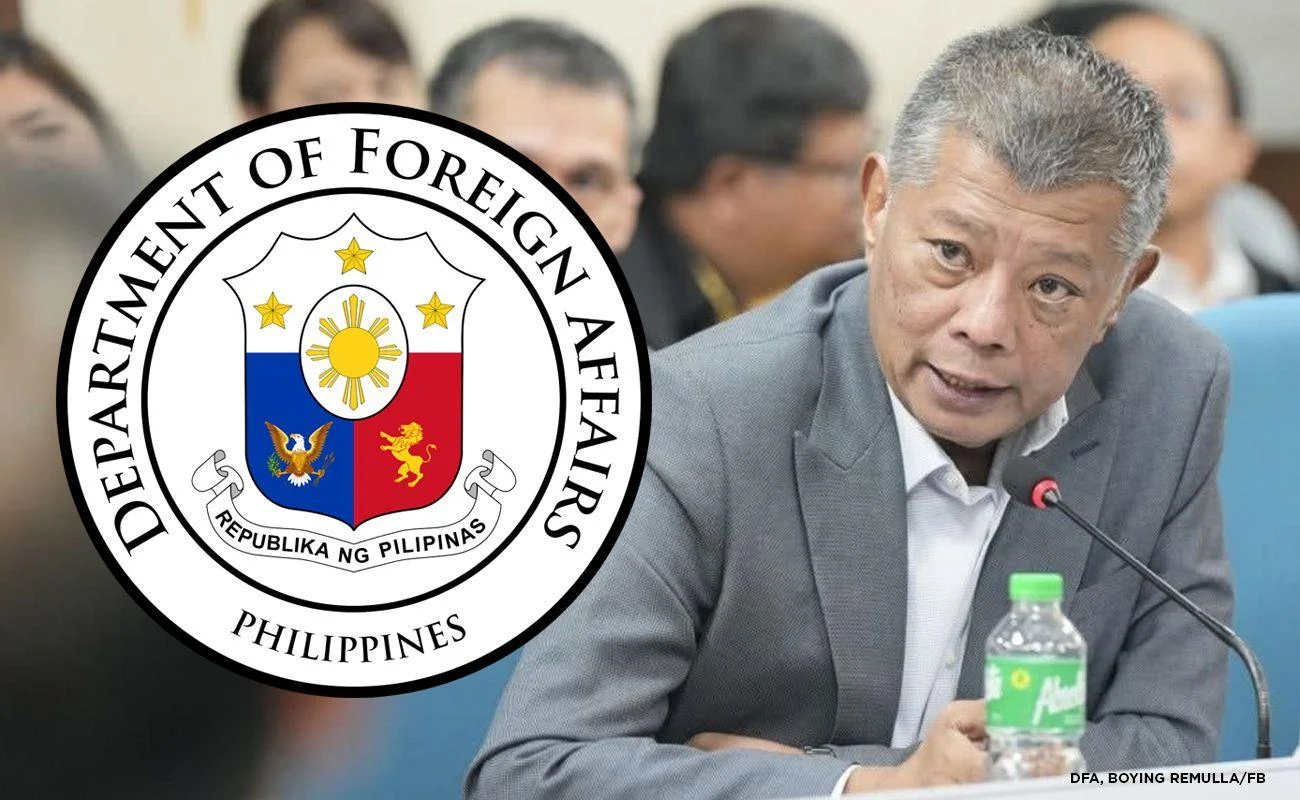


Metro Manila, Philippines – The Department of Foreign Affairs (DFA) strongly rejected Ombudsman Jesus Crispin Remulla’s proposal to remove its visa-issuing functions, calling his allegations that the agency had turned visa processing into a business an unfair attack on the Philippine Foreign Service.
In a statement Monday, Oct. 26, the agency defended its authority to issue visas, pointing out its mandate by law and international conventions.
“The DFA strongly objects to the recent public remarks of Ombudsman Jesus Crispin Remulla calling for the removal of the Department’s visa-issuance functions and alleging that the DFA has turned Philippine visa issuance into a business,” the department said.
“Ombudsman Remulla’s remarks undermine the institutional integrity of the Department and unfairly malign the reputation of the Philippine Foreign Service and its personnel,” it added.
Remulla suggested during a DZRH interview Saturday, Oct. 24, that visa processing should be handled by third-party service providers rather than foreign service officers.
“Ang problema ng DFA, they forget that their primary job is to be diplomats. Eh dito iba ‘yung gusto nilang mangyari, gusto nilang magnegosyo,” Remulla said.
[Translation: The problem with the DFA is that they forget that their primary job is to be diplomats. But here, they want something else to happen; they want to go into business.]
Remulla argued that outsourcing visa processing would establish uniform standards for screening foreign nationals entering the country.
“Ako talaga ang stance ko diyan, let the Philippine visa processing be done by a third party, VFS. Para alam natin kung sino pumapasok, nave-vet natin lahat ng pumapasok,” he said.
[Translation: My position is to let Philippine visa processing be handled by a third party, like VFS. That way, we know who is entering and can vet everyone coming in.]
DFA defends legal authority
The DFA maintained that visa issuance is a statutory consular function under Executive Order No. 292, or the Administrative Code of 1987.
It also cited the 1963 Vienna Convention on Consular Relations, particularly Article 5(d), which recognizes visa issuance as a consular function, and Articles 3 and 70, which address the exercise of consular functions by diplomatic missions.
The department rejected the characterization of visa processing as merely clerical work.
“Contrary to the characterization of visa processing as a merely clerical function, the issuance of visas involves the substantive assessment of applications and verification of documents,” the DFA said.
It emphasized that visa decisions require official judgment under Philippine laws, rules and regulations.
According to the department, these responsibilities cannot be reduced to simply receiving and processing documents.
Outsourcing allowed, but visa decisions remain with government
The DFA clarified that third-party companies, including VFS, may provide administrative support services, particularly in receiving visa applications.
However, it stressed that outsourcing such services does not transfer the government’s authority to approve or reject visa applications.
“Such outsourcing of administrative services does not mean the transfer of sovereign authority to approve or deny visas,” the DFA said.
“This authority remains a governmental responsibility, as exercised by the Philippine Embassies and Consulates.”
The department also defended the collection of visa fees, saying these were authorized under existing laws and regulations, including the government’s prescribed Schedule of Fees.
It maintained that it does not tolerate corruption and remains committed to transparency and accountability.
“The DFA does not tolerate corruption and remains committed to accountability, transparency, and utmost professionalism in the delivery of public service,” the department said.
The DFA said it would continue exercising its visa-issuance mandate in accordance with Philippine law and international obligations.