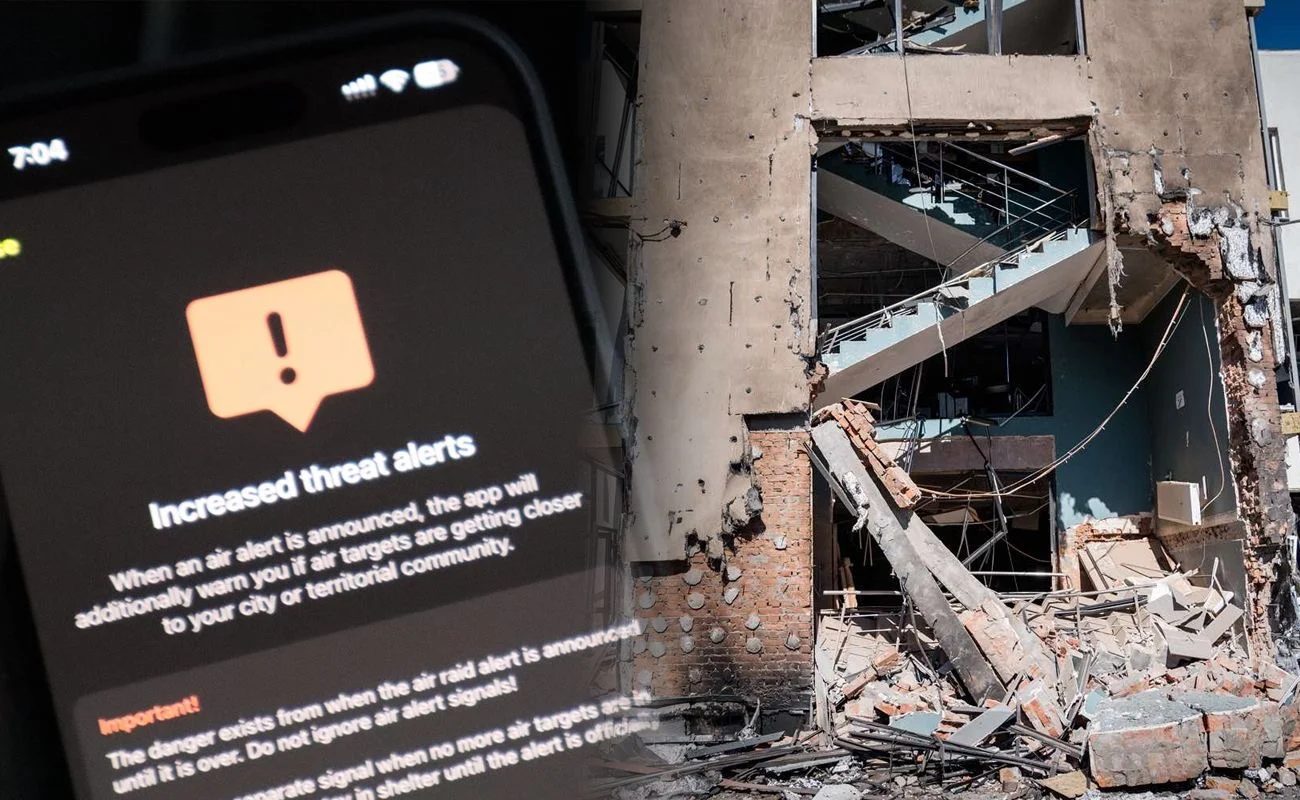


Kyiv, Ukraine – Russia resumed large-scale drone and missile attacks on the Kyiv region a day after a three-day pause that coincided with a visit by U.S. envoys.
The attacks struck residential areas and killed two people.
NewsWatch Plus arrived as the capital braced for renewed attacks. Less than an hour after we reached Kyiv, an air raid alert sounded on our phones.
“Welcome to Kyiv,” our guide told us as we sat inside a car on the way to our hotel in the city center.
Under siege
Kyiv has faced repeated Russian attacks since Feb. 24, 2022, the first day of Moscow’s full-scale invasion of Ukraine.
In May 2023, the capital endured an intense wave of drone and missile siege, sometimes several within a single week.
The scale and frequency of the attacks increased further in the next years, with Russia launching large combined barrages of drones and missiles.
The city’s air defenses intercept many of the weapons, but falling debris and direct strikes have repeatedly damaged homes, businesses and critical infrastructure.
Life continues between the alerts. Shops remain open, trains keep running and people report for work. But every warning signals the possibility of another attack.
Reading the alerts
The first warning we received came through an app that tracks threats across Ukraine.
The app and other monitoring channels use color-coded maps to show the areas facing danger and provide information about the possible weapon involved.
On the tracker used by our team, yellow indicated a heightened threat, commonly involving drones. Red warned of a more serious danger, such as ballistic or cruise missiles, a large-scale drone raid or a combined attack.
Separate warnings may also be issued for artillery shelling, street fighting, and chemical or radiation hazards.
From the moment we arrived, warnings repeatedly appeared on our phones. Most were yellow alerts involving possible drone activity.
The frequency of the notifications showed how quickly an ordinary day in Kyiv could change.
Shelters across the city
People described the shelter at our hotel as one of the better-equipped facilities in the area.
It was a former basement parking area converted into a shelter, with beds, tables, chairs, electrical outlets, drinking water and clean restrooms.
It was mostly empty during daytime alerts but became crowded at night, when Russian attacks were more likely to occur late in the evening or early in the morning.
Apart from shelters in hotels and residential buildings, Kyiv’s underground metro stations provide protection during air raids.
All 47 underground stations can be used as shelters. During major attacks, tens of thousands of people have taken refuge across the metro network.
Parking garages, basements, cellars and other reinforced structures have also been adapted to provide temporary protection.
Mass drone attack
During one trip through Kyiv, another alert reached our group. This time, our Ukrainian guide appeared more concerned.
She said a mass drone attack was approaching the capital and that we needed to reach a shelter immediately.
“There is a mass drone attack on the capital, so we are going to the subway station and will use it as a shelter,” Ukrainian translator Anna Pantiukhova said.
“When the situation clears, we will go back up and see the destruction near the shelter,” she said
Kyiv’s underground trains continued operating during the alert. Some people waited for their trains while others remained inside the station until the danger had passed.
“This is a channel where we receive information about where the drones are,” Pantiukhova said as she showed us updates on her phone. “It is a good thing we are here.”
We left the station a little less than an hour after entering the shelter.
Above ground, traffic continued moving and businesses remained open. The city had returned to its routine, knowing another warning could come at any time.
Changing warfare
Ukraine’s Foreign Ministry said the nature of Russia’s attacks has changed as the war continues.
“Right now, it is very difficult because Russia has resorted to attacking critical infrastructure and civilians, including families and children,” Deputy Foreign Minister Mariana Betsa told NewsWatch Plus.
“Our children and families are being killed, even in Kyiv,” she said.
Betsa said Russia had failed to make significant advances and had increasingly turned its attacks toward civilian areas.
Russia has repeatedly denied deliberately targeting civilians, despite strikes that have hit homes and other civilian infrastructure across Ukraine.
Asked whether Ukraine’s definition of victory had changed since 2022, Betsa said it had not.
“Ukraine is very resilient. Our main goal is our territorial integrity,” she said.
“We are not protecting only Ukraine. This is not a regional war. We are protecting the entire democratic world. This is about democracy, freedom and human rights,” she added.
Nearly five years into the full-scale invasion, Kyiv remains a functioning capital under constant threat.
Above ground, people continue with their lives. Beneath the city, shelters remain ready for the next siren.