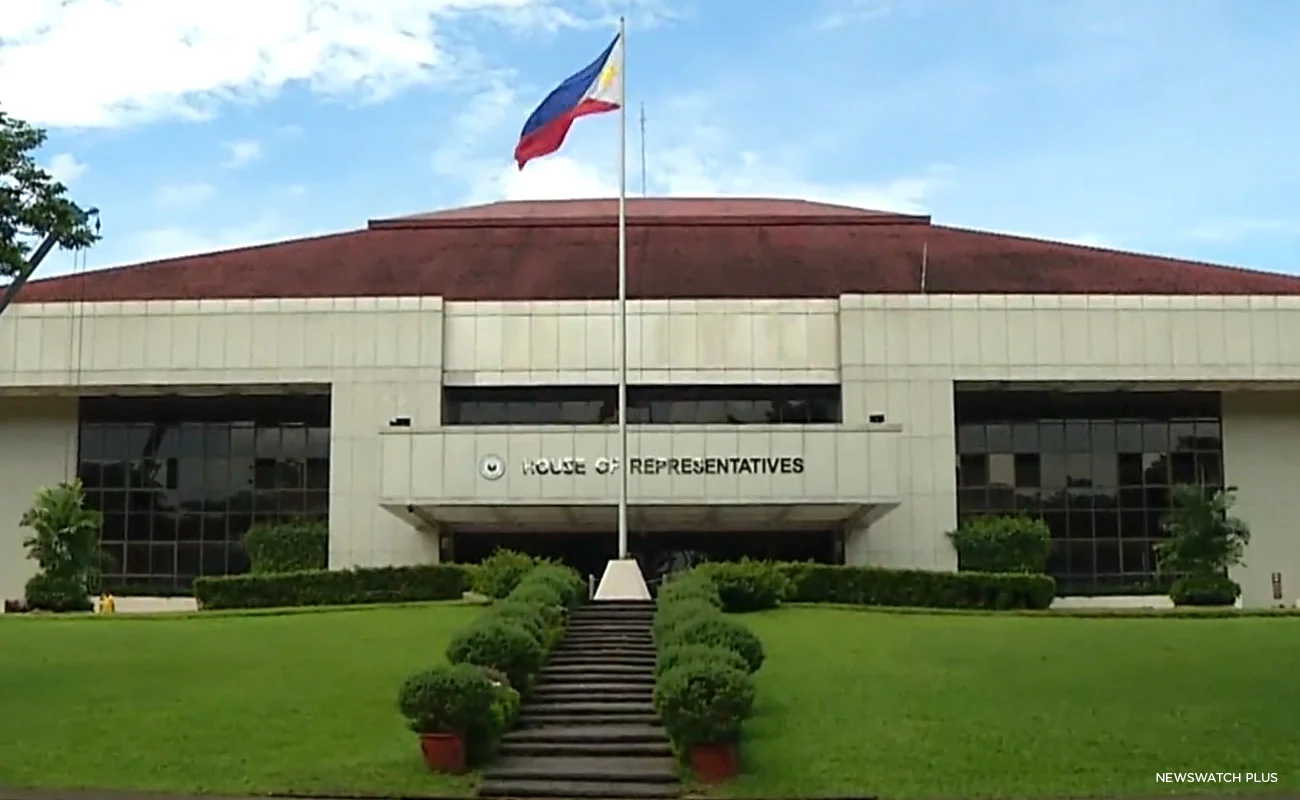

Metro Manila, Philippines – Taking the cue from President Ferdinand Marcos Jr. in #SONA2026, the House of Representatives has set an August deadline to pass the higher income tax exemption ceiling bill and a target implementation by January 2027, the chairperson of the ways and means committee said.
In a press briefing on Tuesday, July 28, Marikina 2nd district Rep. Miro Quimbo said he based his timeline on the informal discussions with Speaker Bojie Dy and Majority Leader Sandro Marcos.
The president urged Congress to pass legislation exempting employees earning up to ₱350,000 a year from income tax as a form of relief for the middle class.
Quimbo said the earliest implementation date is Jan. 1, 2027, as current revenue and budget schedules have been aligned with the existing tax structure.
“It cannot be earlier. Masyadong mahirap para i-unwind. Today, ang computation ng BIR pati ang ating budget ay dependent doon sa tax collection as computed on annual basis. Ibig sabihin, lahat ng budgetary expense today ay dependent sa collection na expected natin up to the end of the year,” he said.
[Translation: It cannot be implemented earlier. It would be too difficult to unwind. Today, the Bureau of Internal Revenue’s computations, as well as our budget, are based on tax collections computed on an annual basis. This means that all of today’s budgetary expenditures depend on the tax collections we expect to receive by the end of the year.]
Quinbo added that raising the income tax ceiling would also increase the tax-exempt threshold for 13th month pay and other bonuses.
Where to recover revenue losses
Citing the Department of Finance, Quimbo pointed out that the proposed tax package would result in a ₱50-billion revenue loss.
He said the August deadline would also cover corresponding compensating tax measures, or other ways the government would generate revenue.
Quimbo said the estimated losses can be entirely offset from higher taxes on vape products, tobacco, sugar-sweetened beverages, and single-use plastics.
“Ang pamamaraan natin dito, gamitin natin two birds with one stone actually, iyong panggagalingan natin ng dagdag na revenue are all health-related. Ibig sabihin, gusto natin i-adjust, o magkaroon ng tax ang mga behavior na ayaw natin. Paninigarilyo, pagve-vape, pag-inom ng softdrinks at iba’t ibang inumin na nakakapinsala…at nakakapinsala sa environment ang mga plastics,” he said.
[Translation: Our approach here is to hit two birds with one stone. The additional revenue will come from health-related measures. In other words, we want to adjust behavior that we want to discourage by imposing taxes on it—such as smoking, vaping, drinking soft drinks and other unhealthy beverages, as well as the use of plastics, which are harmful to the environment.]
Touching on the impact of the possible tax relief, Quimbo likened the proposal to a wage increase for ordinary workers and middle class employees.
“Nagdedesisyon ang pangulo dito na effectively, parang binibigyan ang ordinaryong manggagawa at pati middle class employees ng isang wage increase. Lumalaki ang kanilang net take home pay pero ‘di natin ipinapatawa o inililipat ang burden sa employers,” he said.
[Translation: What the president is deciding here is, in effect, to give ordinary workers and even middle-class employees a wage increase. Their net take-home pay becomes larger, but we are not imposing or shifting the burden to employers.]
Meanwhile, Quimbo said the House is also eyeing final reading approval on the proposed tax amnesty covering unpaid income tax, estate tax, value-added tax, and other tax liabilities – as mentioned in the SONA – before the October session break.