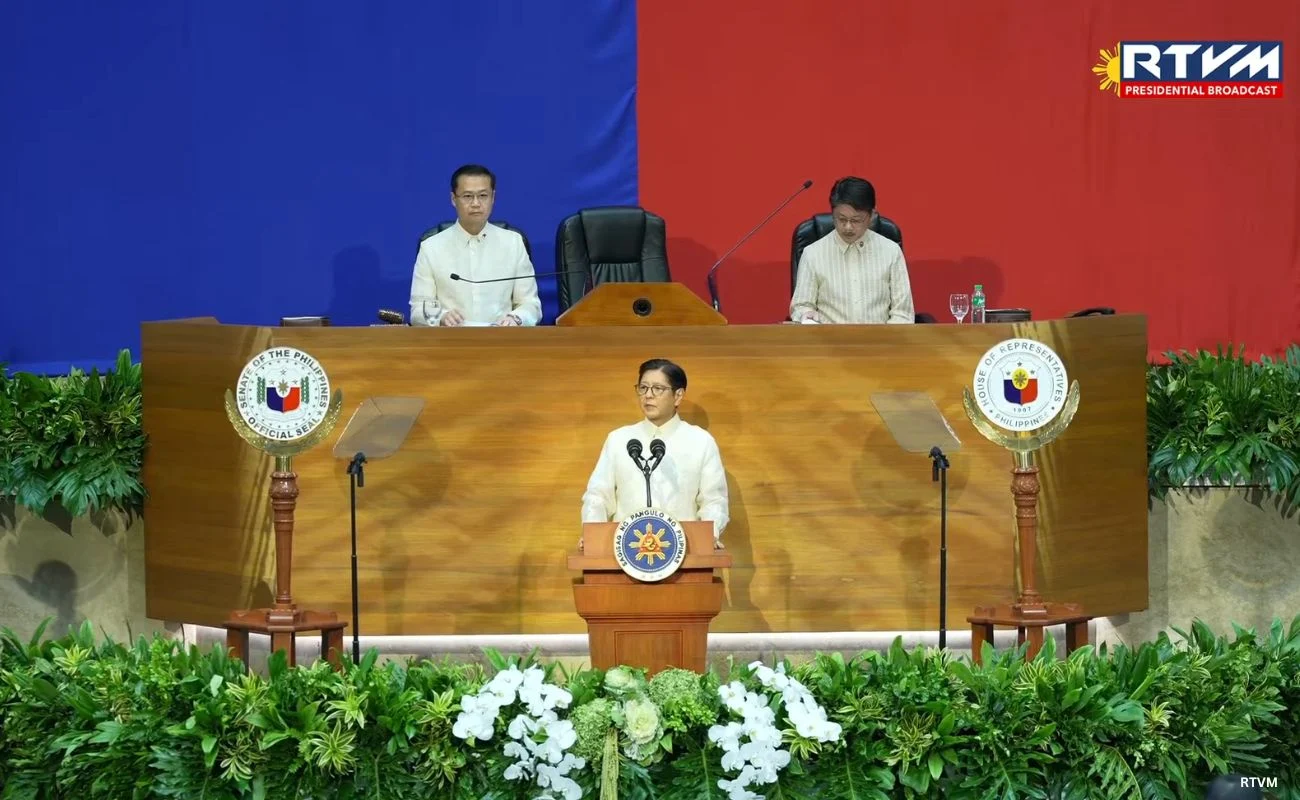


Metro Manila, Philippines – President Ferdinand Marcos Jr. delivered his second to the last State of the Nation Address. Here are some of the most pressing national issues in the one-hour-and-31-minute annual report to the country.
Flood control, accountability for all
Marcos Jr. named his cousin, former Speaker Martin Romualdez, in the multibillion-peso flood control scandal.
READ: ‘Hindi ako pangulo ng aking pamilya’: Marcos names Romualdez in flood control scandal
“Meron nang naunang nakasuhan at nakulong, mga kontratista, matataas na opisyal, pati na mga mambabatas. Dumating na tayo sa punto na yon sa ombudsman ay malapit na ang paghain ng patong-patong na kaso laban sa dating speaker,” Marcos said in his address before the nation on Monday, July 27, referring to his cousin.
[Translation: There have been initial cases and some were arrested, contractors, high government officials, and even lawmakers. We’ve come to the point where the ombudsman is close to filing a series of cases against the former speaker.]
The president said the government has frozen ₱25 billion in assets from people accused in the scam, and ₱800 million has been turned over to the National Treasury.
He also vowed to introduce reforms in the Department of Public Works and Highways.
Tensions with China
Marcos stood up for Filipinos against threats to the country’s dignity and self-respect. A video previously published by state-run China Daily depicted Filipinos as monkeys and subservient to the US and Japan. The Philippines has filed a diplomatic protest over the video.
READ: PH files diplomatic protest over China Daily ‘racist’ depiction of Filipinos
“Let me remind our friends and our detractors: Filipinos are a noble, kind, gracious, and great race. We are not greedy. We are not racists. We are not liars. We are respectful, and we are dignified. We are Filipinos, and we do not yield,” Marcos said.
He reiterated the 2016 Arbitral Award, saying the Philippines would not advance the claim alone and that it would not abandon the efforts.
Marcos said the government would continue to uphold the award through peaceful and legal means available.
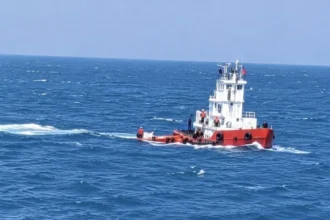
In light of recent harassment in the West Philippine Sea, Marcos honored the military, coast guard, and fisherfolk in continuing to patrol the West Philippine Sea amid the risks.
“They give life to the letter and spirit of the arbitral award,” said the president.
On July 20, Chinese Coast Guard (CCG) personnel hit a Philippine Navy sailor over the head with a wooden baton. Days later, the CCG blasted Filipino vessels with a water cannon during a resupply mission in Bajo de Masinloc.
Marcos’ remarks on China’s actions earned a standing ovation from lawmakers.
War in the Middle East, fuel price shocks
Oil prices have skyrocketed due to the war in the Middle East, the closure of the Strait of Hormuz, and the breakdown of the ceasefire between the US and Iran.
President Marcos said he could face the people with confidence, knowing the government had done everything it could to cushion the impact of the conflict.
“Sa kooperasyon ng ating mga kumpanya ng langis, hindi naging biglaan ang pagtaas ng presyo ng petrolyo, kundi pa-unti-unti sa loob ng isang linggo. Ito’y para naman maging magaan sa ating mga nahihirapang konsumer,” said Marcos.
[Translation: Through our cooperation with oil companies, the fuel price did not spike but increased gradually within a week. This lessened the burden on our struggling consumers.]
He cited fuel price cuts and a three-month suspension on excise taxes for LPG and kerosene products.
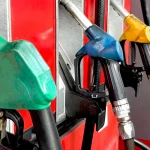
Another major fuel price hike is set for July 28. The following adjustments will take effect:
+gasoline: ₱6.80 per liter
+diesel: ₱7.32 per liter
+kerosene: ₱4.22 per liter
Meanwhile, the president said the administration repatriated around 12,000 Filipinos from the conflict and provided aid to around 140,000 others in the Middle East.
Pax Silica
In his address, Marcos touted the benefits of a US-led supply chain initiative on employment.
“The Pax Silica Industrial Hub will create an eco-system that will have AI at its core. It will bring quality jobs to our people, accelerate our industrial competitiveness, and revitalize our economy,” he said.
The initiative will see the creation of an industrial hub in New Clark City, Tarlac to produce semiconductors, process critical minerals, and bolster artificial intelligence. The project has been criticized for its possible impact on the environment and the displacement of indigenous peoples.
“As a strategic component of the Luzon Economic Corridor, the hub will be an advanced manufacturing and logistics center in the global AI and technology value chain,” Marcos said.
Malacañang earlier said the president would not allow any foreign power to control the arrangement which currently has 23 partner economies.
Energy prices, revisiting nuclear energy
Pivoting to high electricity prices, Marcos called for the immediate amendment of the Electric Power Industry Reform Act (EPIRA).
“Sa aking palagay, panahon na para tanggalin ang systems loss na pinapasa sa consumer. Hindi naman kasalanan ng consumer kung bakit nagkaroon ng systems loss. Hindi naman tama na kailangan sila pa ang pagbayarin para dito,” Marcos said.
[Translation: In my opinion, it’s time to remove systems loss which is passed on to consumers. Systems loss is not their fault. It’s not right to have them pay for it.]
Systems loss refers to the difference between the amount of electricity supplied to the power grid and the amount consumers must pay for resulting from inefficient infrastructure and pilferage.
The president also called on Congress to pass the Sariling Kuryente Bill, which would simplify the process of installing solar panels and battery systems at the household level.
He even proposed revisiting nuclear energy for electricity as the cheap source is already in use for medicine, agriculture, water filtration, and the upcycling of plastic.
The president’s late father and namesake, former President Ferdinand E. Marcos, saw the country repaying the debt-saddled Philippine Nuclear Power Plant in Bataan that was mothballed over safety concerns
Transportation, infrastructure
On transportation infrastructure, Marcos announced that the North-South Commuter Railway will be operational next year, with trains running from Valenzuela City to Malolos, Bulacan.
He said the transportation department would push for the railway extension to Clark, Pampanga before the end of his administration in 2028.
Marcos also said 12 MRT-7 stations would begin operations next year.
The president said the National Building Code must also be amended to ensure that public and private infrastructure – as well as evacuation centers – would be modernized and resistant to calamities.
Tax, tariff cuts
Touching on tax relief, Marcos urged Congress to pass legislation exempting employees earning up to ₱350,000 a year from income tax as a form of relief for the middle class.
He added that income tax should be lowered for workers.
He called for waiving the unpaid minimum corporate income tax for small businesses.
Marcos asked for amnesty on unpaid levies including income tax, estate tax, donor tax, and value-added tax and incurred penalties.
To encourage the shift to electric vehicles (EVs), the president said the government will aim to lower tariffs on EVs to make them affordable. He added that government agencies have been mandated to “prioritize electric vehicles in their refleeting plans”.
He said the goal is for half of all vehicles to be EVs by 2040.