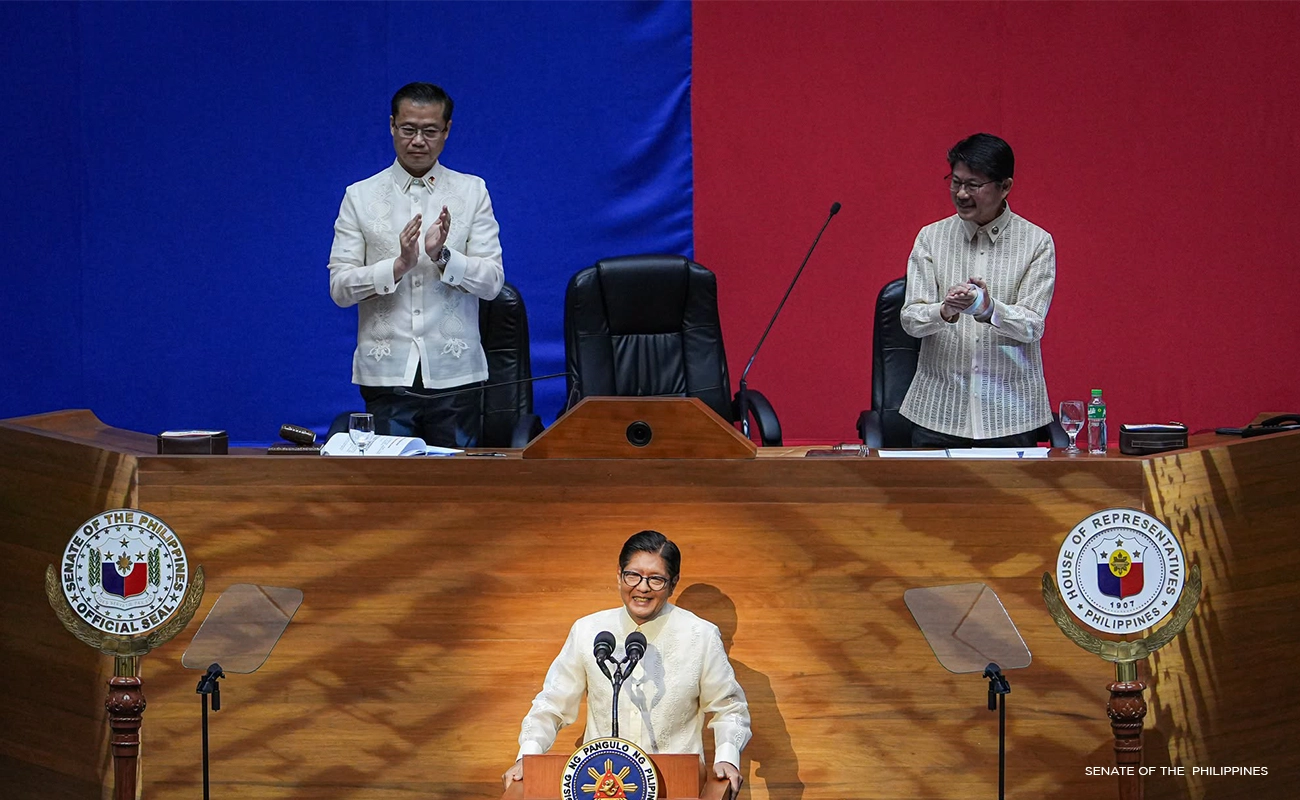


Metro Manila, Philippines – President Ferdinand Marcos Jr. steered clear of the impeachment trial of Vice President Sara Duterte and other controversies in his fifth State of the Nation Address on Monday, July 27.
The one-hour-and-31-one-minute address was his longest as yet, tackling a number of issues such as the flood control corruption controversy, tax policy amendments, addressing fuel prices, and the stance against China’s actions in the West Philippine Sea.
The president was silent on some hot button topics.
Ongoing impeachment trial
Marcos has consistently distanced himself from the impeachment trial, maintaining that the issue is under Senate jurisdiction.
The president has previously said authorities should let the constitutional process run its course without executive meddling.
Senate controversies, arrests
Presidential sister Sen. Imee Marcos did not attend the SONA for the second consecutive time, citing her opposition to the arrest of her colleagues in the Senate minority, namely Senators Jinggoy Estrada and Rodante Marcoleta over their plunder charges. Sen. Bato dela Rosa is evading an arrest warrant from the International Criminal Court over his alleged involvement in the bloody drug war of the Duterte administration as head of the national police.
Tensions sparked at the Senate after the series of gunfire in May in a standoff between in-house security and National Bureau of Investigation agents, the escape of Dela Rosa who was given Senate protection by then Senate President Alan Peter Cayetano, and the leadership tussle between Cayetano and Sen. Sherwin Gatchalilan, who eventually became Senate president..
Marcos had ordered authorities to conduct a fair and truthful investigation on the shooting.
Anti-political dynasty bill
Marcos also did not mention the anti-political dynasty bill despite his earlier decision to include the measure in the list of priorities for the 20th Congress in 2025.
House Bill 8389, authored by presidential son and House Majority Leader Sandro Marcos and Speaker Faustino “Bojie” Dy III, passed on third and final reading in June.
The proposed law prohibits spouses and relatives within the second degree of consanguinity or affinity from simultaneously holding or seeking elective posts within the same political jurisdiction.