

Vancouver, Canada – The Philippines and Canada elevated bilateral relations to a Strategic Partnership, marking a major upgrade in ties that will deepen cooperation in defense, trade, investment and people-to-people exchanges.
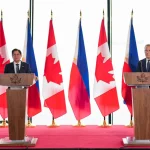
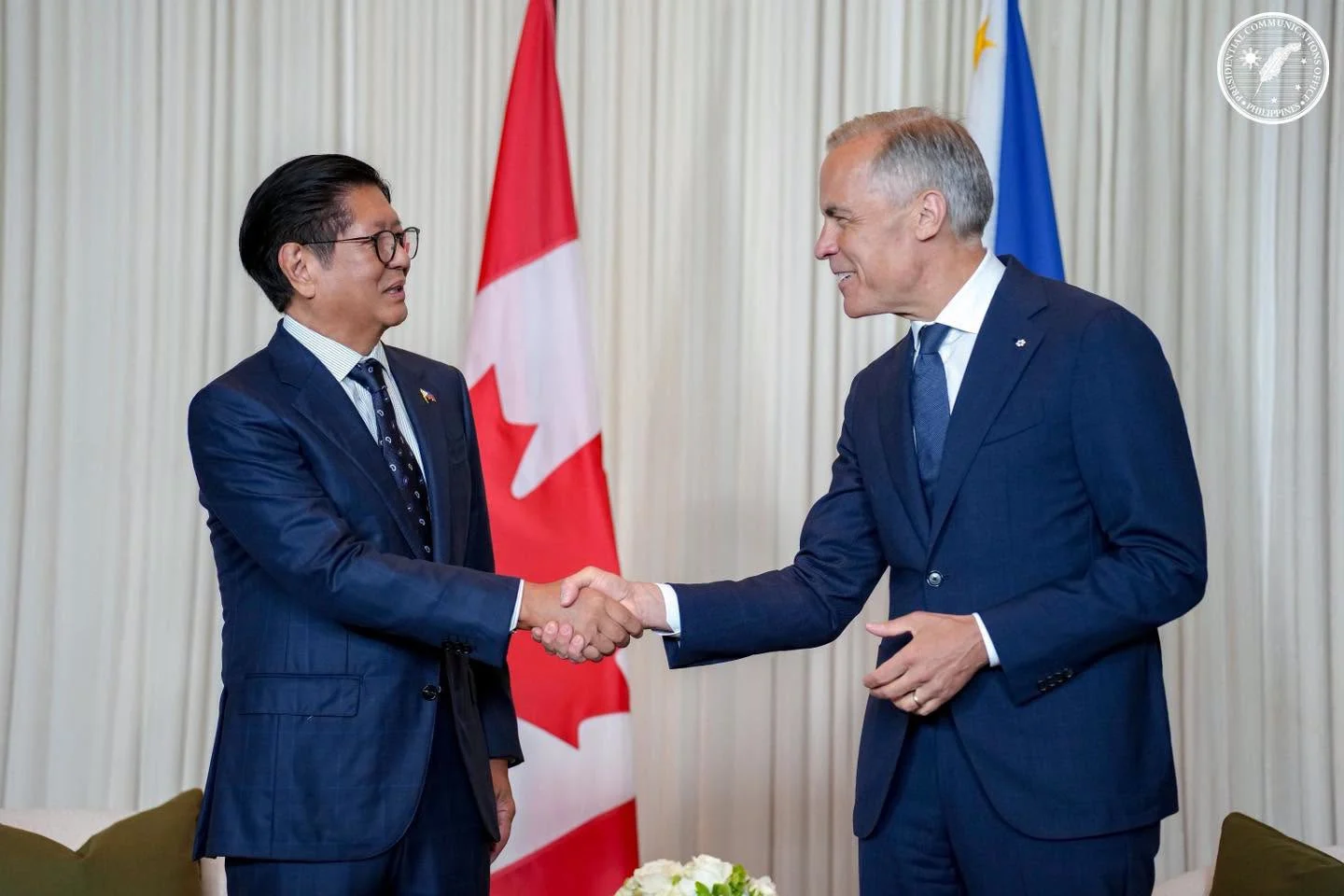
President Ferdinand Marcos Jr. and Canadian Prime Minister Mark Carney announced the move on Thursday, July 2, following bilateral talks in Vancouver. The two leaders said the decision was in response to growing geopolitical and economic challenges in the Indo-Pacific.
“We have tasked our foreign ministers to draw up a plan of action to pursue our shared commitment to work together in adapting to shifting global realities, addressing shared challenges, and building capacities for a future-ready partnership,” Marcos said during a joint press statement.
The two leaders said the new framework builds on recent milestones, including the signing of the Philippines-Canada Status of Visiting Forces Agreement, the Mutual Logistics Support Arrangement, the launch of free trade negotiations, and expanded defense and development cooperation.
Under the Strategic Partnership, Manila and Ottawa committed to conclude a Canada-Philippines Free Trade Agreement, strengthen cooperation in energy, agriculture, mining, infrastructure, digital technologies, space and defense industries, and support more resilient supply chains.
Canada also announced an initial C$2 million (roughly ₱86.85 million) contribution to the Luzon Economic Corridor Partnership, and both countries launched new cooperation on energy, natural resources and geoscience.
On regional security, Marcos and Carney reaffirmed support for a free and open Indo-Pacific anchored on international law and reiterated that the 2016 South China Sea arbitral award is final and legally binding.
The two leaders also pledged to expand defense cooperation through joint military training and exercises, while Canada committed to continue supporting the modernization of the Armed Forces of the Philippines and provide access to its Dark Vessel Detection program to enhance Philippine maritime domain awareness.
Marcos thanked Canada for its continued support of the rules-based international order in the South China Sea and requested continued access to the Dark Vessel Detection program over the next five years.
Marcos and Carney also witnessed the signing of four agreements covering tourism, culture, energy and natural resources, and labor and migration cooperation, further expanding collaboration under the new Strategic Partnership.
Canada is the sixth country with which the Philippines has established a Strategic Partnership. Others are Japan, Vietnam, Australia, South Korea, and India.