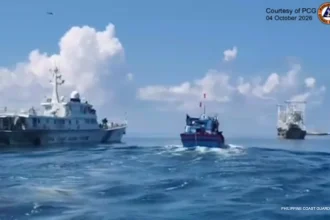


Metro Manila, Philippines – What began as confrontations at sea would eventually lead to one of the most significant legal victories in modern maritime history.
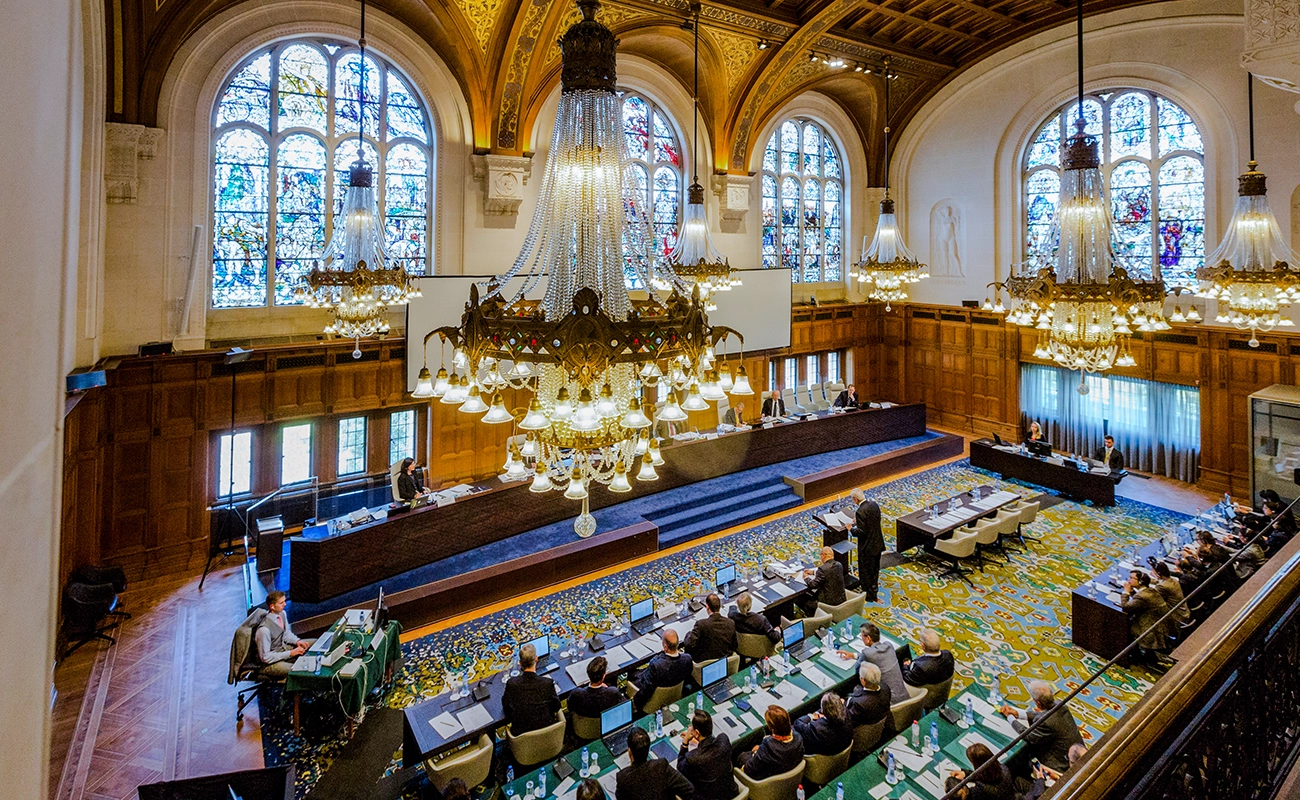
On July 12, 2016, the Philippines won its landmark arbitration case before an arbitral tribunal constituted under the United Nations Convention on the Law of the Sea (UNCLOS) in The Hague.
The ruling invalidated China’s sweeping Nine-Dash Line claim and affirmed the Philippines’ sovereign rights within its 200-nautical-mile Exclusive Economic Zone.
Legal experts and military leaders recently interviewed for the docu-series The Unsinkable Spirit’s “Hearts, Minds, and the High Seas” believe the 2012 Scarborough Shoal standoff was no accident.
Senior Associate Justice Antonio Carpio pointed to a pattern in China’s actions, drawing parallels between Scarborough Shoal and China’s 1974 seizure of the Paracel Islands from South Vietnam.
“In the case of Scarborough Shoal, it was also a setup,” Carpio said.
Retired Admiral Alexander Pama shared the same assessment. He found the timing suspicious: after Philippine personnel boarded Chinese fishing vessels inside Scarborough Shoal’s lagoon, Chinese maritime enforcement vessels arrived in the area in less than eight hours. Based on distance and travel-speed calculations, Pama believed Chinese forces had already been positioned nearby in anticipation of the incident.
“My theory was that the Chinese also did that. They will not do anything unless they have planned for it,” Pama said.
Faced with a military superpower, the Philippines made a decision that changed the course of the dispute.
“How do we fight China?” Carpio recalled asking.
The answer was unprecedented.
“Instead of sending our Marines to Scarborough Shoal to retake Scarborough Shoal, we sent our lawyers to The Hague to invalidate the Nine-Dash Line — and we won a great victory,” Carpio said. The tribunal’s decision became a defining moment not only for the Philippines but for international law itself.
“If the Nine-Dash Line is valid, the entire UNCLOS will collapse,” Carpio said.
The ruling also elevated the Philippines’ standing on the world stage.
“We are now on higher legal as well as moral ground,” Pama noted.
Retired General Juancho Sabban highlighted the broader diplomatic success that followed.
“Getting the majority support of the whole world is already a victory for us,” he said. “A small country with the support of a lot of nations cannot easily be conquered.”
Beyond sovereignty, the ruling carries enormous economic implications.
Economist Dr. Cielito Habito underscored the importance of protecting marine resources.
“Fish is the number one source of protein for Filipinos,” he said.
The health of fisheries in the West Philippine Sea directly affects food security, livelihoods, and the well-being of millions of Filipinos.
The arbitral victory also strengthens the country’s claim over resources critical to future development. According to Dr. Chester Cabalza, the West Philippine Sea is central to the country’s emerging Blue Economy.
“If you imagine that potential, 70% of our economy would rely on the blue ocean,” he said.
The region contains vital fisheries, energy reserves, marine biodiversity, undersea infrastructure, and future renewable energy opportunities.
Former AFP Chief Andres Centino emphasized what is at stake.
“It is where our power and energy are being sourced,” he said. “Our oceans are the source of the food that we eat on our tables. If we don’t secure it, we won’t be able to develop it either.”
For many Filipinos, however, the victory remains deeply personal.
Despite years of harassment, fishermen continue to assert their rights in waters recognized by
international law as part of the Philippines’ Exclusive Economic Zone.
As civic leader and Atin Ito convenor Rafaela David put it: “The West Philippine Sea symbolizes our future. Scarborough is ours.”
Ten years after the Philippines stood before the world armed not with warships but with the rule of law, the arbitral ruling remains a powerful reminder that even a small nation can challenge a superpower through diplomacy, legal action, and national resolve.
The Unsinkable Spirit is a docu-series about the country’s challenges and triumphs in asserting its rights in the West Philippine Sea. Episode 2, “Hearts, Minds, and the High Seas,” continues the story after the Scarborough Shoal standoff, showing how the Philippines transformed a maritime crisis into a global legal victory. The episode explores how the fight at The Hague became more than a battle over territory — it became a struggle for food security, energy independence, environmental protection, and the future of the Filipino people.
Audiences can watch “The Unsinkable Spirit” online via Facebook and YouTube every Sunday at 6:00 PM—Episode 1 on June 28, Episode 2 on July 5, and Episode 3 on July 12. The series will also air on free television via RPTV Channel 9 every Monday at 10:00 PM, beginning June 29 and continuing on July 6 and July 13, with replay broadcasts on succeeding days. It will likewise be shown on ALIW Channel 23 beginning June 29 and July 6, with additional replay schedules throughout July. With its powerful storytelling and timely message, “The Unsinkable Spirit” invites every Filipino to reflect on the nation’s past, understand the challenges of the present, and take part in shaping a stronger future for generations to come.