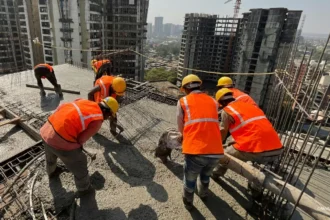


Metro Manila, Philippines – The Department of Education (DepEd) has cleared 14 provinces to begin procurement and construction of new classrooms, clearing the way for on-the-ground rollout of classroom construction.
DepEd Secretary Sonny Angara announced that supplemental agreements with local government units (LGUs) have been finalized under DepEd’s Classroom Building Program, allowing participating provinces to move forward with bidding and construction.
The provinces covered include Ifugao, Sorsogon, Mountain Province, Abra, Quezon, Samar, Ilocos Sur, Pangasinan, Oriental Mindoro, Biliran, Dinagat Islands, Misamis Oriental, Southern Leyte, and Siquijor.
“Bahagi ito ng direktiba ni Pangulong Bongbong Marcos na pabilisin ang pagpapatayo ng mga pasilidad sa edukasyon sa pamamagitan ng pagbibigay ng kapangyarihan sa mga lokal na pamahalaan bilang katuwang sa pagpapatupad nito,” Angara said.
“Sa pamamagitan ng paggamit ng lokal na kapasidad at kaalaman, mas mabilis nating magagawa ang mga silid-aralan na kailangang-kailangan ng ating mga guro at mag-aaral.”
Under this arrangement, LGUs will take on a larger role as implementing partners to oversee procurement, construction, and fund management, while ensuring compliance with government procurement laws. DepEd, meanwhile, will retain oversight functions, including design validation and inspection of completed classrooms to ensure adherence to national standards.
The agreements also mandate stricter financial accountability. LGUs are required to maintain separate trust accounts for project funds and submit regular financial reports to strengthen transparency and monitoring.
To support implementation, DepEd has conducted technical workshops for local partners, covering engineering designs, procurement timelines, and bidding procedures. Several LGUs have already begun identifying and validating school sites in preparation for construction.
“Ito ang bahagi ng P65 bilyong pondo para sa pagtatayo ng mga silid-aralan na ating isinulong na maisama sa 2026 national budget. This is a necessary step toward finally addressing the country’s classroom backlog,” EDCOM 2 Co-Chairperson and Senate Basic Education Committee Chair Senator Bam Aquino said.
During the 2026 national budget hearings, Sen. Bam Aquino has proposed expanding partnerships beyond national agencies by allowing DepEd to engage LGUs, civil society organizations (CSOs), and non-government organizations (NGOs) with proven track records in school infrastructure delivery. This is reflected in Senate Bill No. 1482, or the Classroom-Building Acceleration Program (CAP) Act, which is already approved on third and final reading, and seeks to authorize qualified LGUs and NGOs to construct classrooms within their jurisdictions, subject to DepEd standards and guidelines.
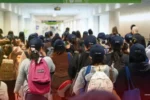
The move comes as the education sector continues to grapple with severe classroom shortages and overcrowding. According to the EDCOM 2’s Final Report, the country faces a backlog of over 165,000 classrooms, which could rise to as much as 219,000 by 2028 if unaddressed.
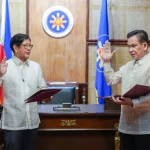
To accelerate efforts, President Ferdinand R. Marcos Jr. also recently approved the release of Php 17.27 billion for the construction of 4,960 classrooms nationwide, including funding for furniture and other essential facilities.
In the coming weeks, the department expects to finalize additional supplemental agreements with more provinces and cities as it scales up the program nationwide.
Separately, bidding has opened for the first three contract packages under the Public-Private Partnership for School Infrastructure Project Phase III, which will cover the construction and maintenance of more than 3,500 classrooms across 329 sites, including Metro Manila and key areas in Luzon.
This is a news release from EDCOM2