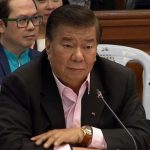


Metro Manila, Philippines – Former Senate President Franklin Drilon said President Ferdinand Marcos Jr. can certify the proposed anti-political dynasty bill as urgent, dismissing claims that such certification would be improper.
“Kalokohan [Nonsense],” he said in an interview on The Newsmaker on Friday, Dec. 12.
Drilon challenged the administration to prove its commitment to reform by formally endorsing the measure as an administration bill.
“The proof of the pudding is in the eating,” Drilon said, noting that many of the president’s relatives occupy elective posts. He cited politically entrenched families such as the Marcoses and the Dys.
“Tingnan po natin kung ano ang kalalabasan nitong anti-dynasty bill…” [Translation: Let’s see what will come out of this anti-dynasty bill…]
Drilon said a genuine anti-dynasty law has been long demanded by the public amid widespread concentration of power in provinces. While some argue the Palace cannot certify the bill as urgent because it does not involve a national emergency, he rejected this view.
“Pwede gawin po yan. Kalokohan yung sinasabi nila na walang urgency.” [Translation: They can do that. It’s nonsense to say there’s no urgency.]
The statement comes after House Speaker Faustino “Bojie” Dy III and presidential son Rep. Sandro Marcos — both members of political clans — filed House Bill 6771 or the “Anti-Political Dynasty Act.” The bill defines political dynasties as concentrations of elective power within relatives up to the fourth civil degree, including first cousins and in-laws.
Critics argue the initial draft contains loopholes because it bars relatives only from running within the same district or LGU, but does not prevent simultaneous candidacies for higher positions. Drilon said he would reserve judgment until the final version emerges.
Asked what a “real” anti-dynasty law should look like, Drilon said it must bar family members within a broad range of relations from holding or seeking office simultaneously.
The changing political climate and growing public demand for accountability pushed President Marcos to throw his support behind an anti-political dynasty bill, Malacañang said Wednesday, reversing a campaign remark in 2022.
In a press briefing, Communications Undersecretary Claire Castro defended Marcos’ decision against certifying the bill as urgent despite identifying it as a priority legislation with the proposed Independent People’s Commission, Party-List System Reform Act, and the CADENA transparency measure.
“Unang-una po ito ay Congress at Executive na priority bills… malinaw ang mensahe ng pangulo,” Castro said.
[Translation: First of all, these are priority bills of both Congress and the Executive… the president’s message is clear.]
She noted that the Constitution limits urgent certification to measures related to public emergency or calamity.
“Hindi naman ibig pong sabihin na sinertify as urgent ang isang bill ay hindi na po sinsero ang pangulo,” she added.
[Translation: It doesn’t mean that if a bill is not certified as urgent, the president was insincere.]
A number of lawmakers, including party-list Reps. Leila de Lima and Chel Diokno, earlier questioned the lack of presidential certification of the bills if Marcos was committed to their passage.
Shift in position
Castro said the president’s change of stance on political dynasties reflects the current political realities. Marcos said in the 2022 campaign that political dynasties are not inherently harmful if voters chose their leaders freely.
“Naiiba na po iyong political landscape. Nakikita natin na mayroong mga umabuso na politiko… Public demands a fairer system,” Castro said.
[Translation: The political landscape has changed. We see politicians who have abused power… The public demands a fairer system.]
She said Marcos now wants to strengthen voter power over entrenched political families.
“Ang nais ng pangulo na ang taumbayan ay makapamili ng liderato nang naaayon sa merito at hindi sa apelyido,” she said.
[Translation: The president wants people to choose leaders based on merit, not on family names.]
Asked what specifically changed the president’s mind, Castro reiterated: “Nagbabago ang political landscape, maraming umaabuso.”
[Translation: The political landscape is changing; many are abusing (the system).]