

Jerusalem (CNN) — International support for Israel’s military campaign in Gaza showed deepening erosion as the war stretched into its fifth week on Tuesday, with the leader of Belgium joining a list of nations issuing pointed criticism of the mounting civilian death toll.
“This is not proportionate or acceptable,” Belgian Prime Minister Alexander de Croo told reporters at a news conference in Brussels, referencing an Israeli airstrike targeting a Hamas leader last month that left scores of civilians dead at a refugee camp, according to Palestinian hospital authorities.
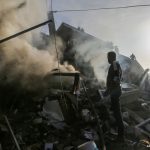
The remarks echoed concern from other leaders, the UN and aid organizations over the humanitarian impact of relentless Israeli aerial bombardment, a blockade on fuel entering Gaza, and severe restrictions on the entry of food and water. Ireland’s Taoiseach, or prime minister, Leo Varadkar, said last week that Israel’s actions in Gaza are “resembling something approaching revenge” and countries across Latin America, the Middle East, and Africa have recalled their ambassadors to Israel.
Key allies including the United States and United Kingdom remain firmly in Israel’s corner, but Israeli Prime Minister Benjamin Netanyahu on Tuesday appeared to acknowledge the broader pressure, saying his country’s diplomats were “operating around the clock to allow the IDF [Israel Defense Forces] the leeway for the remaining military operation.”
More than 10,000 people have been killed in Gaza since Israel’s siege began, according to figures from the Palestinian health authority in Ramallah, drawn from sources in the Hamas-controlled enclave. Israel says the goal of the air and ground offensive in Gaza is the complete elimination of Hamas, after the militant group killed 1,400 people in Israel and kidnapped about 240 others in bloody terror attacks on October 7.
Amid outcry over the damage inflicted on residential areas, medical facilities and UN-run schools being used as shelters in Gaza, the IDF said Tuesday that it is prepared to strike at Hamas “wherever necessary,” including civilian infrastructure if Israel believes Hamas is using it.
Israel has accused Hamas of using civilians and civilian structures including hospitals as shields; Hamas and several hospitals in the enclave have denied that.
Over the past month Israel has attacked more than 14,000 “terrorist targets,” an IDF spokesman said Tuesday, claiming to have eliminated Hamas fighters and destroyed Hamas tunnel shafts and weapons.
Israel’s ground offensive in the isolated territory has appeared to escalate in recent days, with Netanyahu announcing Tuesday that Gaza City has been “encircled” and that the IDF is “advancing the pressure applied on Hamas every hour and every day.”
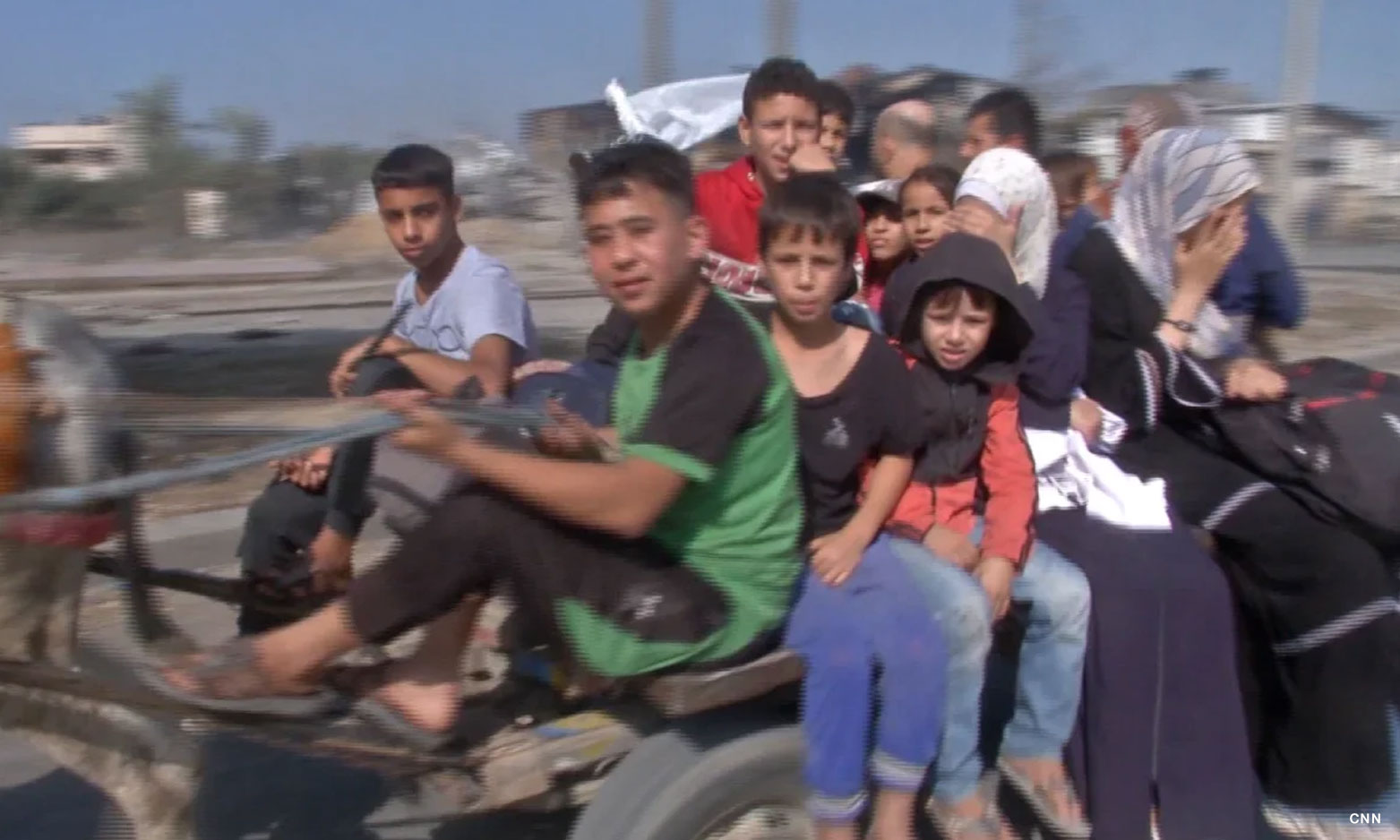
Civilians in northern Gaza are fleeing south, following Israeli evacuation orders, though aid organizations describe mass evacuation as unfeasible.
Since Saturday, Israel has opened up a humanitarian corridor for four hours each day, allowing Gazans in the north to leave for the south. On Tuesday, CNN observed scores of Palestinians walking along the passage from the north, including many children, women, and elderly. Video from the scene showed some raising white flags and holding up their identification cards.
But there are no fully protected zones in Gaza. Eyewitnesses described multiple explosions in central and southern Gaza on Tuesday morning that they said were caused by Israeli airstrikes.
In the central Gazan city of Deir al-Balah, at least two blasts were reported in a camp for displaced people south of the Wadi Gaza waterway. Videos from the city show wounded children being carried away in the arms of adults.
CNN has reached out to the IDF for comment on the blasts but has not received a response.
The IDF says it is carrying out hundreds of airstrikes every day on what it calls Hamas targets in Gaza, insisting it will strike “whenever necessary.”
UN relief agency UNRWA has described conditions in its shelters as overcrowded and “inhumane,” warning in a statement on Monday of a looming public health crisis due to damaged water and sanitation infrastructure.
As CNN previously reported, US President Joe Biden and his top advisers have warned Israel that it will become increasingly difficult for it to pursue its military goals in Gaza as anger intensifies about the scale of humanitarian suffering there.
Biden told reporters Tuesday that he had asked the Israeli leader, when the two spoke on the phone on Monday, to consider a humanitarian pause.
Yet Netanyahu insists he will not permit a ceasefire until Hamas releases the hundreds of hostages it still holds in Gaza. Shorter pauses in the fighting – what the prime minister described as “tactical little pauses” in an interview with ABC news on Monday – may be permitted for the passage of humanitarian goods or hostages, he said.
The US has also warned Israel over its plans for Gaza after the war ends, following Netanyahu’s comments to ABC that Israel should have “overall security responsibility” in the Palestinian enclave for an “indefinite period.”
“The president still believes that a reoccupation of Gaza by Israeli forces is not good. It’s not good for Israel; not good for the Israeli people,” National Security Council spokesman John Kirby told CNN.
A senior Netanyahu adviser sought to bridge the gap in an interview with CNN’s Christiane Amanpour on Tuesday, saying that Israel is “not talking about any sort of ongoing occupation of the Gaza strip.”
“We have to distinguish between a security presence and political control,” Mark Regev said. “When this is over and we have defeated Hamas, it is crucial that there won’t be a resurgent terrorist element, a resurgent Hamas. There is no point doing this and just going back to square one.”
CNN’s Abeer Salman, Eyad Kourdi, Niamh Kennedy and Andrew Carey contributed reporting to this story.