

Metro Manila (CNN Philippines, October 6) – An official of the Department of Agriculture (DA) said the now lifted price cap on rice was “effective,” despite the controversy surrounding the move which was made without the guidance of the country’s economic team.
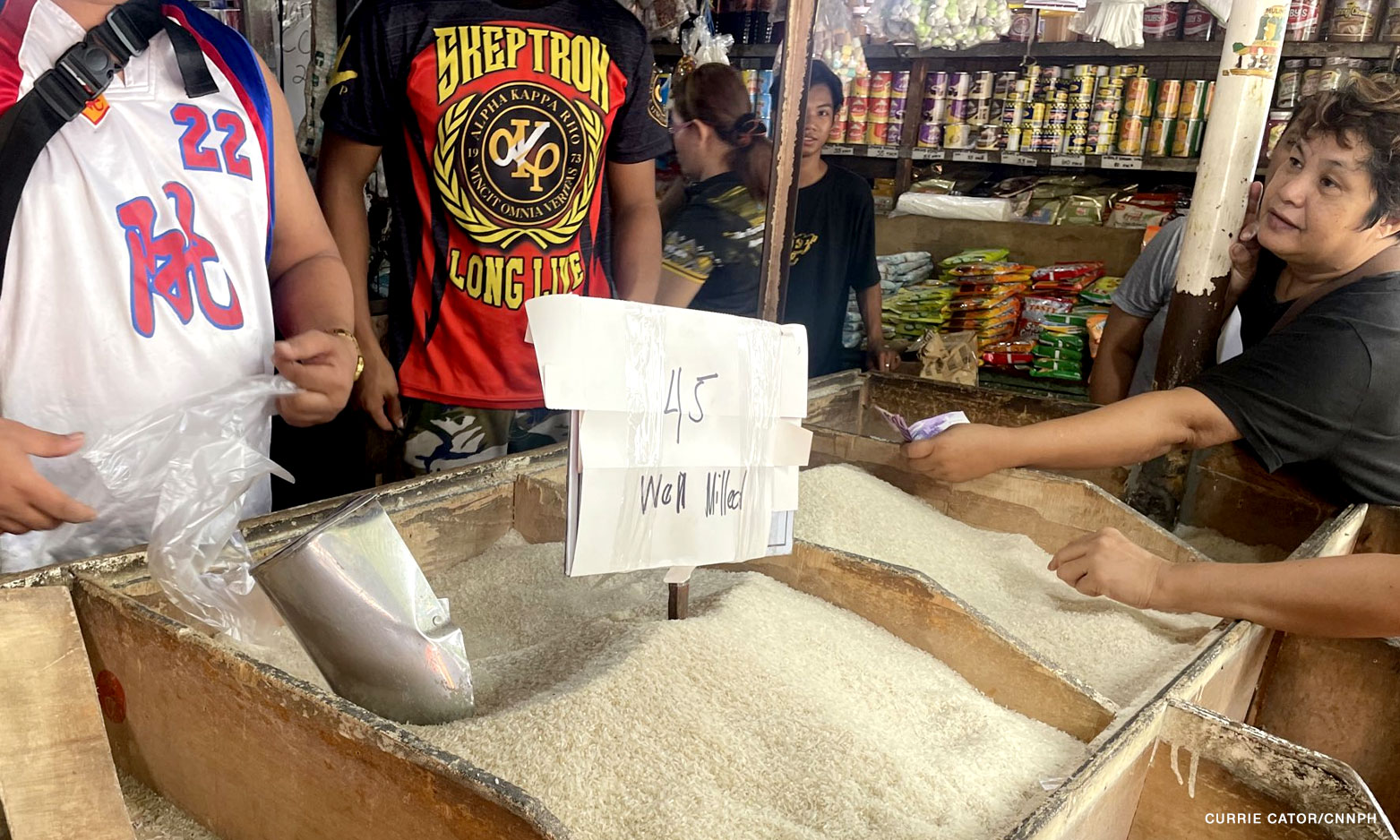
The cap, which was implemented last month, mandated that regular milled rice could be sold for up to ₱41 per kilo and well-milled rice at ₱45 per kilo.
President Ferdiand Marcos Jr. lifted it on Oct. 4, but assured that assistance to farmers and the poor will continue.
READ: Marcos lifts price ceiling on rice
Prior to its implementation, farmers’ groups called to defer the move as many retailers were set to incur heavy losses because they purchased rice stocks at higher prices.
Agriculture and trade officials, however, have recommended the lifting of the price ceiling as supply was improving and the commodity’s global prices were stabilizing.
“Masasabi natin na nag-work dahil yung huling datos namin ay pati yung premium at special rice ay bumaba hanggang ₱5 doon sa latest monitoring namin. On the general average ngayon ng presyo ng regular at well-milled ay halos kapantay,” Agriculture Assistant Secretary Arnel de Mesa told CNN Philippines’ The Exchange on Friday night.
[Translation: We can say that it worked because our most recent data showed that premium and special rice went down by ₱5 in our latest monitoring. On the general average, the price of regular and well-milled rice are nearly equal.]
The official said 88% of rice retailers complied with the cap.
Citing the DA’s weekly price monitor for Sept. 25 to Sept. 29, de Mesa said regular milled rice went for ₱41.04 per kilo, while well-milled rice was sold at ₱45.3 per kilo.
Meanwhile, based on the DA’s Oct. 5 price monitor, local regular milled rice was sold at ₱40 to ₱44 per kilo, while well-milled rice was sold at ₱44 to ₱48 per kilo.
“Masasabi natin na very effective itong nangyari dahil sa EO [Executive Order] 39,” de Mesa said.
[Translation: We can say that what happened was very effective due to EO 39.]
He added that rice supply is expected to stabilize by October at the peak of the harvest season, with 77 days of national inventory, higher than the comfortable level of 60 days.
By the end of harvest season in November, national inventory was projected at 94 days, according to de Mesa, adding these computations did not account for imported rice.
“Nitong September, may pumasok – maliit lang – 271,000 metric tonnes dahil nga harvest season,\” he explained. \”We’re trying to control ang pagpasok ng import.\”