

Metro Manila (CNN Philippines, September 21) — Revisions to the writs for the protection of life, liberty and privacy that may be remedies to red tagging and other human rights complaints could be released by early next year, a representative of the judiciary said on Thursday.
During the House of Representatives plenary session on the judiciary’s proposed budget for 2024, ACT Teachers Partylist Rep. France Castro asked when the revisions to strengthen provisions of the writs of amparo, habeas corpus, and habeas data would be finalized.
The timeline is early next year,” said Committee of Appropriations Vice Chair Rep. Peter Gonzaga, who spoke on behalf of the judiciary.Gonzaga said the revisions to the writs are currently under the review of Associate Justice Marvic Leonen.Members of the judiciary present at the plenary session include Supreme Court Associate Justices Rodil Zalameda, Samuel Gaerlan, Mario Lopez, and Midas Marquez.A petition for a writ of amparo is availabe to “any person whose right to life, liberty and security is violated or threatened with violation by an unlawful act or omission of a public official or employee, or of a private individual or entity.A petition for a writ of habeas corpus is resorted to in cases of illegal detention, directing the one who detains to produce the body of the prisoner at a designated time and place.A plea for habeas data, on the other hand, is a complaint filed before a court by a person whose right to privacy is violated or threatened by the gathering, collecting or storing of private data or information.The discussion on the revisions came after Castro asked members of the judiciary if the writ of habeas corpus and the plea for habeas data could be used in cases where the petitioners are missing or abducted, such as the case for environmental activists Jhed Tamano and Jhonila Castro before they were found.
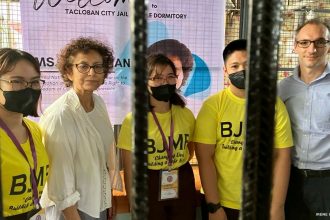
Tamano and Castro were allegedly abducted by four armed men on Sept. 2 in Orion, Bataan. Both are community organizers working with fishermen opposing reclamation projects in Manila Bay.
Criminalizing Red Tagging
Castro also asked the judiciary for any progress on addressing cases of public officials’ red tagging, or labeling of individuals and groups as communists rebels or their supporters.
“Baka puwedeng magkaroon ng initiative ang judiciary to define itong red tagging dahil marami na po napahamak dito,” Castro said.
[Translation: Maybe the judiciary can have an initiative to define this red tagging because many people have been harmed by it.]
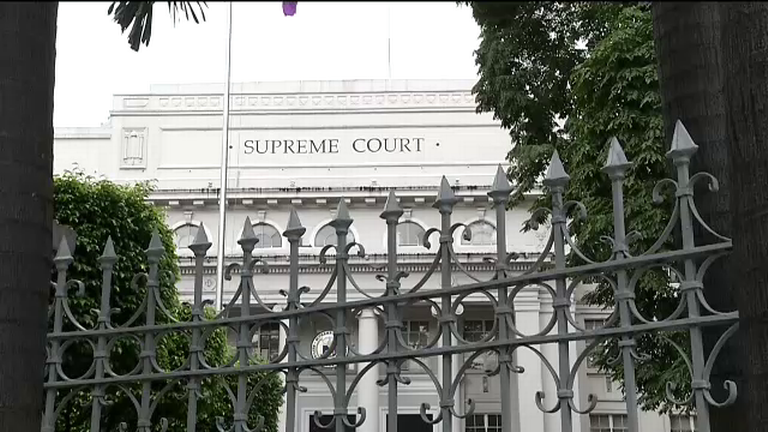
To this Gonzaga answered: “Kahit anong gawing definition ng Korte Suprema sa red tagging, still the Supreme Court cannot penalize.”
[Translation: No matter how the Supreme Court defines red tagging, still the Supreme Court cannot penalize.]He added that cases under “red tagging” are aligned to remedies listed under the writ of amparo, citing the clause “whose right to life, liberty and security is violated or threatened.
Gonzaga added that the legislation should first make a law criminalizing acts of red tagging before it could be penalized.