Metro Manila (CNN Philippines, August 19) — The town of Kalayaan in Palawan has declared Chinese Ambassador Huang Xilian “persona non grata” after China defended its use of water cannons on Philippine boats earlier this month – an act Manila described as unlawful.
The Sangguniang Bayan or municipal council approved the resolution, a copy of which was obtained by CNN Philippines on Saturday.
Its author, Councilor Maurice Phillip Alexis Albayda, also said Vice Mayor Beltzasar Alindogan signed the measure.
\”Ang gobyerno ng Tsina ay patuloy ang pang aalipusta hindi lamang sa ating mga mangingisda at mga hukbong pang dagat sa Kanlurang Karagatan ng Pilipinas ngunit pati na din sa ating pagiging soberanong bansa,\” read the resolution.
[Translation: The Chinese government continues to insult not only our fishermen and naval forces in the West Philippine Sea, but also our national sovereignty.]
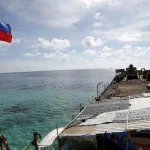
It said the China Coast Guard put the lives of Filipinos at risk on Aug. 5, when it blocked and fired water cannons at Philippine vessels conducting a resupply mission for troops stationed at the BRP Sierra Madre in Ayungin Shoal.
Beijing, however, justified its actions, claiming that Filipino vessels \”broke into the waters\” adjacent to Ayungin in the Spratly Islands \” without the approval of the Chinese government.\”
\”Ang naratibo ng bansang kinakatawan ni Huang Xilian ay isang lantarang paglalapastangan sa mandato at pagkalehitimo ng Bayan ng Kalayaan, Palawan,\” the resolution said.
[Translation: The narrative of the country represented by Huang Xilian shows outright disrespect for the mandate and legitimacy of the town of Kalayaan, Palawan.]
CNN Philippines has requested comment from the Chinese Embassy.
The Department of the Interior and Local Government previously noted that the \”persona non grata\” declaration – a Latin phrase which means \”an unwelcome person\” – is merely a declaration of the sentiment of a lawmaking body, which means it is non-binding.