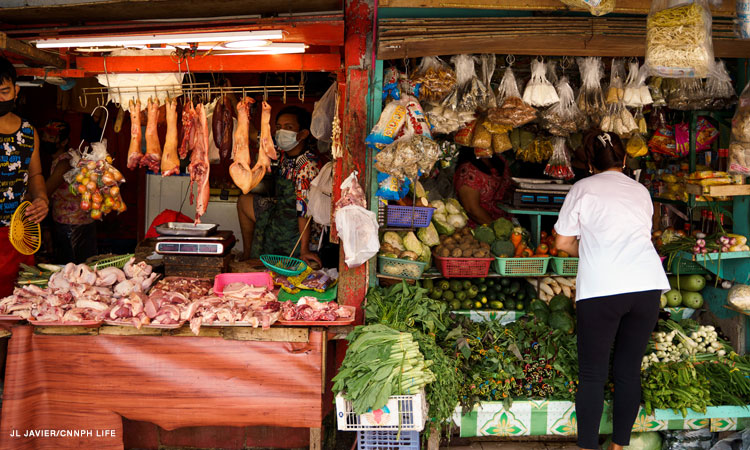


Metro Manila (CNN Philippines, August 8) — The Philippine economy may have expanded at a slower pace in the second quarter as Filipinos have begun returning to normal spending, and with the elevated inflation still biting into consumption.
A CNN Philippines poll of 11 economists showed forecasts ranging from 5.6% to 7.5%, averaging 6.34%–slightly sluggish than the 6.4% recorded a quarter prior and the 7.4% posted in the same period last year.
The survey also yielded a median gross domestic product (GDP) growth estimate of 6.2%.
‘ ‘3’:

While consumer spending continued to be the main driver of growth, the momentum witnessed in the previous quarters may have started fading, some economists said.“Momentum appears to be slowing,” ING Bank senior economist Nicholas Mapa, who projected a 5.6% growth for the period, said in an email interview.“Revenge spending could be waning as households shift to more “normal” spending and saving behavior,” he added.Although he expects the local economy to grow by 7.5% in the quarter, Oxford Economics Assistant Economist Makoto Tsuchiya said this was “largely due to base effects as sequential momentum slowed.”“While the IT cycle likely hit the bottom, we don’t expect a swift rebound in electronics exports, and general external demand likely remained modest. On the domestic front, waning reopening boost led to a sequential slowdown in household spending,” Tsuchiya said.
This was also supported by Pantheon Macroeconomics chief emerging Asia economist Miguel Chanco, who sees an expansion of 6.9%. He said the “slight improvement” can be attributed to a “large extent by very favorable base effects.”
“But we aren’t exactly going to break out the champagne over this rebound… It’s worth remembering that private consumption—the mainstay of the Philippine economy—suffered quite a sizeable quarter-over-quarter contraction in Q2 last year, setting a very low bar for the upcoming year-over-year growth rate. We’re expecting a broad-based slowdown in sequential quarter-over-quarter growth in Q2, to 0.6%, from 1.1% in Q1,” he explained.But for Sarah Tan, an economist from Moody’s Analytics, domestic demand “remains resilient.”“That is supported by easing inflation and a tight labour market,” she said.For Mitzie Irene Conchada, an economist from De La Salle University, the economy showed “robust growth” at 6.2%, albeit weaker than the first three months.“We still see a strong consumer demand, mainly based on ‘revenge spending’ but this is likely to moderate in the coming months,” Conchada said.She also noted that government spending was likely boosted in the second quarter by infrastructure developments in the works.
Construction, food service activities, transport and storage are also seen to pump up the economy in the period, according to Ser Percival Peña-Reyes, director of the Ateneo Center for Economic Research and Development.
Can the government hit its target?
The majority of economists said keeping inflation under control would play a big part as the Philippine economy gets its major backing from private consumption.The Marcos administration expects the economy to grow by 6% to 7% this year.Despite the inflation rate cooling in the past months, the central bank’s previous tightening to tame rising prices still impacts the market.“Borrowing costs are elevated and this has begun to slow bank lending,” Mapa said.Tsuchiya also said that the “lagged impact of monetary policy tightening will weigh on domestic demand.”The Bangko Sentral ng Pilipinas (BSP) had been increasing interest rates to curb price pressures. Doing so would force consumers and businesses to spend less and save more, subsequently leading to lower demand.“The easing in inflation will play a big part in helping the economy reach its growth target. That is because inflation data informs the BSP’s monetary policy decision,” Tan said.“A steady decline in inflation rate back to its target range will give the BSP confidence to pause its monetary tightening cycle until the end of the year. This will give borrowers time to catch their breath, which is significant as private consumption makes up the largest GDP component by value,” she added.