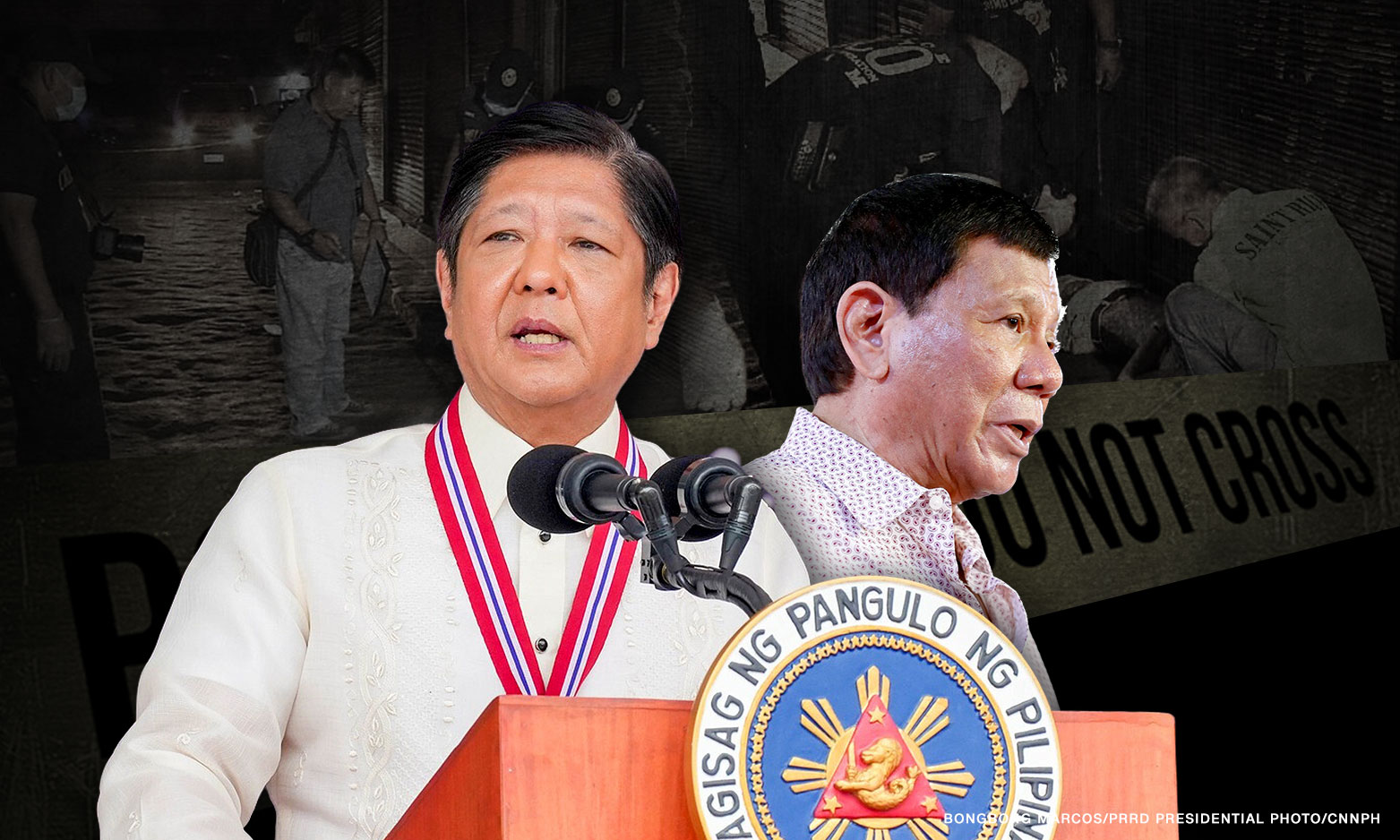


Metro Manila (CNN Philippines, July 21) — President Ferdinand Marcos Jr. is keeping his earlier stance to end dealings with the International Criminal Court (ICC) after the tribunal rejected the government’s plea to block the resumption of the investigation into the Duterte administration’s controversial drug war.
READ: ICC to continue probe into Duterte’s drug war; court chamber junks PH appeal
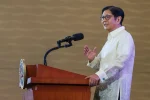
Kagaya ng sinasabi namin mula sa simula (Just like what we’ve been saying since the beginning), we will not cooperate with them in any way… or form,” Marcos said in an ambush interview in Zamboanga Sibugay on Friday.So, we continue to defend the sovereignty of the Philippines and continue to question the jurisdiction of the ICC in their investigations here in the Philippines,” he added.Marcos stressed that the alleged crimes must be investigated by Philippine authorities, not in The Hague.No more appeals are pending before the ICC, the president noted.
“We have no appeals pending. We have no more actions being taken. So, I suppose that puts an end to our dealings with the ICC,” he said.
RELATED: PH gov’t ends engagement with ICC following rejected plea vs. drug war probe
The ICC Appeals Chamber rejected in March the country’s latest appeal asking the tribunal to overturn its decision to resume the drug war probe.
Justice Secretary Jesus Crispin Remulla mirrored Marcos’ aversion to the ICC.
\”May katapusan ang lahat, lalong-lalo na yung ganitong relasyon na hindi naman nakakabuti sa atin. Kung hindi nila igagalang yung ating sovereignty, kung di nila igagalang ang ating kalayaan, ang ating pagiging isang bansa, marahil mas mabuti na lang na huwag na tayong sumapi sa isang samahan na nais pakialam ang pagpatatakbo ng sarili nating gobyerno,\” he told media on Friday.
[Translation: Everything comes to an end, especially relationships that don’t improve the country. If they do not respect our sovereignty, our freedom, our status as a country, it’s better to stay away from a union that wants to interfere in how we run our government.]
However, Remulla added that if the ICC were to attempt opening communication with the Philippines, it would first have to clarify its agenda.
\”Kung mag-uusap lang, nakikipagusap naman tayo sa lahat ng bansa wala namang masama. Ang EU [European Union], kinakausap natin lahat ng miyembro nila. Ang ICJ [International Court of Justice], kinakausap natin. Ang Permanent Court of Arbitration [PCA], kinakausap natin,\” he said.
[Translation: If they want to talk, we talk to all other countries, there’s nothing wrong with it. We speak to member countries of the EU, the ICJ, the Permanent Court of Arbitration.]
Criticisms, demands
For Kristina Conti, ICC Assistant to Counsel and National Union of Peoples’ Lawyers-National Capital Region Secretary General, Marcos’ disengagement from the tribunal signifies two things: \”that the Marcos government is afraid of the ICC uncovering systematic, programmatic killings,\” and that \”it is merely posturing for political convenience in the international arena.\”
The lawyer explained that a complete disengagement with the ICC was disadvantageous to the Philippines – legally, economically, and socially.
\”Ignoring the processes of an international tribunal joined in by 123 states shows that we are not willing to comply with international obligations. We take special note that all of the EU member states are signatories to the Rome Statute, and strong supporters and members of the ICC,\” she noted. The statute outlines the ICC’s structure and jurisdiction.
\”Among other factors, Marcos’ decision doesn’t inspire investor confidence and international support in the Philippines in the long run – things that his father had to contend before his ouster 50 years ago,\” Conti added.
Conti, speaking for the NUPL and as assisting counsel for drug war victims’ advocacy group RiseUp, demanded that Marcos investigate \”Oplan Tokhang\” and the role of former President Rodrigo Duterte.
\”Otherwise, victims of the ‘war on drugs’ can only say that the Philippine government’s intention in non-cooperation is to shield perpetrators of crimes against humanity and other atrocities, she said.