
Metro Manila (CNN Philippines, July 8) – Pope Francis, who is known for advocating dialogue and inclusivity, has invited non-bishops and women to be delegates in the upcoming Synod set on Oct. 4 to 29. Here’s what you need to know about the historic assembly.
Women delegates for the first time
Pope Francis has welcomed women to participate in the 16th Ordinary General Assembly of the Synod of Bishops as voting delegates, a first in 58 years.
The general assembly is the last and universal phase of the Synod.
“Only in this Synod did the Pope invite women or non-bishops (priests, religious, lay) and gave them voting rights,” Estela Padilla, the first and only Filipina delegate, told CNN Philippines.
Padilla is among the 10 non-bishop members coming from Asia. She works with Bukal ng Tipan-CICM, a pastoral center facilitating synodal approaches and skills with different dioceses in the Philippines and abroad.
She is also a consultant to the Commission on Basic Ecclesial Communities (BECs) of the Catholic Bishops’ Conference of the Philippines (CBCP).
Other Filipino delegates are CBCP president Bishop Pablo Virgilio David of Caloocan, CBCP vice president Bishop Mylo Hubert Vergara of Pasig and Manila Archbishop Jose Cardinal Advincula.
READ: Vatican assembly to welcome first Filipina appointee
Padilla, who is also a theologian, said that although there are other participants, like experts, in previous Synods, only bishops have the right to vote.
Last April 26, the Vatican announced that laypeople will be able to vote on the assembly’s final recommendation to the Pope on governing the Church.
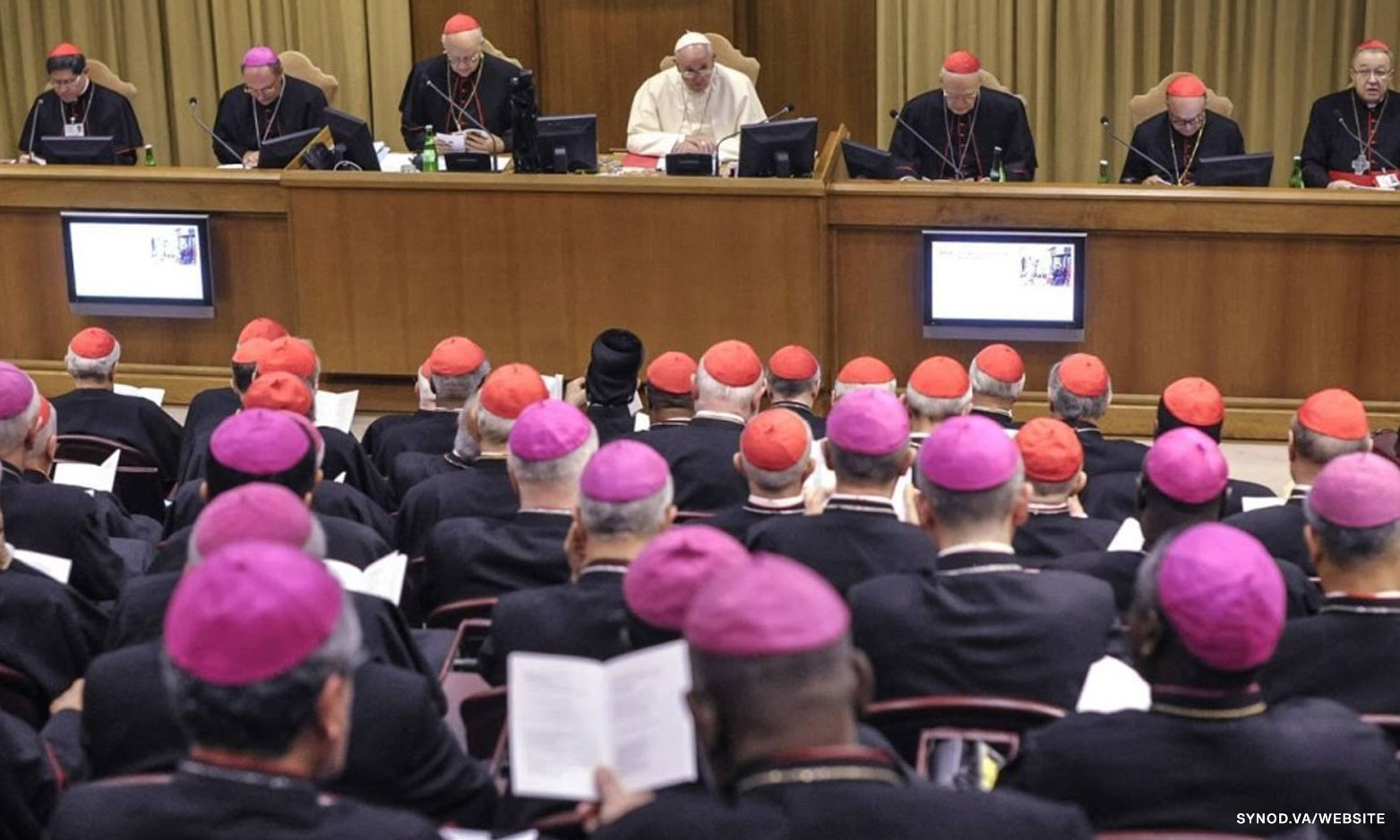
Of the 438 participants, more than 300 are voting delegates, while the rest are facilitators, experts and spiritual assistants.
Pope Francis earlier said 50% of the non-bishop participants should be women and should also include \”several young people.\”
“The past years, all over the Catholic world, clamor for more leadership responsibilities for women in all levels of church life and administration has been articulated,” Padilla said.
The Synod is a meeting attended by the bishops to discuss contemporary issues surrounding society and the Church.
A total of 70 non-bishops were invited to this year’s assembly.
It’s a Dialogue
In order to have a more “relaxed period of discernment,” the Pope decided to extend the synodal process until 2024, splitting the general assembly into two sessions.
Pope Francis launched the Synod on Synodality in 2021. During the multi-stage synodal process, Catholics in different countries were urged to hold consultations within their respective parishes and provide their feedback on the Church.
The results were turned into diocesan reports. After these reports were discussed in a national Synodal assembly, a national report was created.
The national reports from 121 Catholic countries were then sent to the Synod secretariat in Rome, which summarized and produced a Document for the Continental Synod.
This document was studied in the Bishops’ Continental Conferences, producing a continental report. The seven continental reports became the basis for the creation of Instrumentum laboris (working instrument,) which will then serve as the basis for the discussion and discernment in the October Synod.
“Ang [the] basic sa [of the] Synod would be really listening to one another. Listening to the diversity, thinking together, [and] praying together,” Padilla said.
According to the Philippine Catholic Church Synodal Report, at least 50 sectors were consulted nationwide.
These sectors include overseas Filipino workers, women, indigenous peoples, single parents, people who suffer from substance abuse, the LGBTQ+ community, laborers, politicians, youth and people with disabilities.
Padilla said some Filipinos pointed out that they felt left behind, unattended and unaccepted by the Church.
“Local issues – meaning parishes or dioceses – coming from their local reports are being responded to by acting on them directly,” Padilla said. “Other dioceses [address the issues] through integrating these issues in their regular pastoral planning and responding to them communally.”
Meanwhile, the document from the Asian Continental Assembly on Synodality called for the “renewal of governance structures that will allow the meaningful participation of women in all aspects of the Church.”
It also urged Catholics to “play an integral role in the work of peacebuilding and conflict resolution.”
“Ang call for Asia ay maging peacebuilders, to be bridges of peace sa nangyayari na violence, terrorism,” Padilla said.
[Translation: The call for Asia is to be peacebuilders, to be bridges of peace amid the violence, terrorism.]
The document also pointed out that, among other issues, Catholics in Asia view the Church as an institution that lacks credibility, transparency and accountability in governance.
According to Instrumentum laboris, the main questions for the October Synod revolve around “A Communion that Radiates,” “Co-responsibility in Mission” and “Participation, Governance and Authority.”
Padilla said the October Synod will be a “good time” to bring about sensitive matters such as women’s ordination, blessings of unions of LGBTQ+ couples and celibacy not being required for the priesthood as Church representatives worldwide gather.
“These [issues] will go through a lot of dialogue and discernment at the Synod in October and even beyond, as there will be canonical implications of issues such as these,” Padilla said.
What comes after the Synod?
After the General Assembly of the Synod of Bishops, a final document will be submitted to the Pope, which will aid him in making decisions for the Church.
Padilla said she hopes to see a Church that “creates more participatory leadership structures and practices.”
“Indeed, all of us are expecting change! We want a Synodal Church – where no one is left behind, especially the poor and marginalized,” Padilla said.