

Metro Manila (CNN Philippines, June 22) — Malacañang has declared June 20 of every year as “National Refugee Day” through Presidential Proclamation No. 265.
The decree was made public on Thursday after it was signed on June 20 on behalf of the president by Executive Secretary Lucas Bersamin.
It highlighted that the Philippines was one of the few countries which agreed to the 1951 Refugee Convention and its 1967 protocol, the 1954 Convention Relating to the Status of Stateless Persons, and the 1961 Convention on the Reduction of Statelessness — something that the United Nations has also recognized.
\”The Philippines has a longstanding humanitarian tradition of opening its arms to those who seek safety, and promoting an environment suitable for people forced to flee their countries of origin, stateless persons, and populations at risk of statelessness,\” the proclamation read.
Throughout Philippine history, there have been several waves of refugees accepted by the country, according to the UN High Commissioner for Refugees:
At the end of World War I, the country accepted a wave of 800 \”White Russians\” fleeing persecution in 1923. In the middle of World War II, a wave of 1,200 jews fled to the Philippines in 1934 and in 1937. President Manuel Quezon pushed to admit up to 30,000 more.
In 1939, Spanish Republicans fleeing the Spanish Civil War were let into the country. Six years later, the Philippines welcomed about 30,000 Chinese Kuomintang members fleeing the Civil War in China’s mainland.
A second wave of about 6,000 White Russians were accepted into the Philippines in 1947 under President Elpidio Quirino. From 1975 to 1992, about 2,700 Vietnamese \”boat people\” fleeing the Vietnam War and the reunification of the North and South parts of the country were accepted into the country.
In 1979, a wave of several thousands of Iranian fled to study and work in the Philippines rather than return to their home country amid a revolution. From 1980 to 1994, around 400,000 refugees fleeing from regime changes in Laos, Cambodia, and Vietnam escaped to the Philippines and were processed for relocation to countries like the United States, Canada, France, and Australia.
The ninth wave came in 2000 when some 600 East Timorese fled Indonesia amid the country’s struggle for independence.
In 2018, former President Rodrigo Duterte expressed his administration’s willingness to accept Rohingya refugees fleeing persecution and genocide in Myanmar.
Meanwhile, the Philippines is currently in talks with the US to house some of its former Afghan personnel fleeing the Taliban while their American visas are being processed.
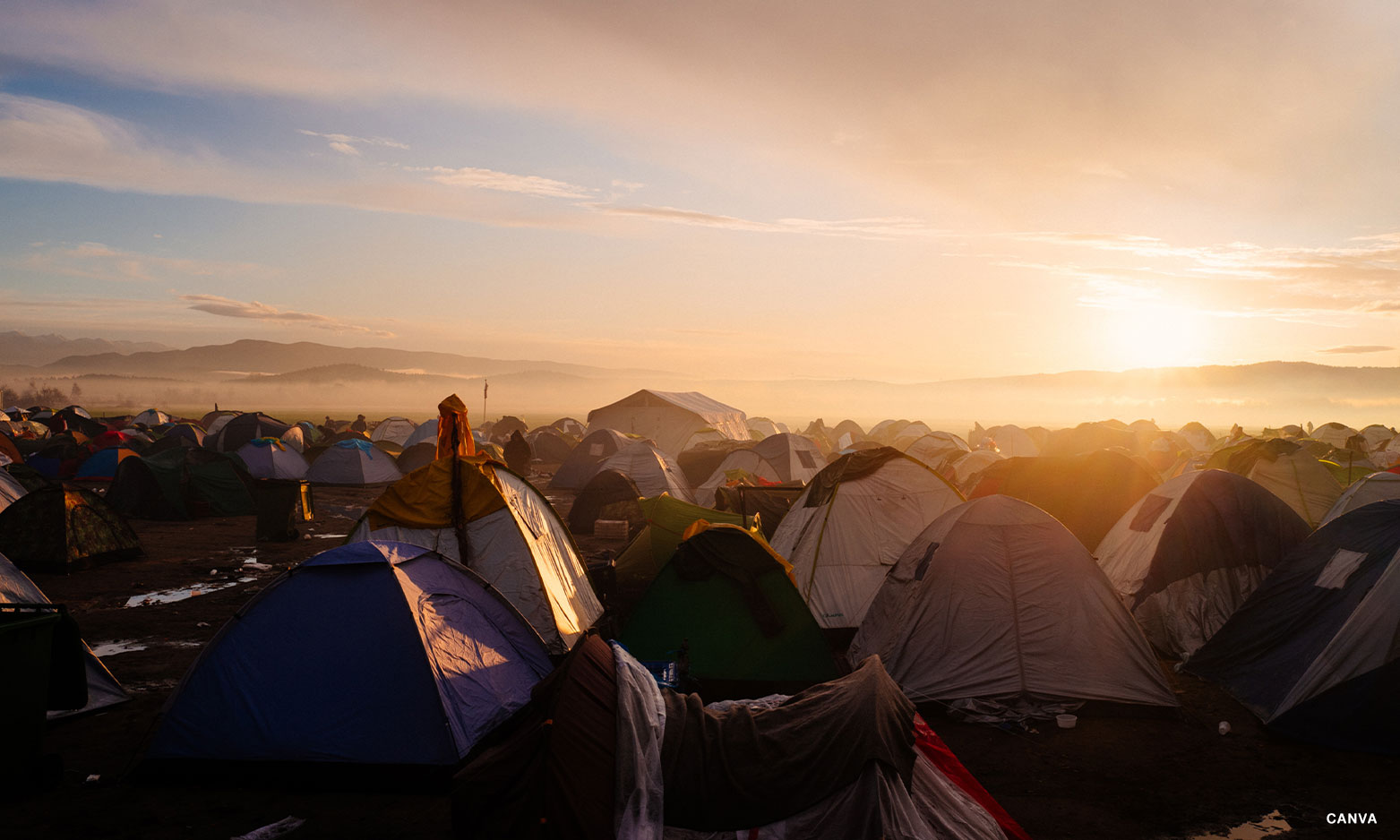
\”With more than 100 million people forced to flee globally, and with an estimated 264,000 persons of concern currently hosted by the Philippines, the government recognizes the necessity for a national observance of the ‘World Refugee Day’ to protect and uphold the rights of refugees, stateless persons, and asylum seekers, and increase awareness and recognition of their welfare, needs, and vulnerabilities,\” it added.