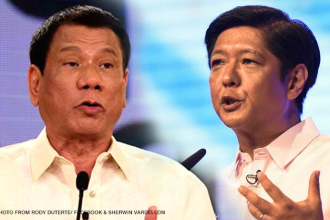


Metro Manila (CNN Philippines, April 24) — President Ferdinand Marcos Jr.’s economic team has kept this year’s growth target to as much as 7% despite increasing global headwinds that forced other institutions to cut or stay cautious about Philippine growth prospects.
At its Monday meeting, the interagency Development Budget Coordination Committee (DBCC) said domestic consumption and brisk tourism should boost the economy to a 6% to 7% range in 2023, despite persistent food, energy and transport inflation.
The World Bank last month lowered its growth forecast for the Philippines to 5.6% from the 5.8% projection it tipped during its October 2022 review on account of a slowing global economy and rising borrowing costs. The International Monetary Fund (IMF) and the Asian Development Bank (ADB), meanwhile, forecast 2023 growth at 6%, at the lower end of the government’s official goal.
“We maintained our growth targets at 6% to 7% for 2023 and 6.5% to 8% for 2024 to 2028 in consideration of the risks posed by geopolitical and trade tensions, possible global economic slowdown, as well as weather disturbances in the country,\” said Budget secretary Amenah Pangandaman.
The DBCC remained bullish about growth even as it expects consumer prices to remain elevated, with its inflation assumption now raised to a 5% to 7% range from just 2.5% to 4.5% band during its December review. The central bank, however, reiterated that inflation should ease closer towards 4% by the fourth quarter of this year.
More taxes and other DBCC revisions
The DBCC, meanwhile, lowered the 2023 price assumption for Dubai crude to $70-$90 per barrel from $80-$100 per barrel previously given a slowdown in global demand. The DBCC expects the peso to end the year at a stronger $53-to-$57-per-dollar range versus the $55-$59 exchange rate it penciled in during a December review on the back of dollar inflows from tourism and remittances.
The economic team raised the projected revenues for this year as the Marcos government pushes before Congress new tax measures for the next two years.
Among these are Package 4 or the Passive Income and Financial Intermediary Taxation Act, the value-added tax (VAT) on digital service providers, as well as the excise taxes on single-use plastics and pre-mixed alcohol beginning next year.
Economic managers also want lawmakers to pass more tax reforms governing the excise tax on sweetened beverages, motor vehicle road user’s tax, and the mining fiscal regime.
Revenues from these tax hikes were factored in the assumptions beginning 2025 until the end of Marcos’ term in 2028. Still, the additional tax measures won’t change the ratio of the budget deficit to gross domestic product for those years.
“This is not a new tax. We are just making it clear that as we tax the regular sales, this is a VAT on digital sales providers. There’s also an excise tax on single-use plastics. And excise tax on pre-mixed alcohol. Those are the four measures,” said Finance secretary Benjamin Diokno.