

(This story was updated on Jan. 20, 2024.)
Metro Manila (CNN Philippines) — The Philippine government is moving forward with its public utility vehicle (PUV) modernization program, which aims to phase out vehicles, especially jeepneys, that are more than 15 years old.
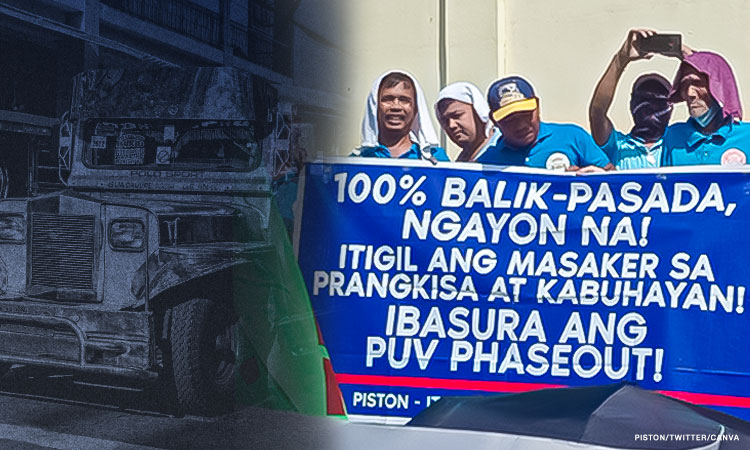
Various protests and transport strikes were held, but authorities stood firm and denied requests to extend the deadlines for franchise consolidation.
Industry consolidation is the first component of the program, which requires at least 15 individual franchise holders to form one cooperative. This would supposedly help operators to buy modern jeepneys through loans from financial institutions. One modern jeepney could cost up to ₱2.8 million.
Some transport groups described the program as anti-poor, as drivers and operators will bear the burden of modernizing their vehicles. They also said this could be a ploy to increase vehicle sales of big automotive companies and foreign businessmen.
After the deadline, a total of 145,721 PUVs or 76% of PUVs nationwide have either consolidated or applied for consolidation.
In Metro Manila, the region with the highest number of PUVs, regulators had issued permits to 42,000 jeepneys. However, only 21,655 units have consolidated.
The transportation department allayed fears of higher fares and a transport crisis due to the PUV modernization program.
In this timeline, CNN Philippines consolidated the modernization program’s developments, concerns of various groups, and other related reports to better understand the situation:
January 4, 2016 – Transport group Pinagkaisang Samahan ng mga Tsuper at Operator Nationwide (Piston) protested at the head office of the then-Department of Transportation and Communications (DOTC). It wanted to make sure that the Land Transportation Franchising and Regulatory Board (LTFRB) and Land Transportation Office (LTO) would accept the applications for registration of old jeepneys. Former LTFRB chairperson Winston Ginez said a mandatory phaseout would begin in 2017.
September 21, 2016 – Jeepney operators and drivers warned that they plan to hold a nationwide transport holiday if Congress passed a bill that would approve the newly named Department of Transportation’s (DOTr) plan to carry out the PUV phaseout program, among other projects. The bill also pushed to give emergency powers to former President Rodrigo Duterte to solve the transport crisis.
February 6, 2017 – The Stop and Go coalition called for a nationwide transport strike, the first of many. It affected thousands of passengers and forced the cities of Manila and Malabon to suspend work and classes. It ended after the LTFRB called for a dialogue. The transport groups were reportedly unsatisfied with its results. Another strike was staged on Feb. 27.
June 19, 2017 – The LTFRB announced that the PUV modernization program would start after a month under its order called Omnibus Franchising Guidelines. Aside from the phaseout, the program would stop giving franchises to single-unit operators. It was also reported that the government-affiliated Land Bank of the Philippines had put up a ₱1-billion credit facility to cover the replacement of some 650 jeepneys, which would cost from around ₱1.4 million to ₱1.6 million per unit. Days later, the Department of Trade and Industry released possible designs for a prototype of the modern jeepney. After a few months, transport officials said that by 2020, all PUVs would be modernized.
October 16-17, 2017 – Jeepney drivers and operators led by Piston staged another nationwide strike. The LTFRB claimed it received reports that it was part of a destabilization plot but the group denied the allegation. The LTFRB warned that it would cancel the franchises of operators who participated in the strike. Traffic enforcers took photos of drivers who joined the protest, it added.
During an event in Camarines Sur, Duterte had some harsh words for members of Piston and other protesters, warning them about serious consequences if they didn’t join the program.
December 11, 2017 – The Senate committee on public service, led by Sen. Grace Poe, conducted a hearing on the PUV modernization program. Poe said the ₱80,000 subsidy would not be enough to assist jeepney drivers as modern jeepneys cost ₱1.6 million each. But according to her own computation, each unit would actually cost ₱2.1 million at a 6% interest rate per annum if the payment period was seven years.
January 2, 2018 – The DOTr said old jeepneys must meet government requirements as determined by a motor vehicle inspection system (MVIS), or a roadworthiness test, before they could resume plying their routes until 2020. The agency also said jeepney units must be replaced with Euro-4 compliant engines.
January 8, 2018 – Transport officials started its Tanggal Bulok, Tanggal Usok campaign, where they issued warnings to smoke-belching vehicles and Temporary Operator’s Permits for vehicles with defective parts and accessories. A month later, they cracked down on jeepneys at the University of the Philippines Diliman and issued citations to 95 drivers. The surprise operation affected students, teachers and employees. The DOTr deployed only 10 solar-powered jeepneys to the campus.
March 19, 2018 – The LTFRB released a memorandum circular telling individual operators to join a cooperative or corporation that would operate more than 15 units, or group themselves to form a single juridical entity, by March 2019. This started the industry consolidation component of the PUV modernization program.
October 8, 2018 – In a Senate hearing, the LTFRB said it will postpone the implementation of the total PUV phaseout originally set for March 2019, following opposition from senators and transport groups. But days later, then-Transportation Secretary Arturo Tugade said they would continue with the modernization program.
September 30, 2019 – LTFRB’s then-chief Martin Delgra said around 18,000 PUV units nationwide, including 5,642 jeepneys, had complied with the modernization program. The government is looking to modernize around 170,000 units. He also said the transition phase of the program would end by June 2020.
Transport groups claimed a successful nationwide strike on the same day. Efren de Luna, Alliance of Concerned Transport Organizations’ president at that time, said nine out of 10 jeepneys in major cities participated in the protest action. Delgra reportedly vowed they would proceed with the program.
March 2020 – The enhanced community quarantine (ECQ) or a total lockdown was implemented in Luzon because of the COVID-19 pandemic, crippling the transport sector.
June 2020 – Transport group Federation of Jeepney Operators and Drivers Association of the Philippines (FEJODAP) expressed concern the government would use the COVID-19 pandemic as an excuse to phase out jeepneys, after modern jeepneys were prioritized over traditional jeepneys and UV Express units to resume operations. In July, provisional authorities of PUV operators were extended until Dec. 31, 2020.
December 18, 2020 – The LTFRB extended the franchise consolidation deadline to March 31, 2021. It made another extension until the lifting of the ECQ. By March 2022, the agency said the provisional authorities for traditional jeepneys will be valid until March 2023, to give them time for franchise validation. In September 2022, the board also extended the deadline for operators plying routes that have yet to consolidate.
February 21, 2023 – The LTFRB extended the deadline for the franchise consolidation until June 30, as LTFRB chief Teofilo Guadiz III revealed only about 60% of traditional jeepneys had been modernized.
February 27, 2023 – Manibela chairperson Mar Valbuena said around 100,000 drivers and operators would stage a week-long, nationwide strike on March 6 to pressure the LTFRB into suspending the mandatory consolidation. He reiterated calls that the program must be humane and reasonable, and for the vehicles to be locally made.
March 1, 2023 – President Ferdinand Marcos Jr. urged drivers to cancel the strike but he stressed the need to implement the modernization program in a “different way.” It was the first time he shared his sentiments on the matter after winning the elections. During his campaign, Marcos said the DOTr should modernize PUVs by inspecting the vehicles’ condition and not simply basing it on age.
In the afternoon, the LTFRB announced the extension of the franchise consolidation deadline, now set until Dec. 31, to give the transport sector “more time to consolidate” — which did not stop Manibela.
March 2, 2023 – In a hearing, senators urged transport regulators to indefinitely postpone the deadline of the franchise consolidation. Sen. Poe noted that the national government itself is not yet ready to implement the PUV Modernization Program.
March 6, 2023 – In anticipation of the possible effects of the transport strike, various cities and schools, mostly in Metro Manila, announced the shift to online and asynchronous classes. Libreng sakay trips were also prepared. However, Malacañang said many of the country’s transport groups were not participating.
For Manibela, it said around 80% of transportation in NCR and other main cities in provinces were paralyzed. But on the night of March 7, the groups announced the end of the strike after their private meeting with Undersecretary Roy Cervantes of the Office of the Executive Secretary.
On March 29, the LTFRB issued a memorandum circular to formalize Marcos’ call to revisit the PUV modernization program. It also extended the deadline for routes without filed application for consolidation.
November 20, 2023 – Following Manibela’s October protest, Piston began a three-day strike that is expected to last until Nov. 22. LTFRB chief Guadiz said the agency is willing to grant jeepney operators a five-year franchise, which was one of the proposals from the strikers. The transport group said it will continue the strike despite the dialogue. Manibela led another strike from Nov. 22 to 24.
December 12, 2023 – President Marcos said there will be no deadline extension for franchise consolidation as 70% of all operators have already complied. He said the government “cannot let the minority cause further delays” in the implementation of the program as it would affect stakeholders. The LTFRB reiterated this in a dialogue between various transport groups amid Piston’s two-day strike that started on Dec. 14.
December 15, 2023 – In a memorandum circular, the LTFRB said the franchises of unconsolidated PUV drivers and operators will be revoked on Jan. 1, 2024.
December 20, 2023 – Piston filed a petition before the Supreme Court asking to declare the order formalizing the modernization plan and circulars for the consolidation as null and void. It sought a temporary restraining order (TRO). On Dec. 28, the high court told the DOTr and LTFRB to submit a comment but it did not issue a TRO.
In its comment dated Jan. 5, 2024, the government asked that the petition be “denied for lack of merit,” arguing that the program and franchise consolidation were “valid and reasonable” and that it complied with the country’s international commitments. Pro-PUV modernization program groups also filed a motion for intervention before the court to block the TRO plea.
December 31, 2023 – This was the last day for drivers and operators to consolidate. On Dec. 29, Piston and Manibela tried to march to Malacañang but were blocked by security forces. Their campout on Recto Avenue was transferred to Liwasang Bonifacio, a freedom park, but had to disperse as well.
2024 – The second component of the PUV Modernization Program will start. On Jan. 18, the LTFRB released the list of routes with or without consolidated entities. Over 300 jeepney routes and more that 70 UV express routes in Metro Manila remain without consolidated entities.