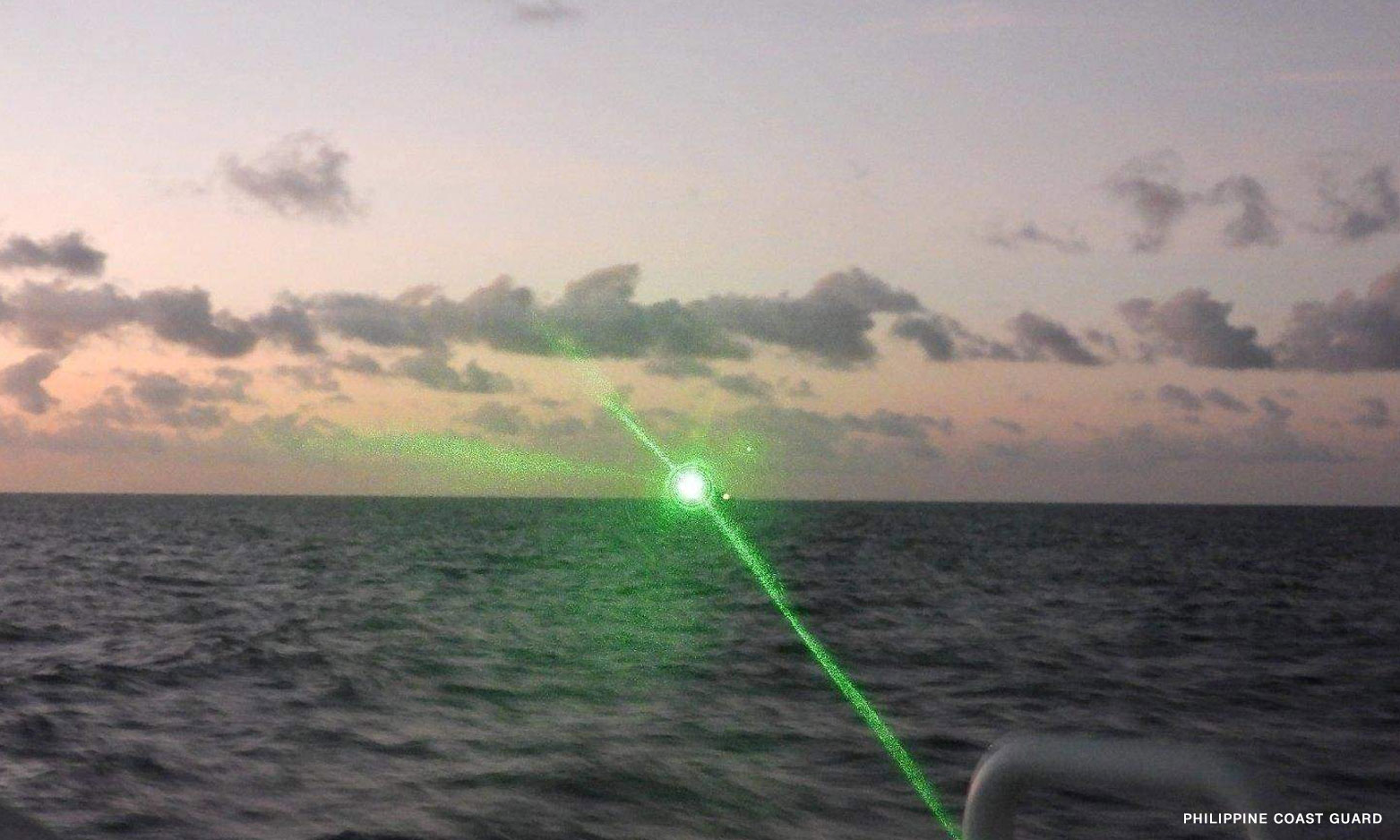


Metro Manila (CNN Philippines, February 16) — A former Philippine envoy on Thursday said the Ayungin Shoal laser beam use by a Chinese vessel on the Philippine coast guard is not an armed attack, but it is a threat to ties between Manila and Beijing.
“Personally, I don’t really think it is an armed attack, but it is a threat and therefore we should seriously consider that as a threat which, of course, increases the tension between China and the Philippines,” former Philippine Ambassador to the United States Jose Cuisia Jr. told CNN Philippines’ The Source.
China on Wednesday denied that its coast guard pointed military-grade lasers at the Philippine Coast Guard (PCG) vessel. The BRP Malapascua was en route to the BRP Sierra Madre, a decommissioned ship serving as military outpost, to resupply the navy crew there.
Chinese Foreign Ministry spokesperson Wang Wenbin said the “China coast guard ship used hand-held laser speed detector and hand-held green light pointer to measure the distance and speed of the Philippine vessel and signal directions to ensure navigation safety.”
This is contrary to what the PCG reported, which also said that the laser beam caused temporary blindness on its crew.
Cuisia said he takes the latest statement from China with a grain of salt “because many times, they won’t tell us the truth.”
What the Philippine government can do is bring the issue up to the US to help it determine the seriousness of the action and discuss what can be Manila’s next step, he noted.
He also said that it is more critical now that the Philippines and US resume joint maritime patrols to prevent similar incidents.
“I think it’s a very good idea and we should even push the suggestion of Japan, Philippines, US, and possibly even Australia working together on joint patrols because that will serve as a deterrent to the Chinese aggression,” Cuisia said, noting that this should happen as soon as possible.
He said the government should also continuously take up in the United Nations General Assembly and every opportunity it will have the 2016 ruling that rejected China’s claims and recognized Manila’s sovereign rights in areas within its 200-nautical mile exclusive economic zone.
This is what Nicaragua did in its case against the US, which favored the former and the latter refused to recognize.