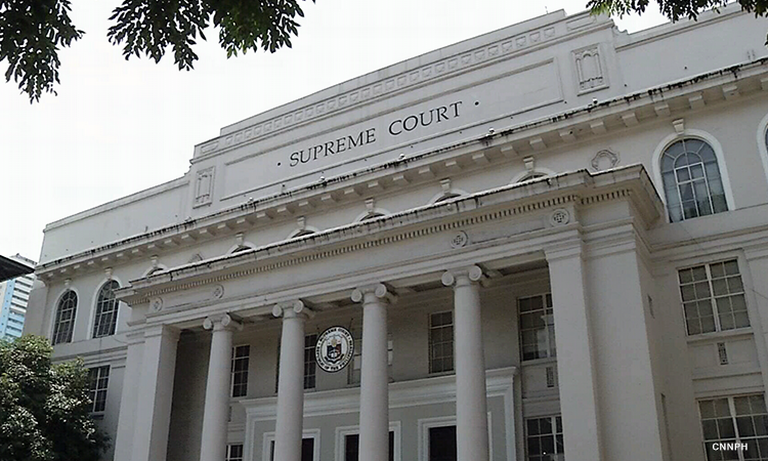


Metro Manila (CNN Philippines, January 27) — The Supreme Court has upheld the constitutionality of the Tax Reform for Acceleration and Inclusion (TRAIN) law, the court’s public information office said in a statement on Friday.
‘
Voting 13-1 during its en banc session on Tuesday, the high court dismissed two petitions that challenged the constitutionality of the TRAIN law or Republic Act 10963.
‘
The consolidated petitions of Alliance of Concerned Teachers and Laban Konsyumer argued that the law was unconstitutionally passed by the House of Representatives despite a purported lack of quorum.
‘
“TRAIN rammed through major procedural requirements set by the Rules of the Lower House, and by no less than the fundamental law of the land — the 1987 Constitution,” petitioners said.
‘
READ: Opposition solons ask SC to strike down new tax reform law
‘
But according to the high court, the supposed absence of a quorum was contradicted by the official Journal of the House of Representatives — both on the day the TRAIN’s bicameral conference report was ratified and the immediately subsequent session on January 15, 2018.
‘
The petitioners also argued that excise taxes imposed on diesel, coal, liquefied petroleum gas, and kerosene, were prohibited regressive taxes.
‘
However, the court said TRAIN law does not prohibit the imposition of regressive taxes, but “merely directs Congress to evolve a progressive system of taxation.”
‘
Lastly, petitioners claimed that excise taxes were discriminatory and against the poor, which violated the Filipino people’s right to due process and equal protection of laws.
‘
But the court asserted that the petitioners’ contention was not sufficiently proven and remained largely hypothetical.
‘
Among 13 Justices that voted against declaring TRAIN law unconstitutional, only Justice Alfredo Benjamin Caguioa registered dissent, while Justice Ricardo Rosario was on wellness leave.
‘
Former President Rodrigo Duterte signed the ratified TRAIN law in 2018.
‘
The new tax reform law will lower personal income taxes, but it will increase taxes on fuel, sweetened beverages, tobacco, and cars.
‘