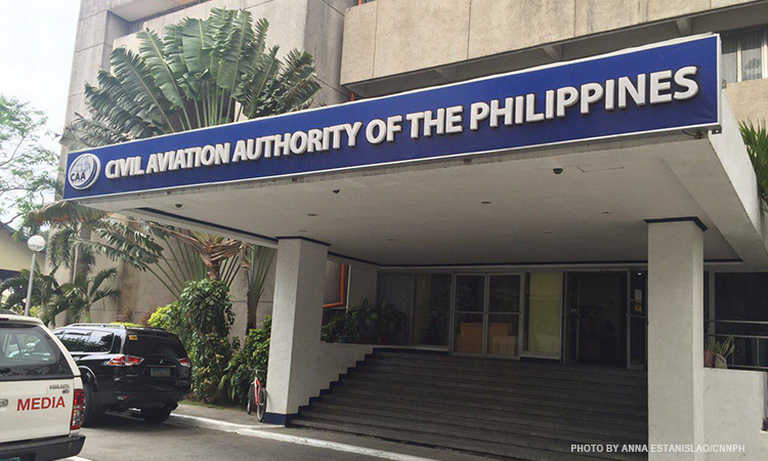

Metro Manila (CNN Philippines, January 18) — The engineer in charge of the Communication, Navigation and Surveillance/Air Traffic Management (CNS/ATM) system, which broke down on New Year’s Day, has taken a leave of absence amid an ongoing investigation on the fiasco, a transport official said Wednesday.
At the continuation of the House Transportation Committee’s hearing on the Jan. 1 air traffic mess, Transportation Undersecretary Roberto Lim told lawmakers that Civil Aviation Authority of the Philippines (CAAP) head engineer Arnold Balucating is already on leave upon the Department of Transportation’s (DOTr) recommendation.
More than 350 flights arriving in and leaving Manila were either delayed or canceled due to a glitch in the CNS/ATM system’s power supply.
At the House hearing, CAAP Director General Manuel Tamayo said the probable causes of the CNS/ATM breakdown were a damaged circuit breaker and power transfer switch.
He, however, said the investigation by an external committee charged to look into the incident is still ongoing.
The external committee is composed of representatives from the DOTr, Department of Information and Communications Technology (DICT), National Bureau of Investigation, National Intelligence Coordinating Agency, and Cybercrime Investigation and Coordinating Center (CICC).
“There is no conclusive findings yet determined by committee. Investigation is ongoing few more weeks before the committee can come up with the report. Insofar as the CAAP is concerned, we have recommended that the head of the CNS/ATM, Mr. Arnold Balucating, will take a leave of absence and he has done so already,” Lim said.
“As of this moment, we have identified the probable causes of this ordeal are the damaged circuit breaker and one of the equipment that was damaged: the power transfer switch. Both items were turned over to the CICC last Jan. 9, 2023 for forensic investigation and examination to ensure impartiality,” Tamayo also said.
To avoid a repeat of the air traffic fiasco, Tamayo said CAAP is working on immediately restoring and enhancing the CNS/ATM system to its original design before the incident. The agency is also set to procure an “ultimate fallback system” for the equipment, which would also require a systems upgrade.
Tamayo said CAAP would construct an independent backup system for the CNS/ATM system and hire a third-party contractor to check how CAAP personnel operate the equipment.
Meanwhile, Civil Aeronautics Board Executive Director Carmelo Arcilla said as many as 70,000 passengers were affected by the air traffic fiasco. He said the number was updated to include travelers who booked online but no longer proceeded to airports since their flights were canceled.
Following the incident, Manila International Airport Authority General Manager Cesar Chiong said a lounge will soon be constructed at the Ninoy Aquino International Airport for overseas Filipino workers. He said talks are ongoing with the Overseas Workers Welfare Administration regarding the project.
Digital forensic exam results of CNS/ATM system out by February
During the same hearing, lawmakers pressed representatives of the DICT and DOTr on the possibility that a cyberattack caused the glitches in the CNS/ATM system.
In response, DICT Cybersecurity Bureau Head Maria Victoria Castro said the agency needs a “minimum [of] six weeks” from the time of the incident to finish the forensic examination. She added that the DICT is already working with CAAP to study the logs and records related to the equipment.
“It really is taking time because the CAAP is not connected to DICT. So we have to conduct a lot of investigation in determining the logs, records they have. We are awaiting a lot of submissions from them to determine the origin — if there is one — for the cyberattack,” Castro said.
Harry Nuske, the country representative of French firm Thales Group, said it was “unlikely” that the glitch was caused by a cyberattack even if the CNS/ATM system’s software had not been updated since 2020 when the warranty for maintenance expired.
Thales provided the software for the system, while Japanese company Sumitomo was in charge of the hardware and other civil works.