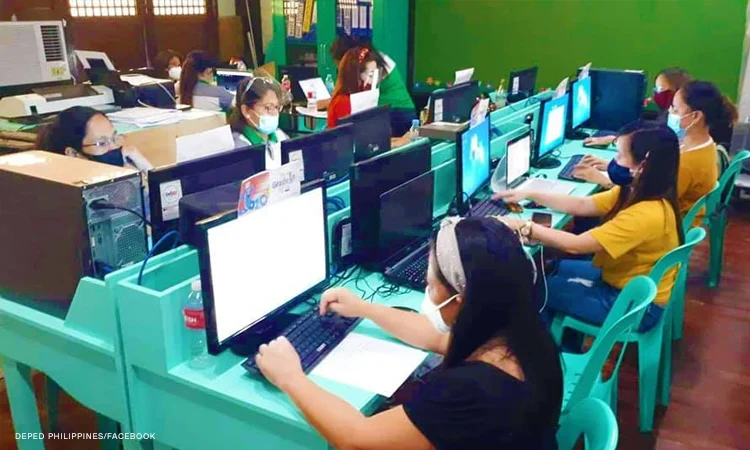


Metro Manila (CNN Philippines, January 12) — Despite the salary adjustments implemented over the past years, over 76% of government workers still got paid less than the living wage, the Alliance of Concerned Teachers (ACT) disclosed on Thursday.
‘
“The situation calls for the urgent passing of a new law that will significantly increase the pay of low-salaried government workers and set the minimum wage in the public sector at liveable levels,” ACT Chairperson Vladimer Quetua said in a statement.
‘
Quetua added that some government employees are paid ₱13,000 to ₱33,59, which is below the living wage level of ₱1,146 a day or ₱34,380 monthly.
‘
Citing the Department of Budget and Management Staffing Summary for 2020, Quetua said 76% or 1,085,772 personnel under the Salary Standardization Law V (SSL V) received unlivable salaries.
‘
Of the 1,085,772 government employees, 92% are public school teachers, Quetua added.
‘
Budget Secretary Amenah Pangandaman announced on Wednesday that the fourth and last tranche of pay increase under the SSL V took effect on Jan. 1, 2023.
‘
“The government recognizes the indispensable role of its dedicated personnel in serving our beloved country. We hope this latest salary increase will cushion the impact of inflation,” Pangandaman said in a statement.
‘
Under the SSL V, civilian personnel under the executive, legislative and judiciary branches and all positions for salaried local government unit personnel will receive the pay increase.
‘
Meanwhile, military and uniformed personnel, contractual employees and those under job orders are excluded.
‘
The first tranche took effect on Jan. 1, 2020.
‘
Quetua also appealed to set the monthly minimum wage of government employees to ₱33,000 so they can afford basic necessities for their families..
\n
“There is a great need to overhaul the salary scheme in government, which has long been inequitable,” Quetua said.
‘