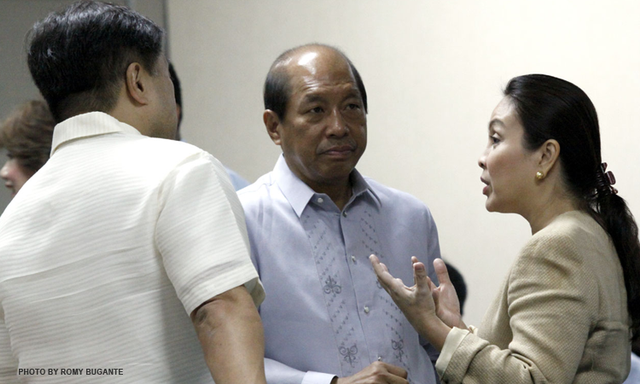


Metro Manila (CNN Philippines) — The Senate Committee on Finance, led by recently-appointed chairperson Sen. Loren Legarda, began on Wednesday (August 12) discussions on the administration’s proposed P3 trillion national budget for 2016.
In her opening speech, Legarda said that the committee was seeking to attune the national budget with the United Nations’ (UN’s) Sustainable Development Goals (SDG), which would succeed the UN’s Millennium Development Goals by the time the former expires by the end of 2015.
“While the SDGs are still being finalized and are set to be adopted in September, we already have to work together, we have to use these goals as framework as we incorporate them into our national development agenda by ensuring that government funds will be used to attain these targets, ” Legarda said.
For his part, Budget Secretary Florencio “Butch” Abad said that the goal was not merely to pass the budget on time but but to diligently scrutinize it.
Bangko Sentral ng Pilipinas Deputy Gov. Diwa Guinigundo said that the country’s domestic growth fundamentals remained intact and that inflation had been on a downward trend . But more structural reforms would be needed to sustain economic gains.
Similarly, National Economic Development Authority chief Arsenio Balisacan described the financial system as healthy, adding that economic planner remained hopeful that they could at least achieve a growth target of 7% to 8% of GDP this year.
Senate President Franklin Drilon questioned the idea of government reducing its budget, citing how underspending had affected the country’s GDP growth.
Abad said he would rather characterize it as “slow spending” as it would get spread out through the years.
He went on to say that, for the longest time, agencies had been used to operating under severe fiscal constraints. And now that the economy was growing, it took a bit of time for the agencies to adjust to higher spending.
Abad said economic planners would rather look at how they could strengthen the ability of agencies to implement projects.
He said the 2016 budget is 95% higher than the 2010 budget.