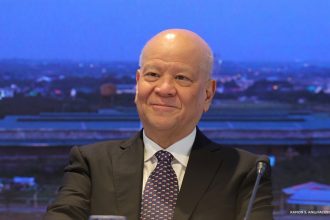
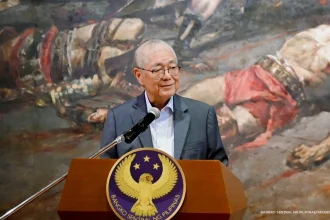
Metro Manila (CNN Philippines) — Despite the recent shocks and volatility in the Chinese stock markets, Department of Finance (DoF) Usec. Gil Beltran believes that the Philippines is resilient enough to face economic risks from abroad.
“Strong macroeconomic fundamentals and a market-based framework differentiate the Philippines. The market recognizes the sound economic stewardship and deep-seated reforms over the past 5 years, shielding the economy from external shocks and bolstering domestic demand buoying the economy,” Beltran said.
In a statement, the DoF said that the country remains a “bright spot,” despite a weighed down investor risk appetite in global markets by prevailing uncertainties and an impending increase in U.S. interest rates.
According to the Bangko Sentral ng Pilipinas’ (BSP’s) Coordinated Portfolio Investment Survey, Philippine investments in Chinese stock markets reached $252.5 million — or 3.9% of total resident exposure — at the end of June last year.
Likewise, the DoF said that China’s portfolio investments in the Philippines are negligible, according to the a report of the International Operations Department on BSP-registered foreign portfolio investments covering May 2008 to May 2015.
Citing a report from Swiss financial services firm UBS, the agency said that the Philippines joins others countries like Taiwan, South Korea, and Vietnam as top electronics exporters to China whose overall export volumes did not suffer from recent economic developments. UBS also said the the Philippines and Vietnam have increased market shares and the dollar-value of their electronics and exports to China.
The DoF also pointed to Capital Economics’ Asia Economic Outllook for Q3 2015, which named the Philippines a “top performer,” and expects the country to “remain one of the region’s fastest growing economies over the forecast period, helped by recent improvements in the business environment, a strong fiscal position, and improving prospects for exports.”
According to government statistics, the country’s general government debt-to-GDP (gross domestic product) ratio stood at 36.4% last year. In contrast, the equivalent figure for Greece stood at 177.1%, according to Eurostat. The Philippines also registered a budget deficit equivalent to 0.6% of GDP during the end of last year.
“As of 2014, total (public and private) external debt is at 17% of GDP, or 0.6x FX reserves, one of the lowest levels in Asia… [O]nly 8% of external debt matures within one year, demonstrating that ample buffers thickly insulate the country from external risks,” the DOF said.
Beltran also hinted at the recent enactment of the Philippine Competition Act and amendments to the Cabotage Law: “Structural reforms have been put in place; we continue to open up the financial sector and let market forces drive the economy in a level playing field with a clear regulatory environment.