

Baguio City (CNN Philippines) — A former socioeconomic planning secretary has pacified concerns that the Association of Southeast Asian Nations Economic Community (AEC) integration by the end of 2015 will be a threat to various industries in the Philippines.
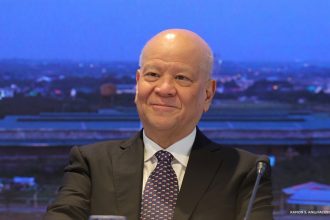
Cielito Habito, chief of party of the U.S. Agency for International Development (USAID)-backed Trade Related Assistance for Development, said that the country is strongly positioned into the AEC and is resilient to the challenges that lie ahead with the full integration.
At the Department of Trade and Industry (DTI)-led AEC Roadshow on Thursday and Friday (May 28 to 29) in Baguio, Habito said that ASEAN integration already been existing in the country in some form— member nations have removed tariffs percent as early as 2010.
Rather than seeing the integration as a weakness, the business community, he said, should be open to complementation than competition.
\Habito calls it “coopetition” — that is, industries in the ASEAN should cooperate with each other as overall benefits outweigh the costs of having an open market.
Instead of fearing the AEC integration, he advised local industries, such as those in the vegetable and coffee industries in the Cordilleras, to take advantage of the growing opportunities for export in other countries.
He stressed that complementation may come in the form of providing spare parts, components and ingredients for various products and that this could be done not only by large-market players but also by small and medium-scale enterprises (SMEs).
“December 31, 2015 is not doomsday but merely compliance,” Habito stressed.
However, he admits that a lot of homework needs to be done in terms of the country competing in the free market with its neighbors.
DTI Assistant Secretary Rafaelita Aldaba, said that the country has already laid out policy road maps for various sectors. The DTI expects regions to do local stakeholder road maps to ensure full competition for the AEC.
Habito believes that the Philippines is “now strongly positioned for AEC.”
“The AEC is more about complementation and less about competition. Overall benefits outweigh the cost.”
At full integration, he added that there would be a need in the country for a single production base, a competitive economic region, an equitable economy, and the region’s integration into the global economy.
If the demand for a product couldn’t be supplied by one local entrepreneur alone, Habito pointed out, he or she could work with local competitors to supply the export requirement.