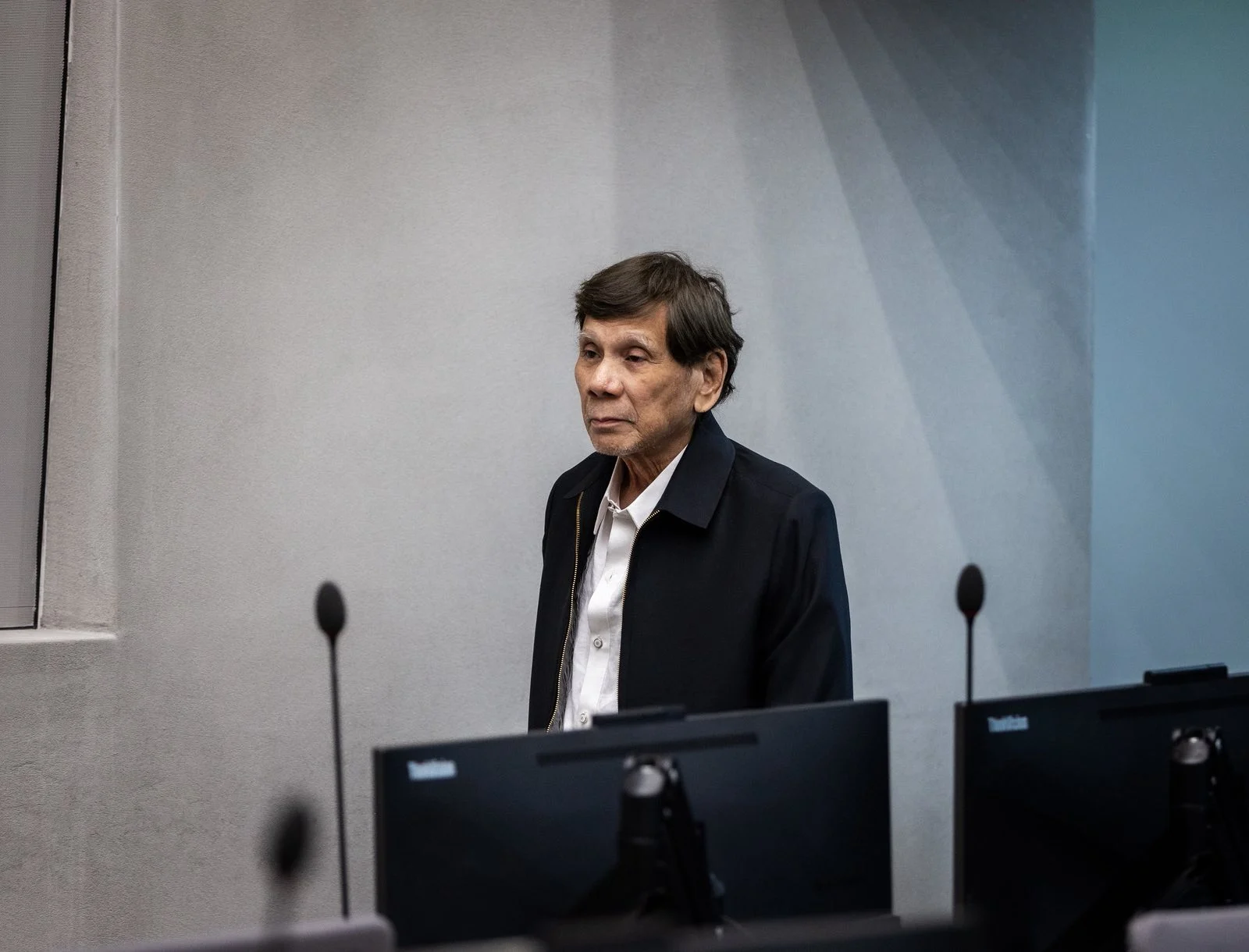


Metro Manila, Philippines – The Supreme Court has dismissed petitions challenging the arrest and seeking the release of former President Rodrigo Duterte, ruling that local courts do not have jurisdiction over the International Criminal Court (ICC) in The Hague, Netherlands.
The decision, announced Tuesday, Nov. 24, was released six days before the former leader will stand trial for crimes against humanity in connection with killings linked to his anti-drug campaign.
Voting 9-4, the full Supreme Court dismissed the consolidated petitions for habeas corpus filed by Duterte’s children, Sebastian, Veronica and Paolo Duterte, on behalf of their father. The petition requires a person holding someone in custody to bring the detainee before a judge and prove the detention is lawful.
Associate Justice Japar Dimaampao penned the decision. Associate Justice Samuel Gaerlan was out on official business.
The court ruled that the petitions were moot because such a writ can only be enforced within Philippine territory.
“Significantly, [Duterte] is not just beyond the Court’s coercive powers, but also stands accused before an international tribunal that has assumed jurisdiction over his person,” the decision read.
The court also ruled that government officials named in the petitions could no longer be ordered to produce or release Duterte because they no longer have custody or control over him.
No ruling on arrest legality
The Supreme Court said the decision neither establishes the lawfulness of Duterte’s arrest and subsequent transfer to The Hague, nor that his constitutional rights were violated.
The court said the decision was limited to determining whether habeas corpus remained an available and enforceable legal remedy under the circumstances.
Any alleged violation of Duterte’s rights, including claims involving compensation or liability, must be pursued through appropriate legal proceedings.
The court also clarified that it was not deciding whether Duterte should seek legal relief before the ICC, noting that related questions could be addressed in a separate pending petition before the Supreme Court.
Justices divided over constitutional questions
In his concurring and dissenting opinion, Senior Associate Justice Marvic Leonen agreed with the dismissal of the habeas corpus petitions and the majority position that there were no legal barriers to pursuing Duterte’s prosecution before the ICC.
However, he disagreed with the decision not to address unresolved constitutional questions surrounding Duterte’s arrest and surrender.
He said these issues could recur and evade judicial review, leaving judges, lawyers and law enforcement authorities without sufficient guidance.
Associate Justice Alfredo Benjamin Caguioa also agreed that the petitions should be dismissed for mootness.
He maintained that a habeas corpus petition was not the proper legal avenue for the Supreme Court to issue guidelines on the enforcement of arrest warrants issued by international tribunals.
Meanwhile, Associate Justice Ramon Paul Hernando dissented from the majority, arguing that the exceptional circumstances and public significance of Duterte’s case warranted judicial review even if the petitions had become moot.
He said Duterte’s surrender to the ICC violated constitutional protections, including due process, freedom of travel and protection against unreasonable searches and seizures.
Arrest and transfer to The Hague
Duterte was arrested on March 11, 2025, upon his arrival in Manila from Hong Kong, in light of an ICC arrest warrant for crimes against humanity.
He was flown out that evening and formally surrendered to the international court on March 12.
The ruling was less than a week before the opening of Duterte’s crimes against humanity trial at the ICC.
The trial will begin at 10 a.m. on Monday, Nov. 30, local time, or 5 p.m. Philippine time, before Trial Chamber III.
Duterte, 81, faces three counts of crimes against humanity involving murder and attempted murder.