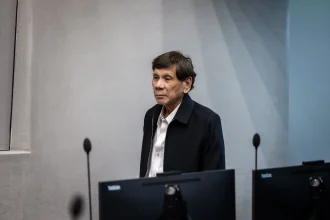


Metro Manila, Philippines – The International Criminal Court has allowed prosecutors to introduce the prior recorded testimony of a witness whose evidence is expected to touch on an alleged policy to “neutralize” suspected criminals through killings, the Davao Death Squad and former President Rodrigo Duterte’s alleged knowledge and intent.
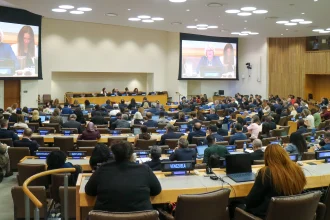
In a decision dated Oct. 2, the Trial Chamber III granted the prosecution’s first request under Rule 68(3) to introduce the prior recorded testimony of a witness identified only as P-1100. The witness’ identity and several details about the testimony remain redacted from the public document.
Prosecutors filed the request on Aug. 31, saying P-1100’s evidence relates to the witness’ previous work and findings, details of which have also been redacted.
The prosecution said P-1100’s testimony is “particularly relevant” to an alleged policy to “‘neutralise’ through violent crimes, including murder, alleged criminals in the Philippines.”
Prosecutors also said the testimony provides evidence concerning the alleged Davao Death Squad’s “modus operandi” and Duterte’s alleged individual criminal responsibility, including his “knowledge and intent.”
The Trial Chamber noted, however, that allowing the recorded testimony does not mean the witness will no longer have to appear before the court.
Under Rule 68(3), prior recorded testimony may be used in place of all or part of a witness’ examination-in-chief, but the witness must still appear before the Chamber, agree to the introduction of the previous testimony and remain available for questioning by the parties and the judges.
The judges said the procedure does not replace oral testimony but “complements it,” with Duterte’s defense retaining the right to question P-1100, including on credibility, the value of the evidence and potentially exculpatory matters.
Defense objects
Duterte’s defense had asked the chamber to reject the prosecution’s request.
Among its objections, the defense said P-1100’s evidence predates the period covered by the charges and attempts to connect alleged killings in 2009 to crimes allegedly committed during the charged period.
The defense said the witness’ “objectively extremely limited factual foundation” could not support the broader propositions for which prosecutors intended to use the testimony.
It added that allowing the evidence would require “lengthy cross-examination” to test the limits of the witness’ knowledge.
The Trial Chamber was “not persuaded” by those arguments.
It found that P-1100’s testimony and reports appeared relevant to the “background and context” of the case, even if some of the evidence does not directly concern the facts being tried.
The judges also noted that P-1100 will not be treated as an expert witness merely because of the witness’ professional standing.
ICC cuts prosecution questioning to one hour.
The use of the recorded testimony is also expected to shorten P-1100’s appearance at trial.
Some supporting materials rejected
Thechamber did not grant the prosecution’s request in full.
Judges rejected four pieces of associated material that prosecutors sought to introduce alongside P-1100’s testimony, finding that the witness had not sufficiently used or explained them for the documents to be considered an integral part of the recorded testimony.
Five other pieces of associated material were allowed, including three reports authored by P-1100.
Duterte’s trial is set for Nov. 30.