


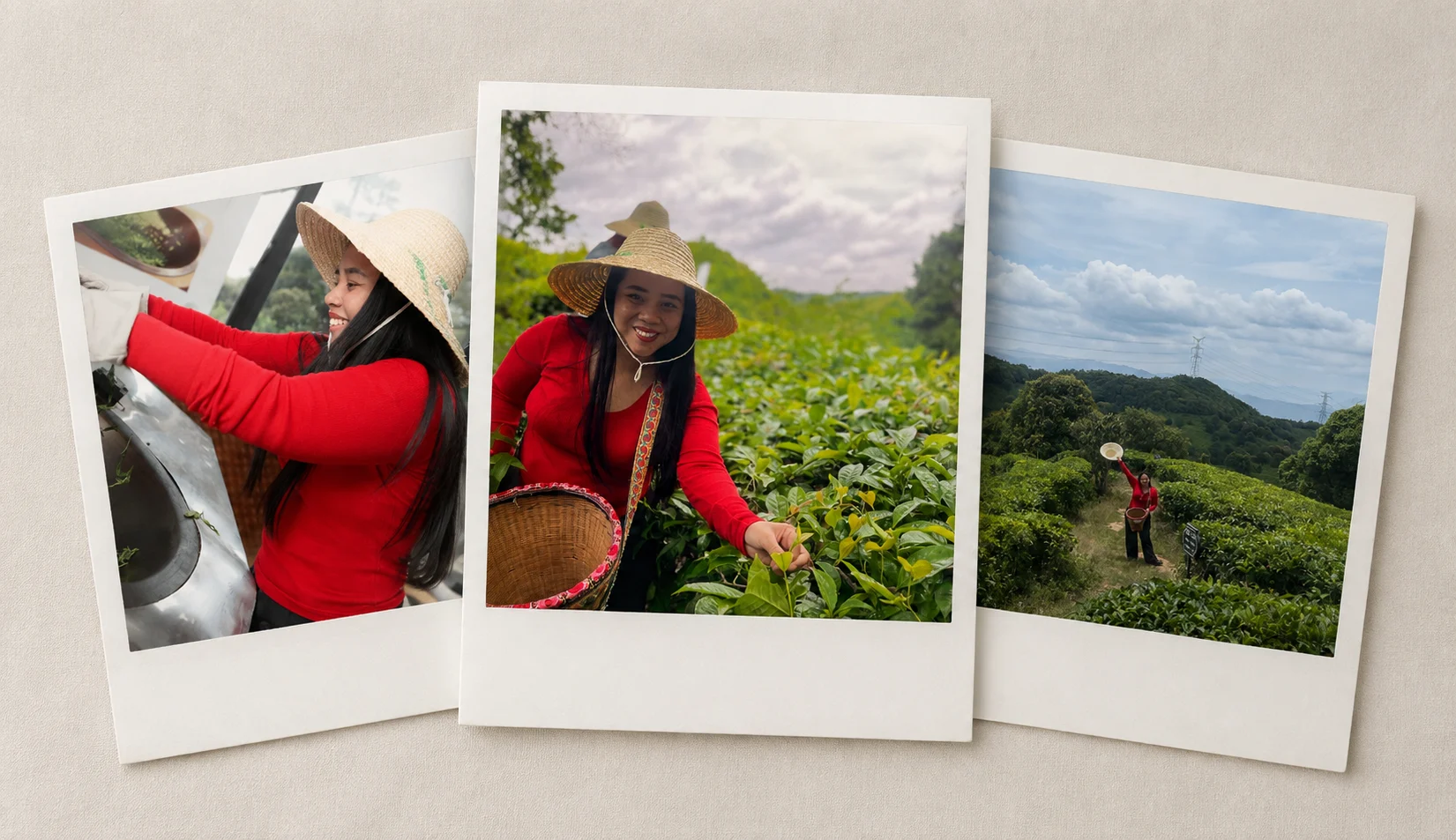


For something many of us drink without much thought, tea can get surprisingly complicated.
CHAGEE Tea Master Kate Cartolina knows this firsthand. After nearly a decade in the beverage industry, she began studying tea more seriously when she joined CHAGEE in 2025, eventually undergoing Tea Master training in China covering everything from tea history and cultivation to brewing, tasting, and appreciation.
We asked her about the little details most casual tea drinkers probably miss. Here are five that made us go, “May gano’n pala?”
1. You’re not supposed to brew every tea with boiling water
If your usual tea-making method is boil water, pour, done, you may want to rethink it.
According to Kate, one of the things that surprised her during training was learning that different teas need different water temperatures. Using boiling water for everything can actually make some teas bitter instead of bringing out their intended flavors.
So if a tea tastes harsher than expected, the leaves might not be the problem. It could be the water.
2. Even your first, second, and last sip can serve different purposes
Tea tasting isn’t simply a matter of deciding whether something tastes good.
Kate says she starts by looking at the tea’s color and clarity, then smelling its aroma. From there, the first sip helps assess strength and flavor, the second focuses more on texture and sensation, while the last lets you notice its distinct character and finish.
Suddenly, finishing a cup in three giant gulps feels like we’re missing something.
3. There’s such a thing as “blooming” your tea leaves
Coffee lovers may already be familiar with blooming, but apparently, tea leaves can get their own version too.
For home brewers, Kate suggests briefly pouring hot water over the leaves and discarding that first infusion before brewing the tea properly. This gives the leaves time to open up and release their aroma, which can help bring out more of their flavor and character.
It’s a small extra step, but one that could make your usual cup taste noticeably different.
4. There’s a tea ceremony built around the different stages of life
During her training in China, Kate experienced a traditional Three-Course Tea ceremony led by a tea master from the Bai ethnic group in Yunnan.
The ceremony involves three teas: bitter tea, representing the hardships of youth; sweet tea, symbolizing perseverance; and aftertaste tea, which invites reflection on the journey you’ve taken.
It’s probably one of the best reminders that sometimes a cup of tea can carry a little more meaning than whatever’s written on the menu.
5. You might not dislike tea. You might just not have found your tea yet
Tea has a few image problems in the Philippines. For some, it’s something you drink only when you’re sick. For others, it needs plenty of sugar before it becomes enjoyable.
Kate says that good-quality tea already has its own natural flavors, shaped by where the leaves come from, how they’re processed, and how they’re brewed.
And if you still think you’re simply “not a tea person,” her theory is much simpler: you may not have found the variety that works for you yet.
Her beginner-friendly suggestion? Jasmine Green Tea, which she describes as smooth, fragrant, and approachable, with a delicate floral aroma.
So the next time you order your usual drink on autopilot, maybe give the tea menu another look. Apparently, there’s a lot happening inside that cup.
May gano’n pala, indeed.