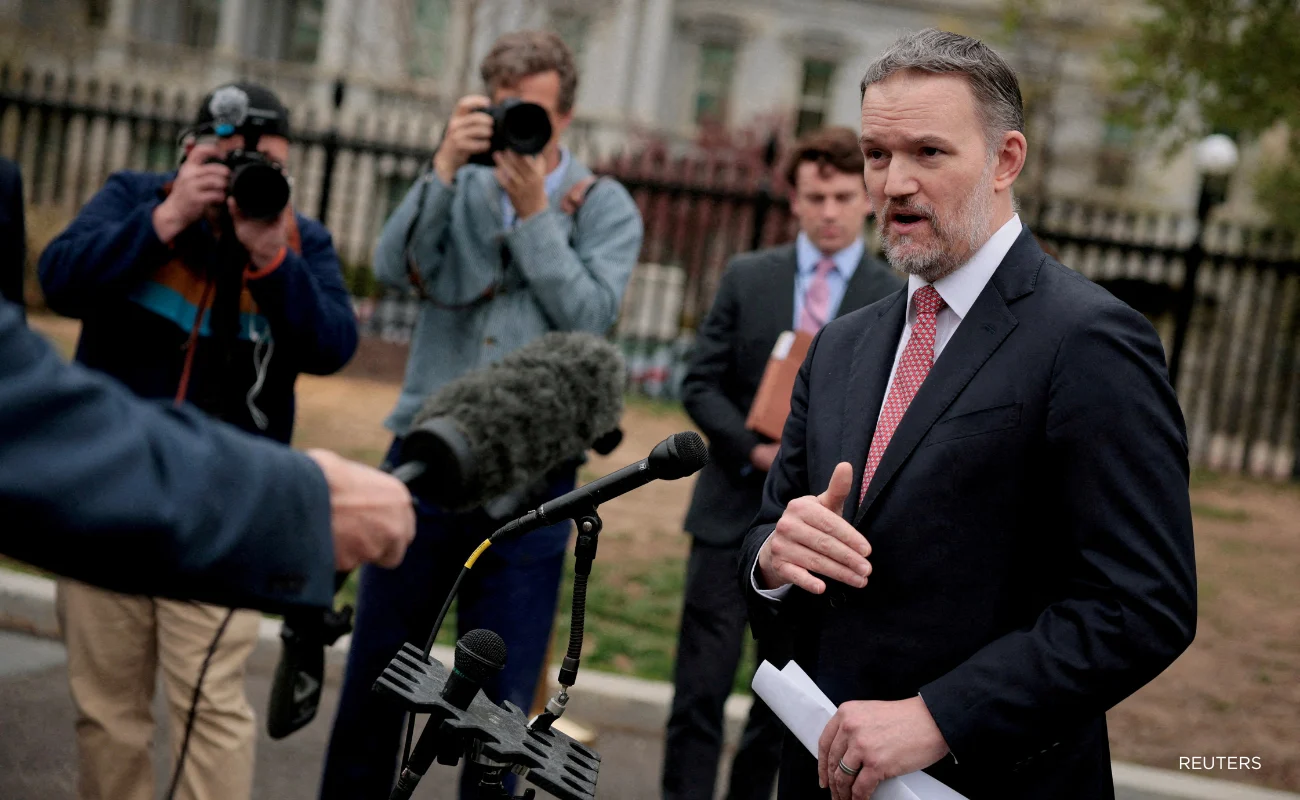


Colorado, USA – US Trade Representative Jamieson Greer said on Wednesday that formal trade talks with Mexico were progressing, while discussions with Canada had yet to produce concessions sought by President Donald Trump as he pushes to reduce US trade deficits with the two countries.
“So, it’s going well with the Mexicans. They’re quite pragmatic,” Greer said during an appearance at the Aspen Institute Security Forum in Colorado. “But our trade deficit with Mexico really is a challenge. It really is a problem.”
US and Mexican officials are due to hold a third round of formal bilateral USMCA negotiations next week in Mexico City.
By contrast, Greer said the United States has not started formal negotiations with Canada on the trade pact’s future, although he speaks with Canadian counterparts weekly.
Greer earlier this month declined to extend the US-Mexico-Canada Agreement on July 1, citing concerns including the US trade deficit with Mexico, which grew $28 billion, or 17%, to $197 billion in 2025, according to US Census Bureau data.
The decision started a clock to wind down the North American trade deal in a decade unless the three countries can agree on improvements.
He said that although the Trump administration would prefer US companies import goods from Mexico than China or Southeast Asia, the “structural” trade deficit with Mexico needs to be brought “under control.”
“I have a mandate from the president to find a way in whatever deal we make with Mexico to have … tariffs or quotas or whatever it is to try to control that,” Greer said.
“You know, we want to do it in a way that doesn’t disrupt supply chains unnecessarily, but we do want to incentivize supply chains moving” to the US.
During bilateral USMCA talks with Mexico in May, the Trump administration proposed requiring that 50% of the value of North American-built vehicles originate in the United States, a significant departure from current rules and a difficult adjustment for automakers with highly integrated regional supply chains.
Greer on Wednesday did not discuss the administration’s specific proposal for vehicle content requirements, but said auto rules of origin should be tightened so cars and trucks contain more US and Mexican parts and fewer parts from Asia.
He added that he wanted tighter rules of origin for strategic sectors including industrial goods, electronics and pharmaceuticals, and said US and Mexican officials were identifying products that could be reshored to North America.
TALK, NOT MOVEMENT
Talk, no movement
Turning to Canada, Greer said that he has made suggestions to Canadian trade officials for immediate changes to put the US-Canadian trade relationship in a “better position.”
While they meet weekly, Greer said, “That’s not a concession. That’s not movement. That’s just describing what we do now, which is talk.”
The US trade deficit with Canada, which is largely driven by US oil imports from its northern neighbor, fell by $12.9 billion or 21% last year to $48.3 billion.
He cited as positive Canada’s moves to roll back a proposed digital services tax and an online streaming act that would have hurt American firms, but said he was not inclined to give Canadian negotiators credit for this.
He declined to estimate how long talks might take, but said a breakthrough could require direct agreement between Trump and Canadian Prime Minister Mark Carney.
“I mean, the reality is, if the president and Prime Minister Carney, you know, have an understanding, I’m sure we can put together something that makes sense to get us over the hump.”
(Reporting by David Lawder; Editing by Cynthia Osterman)