


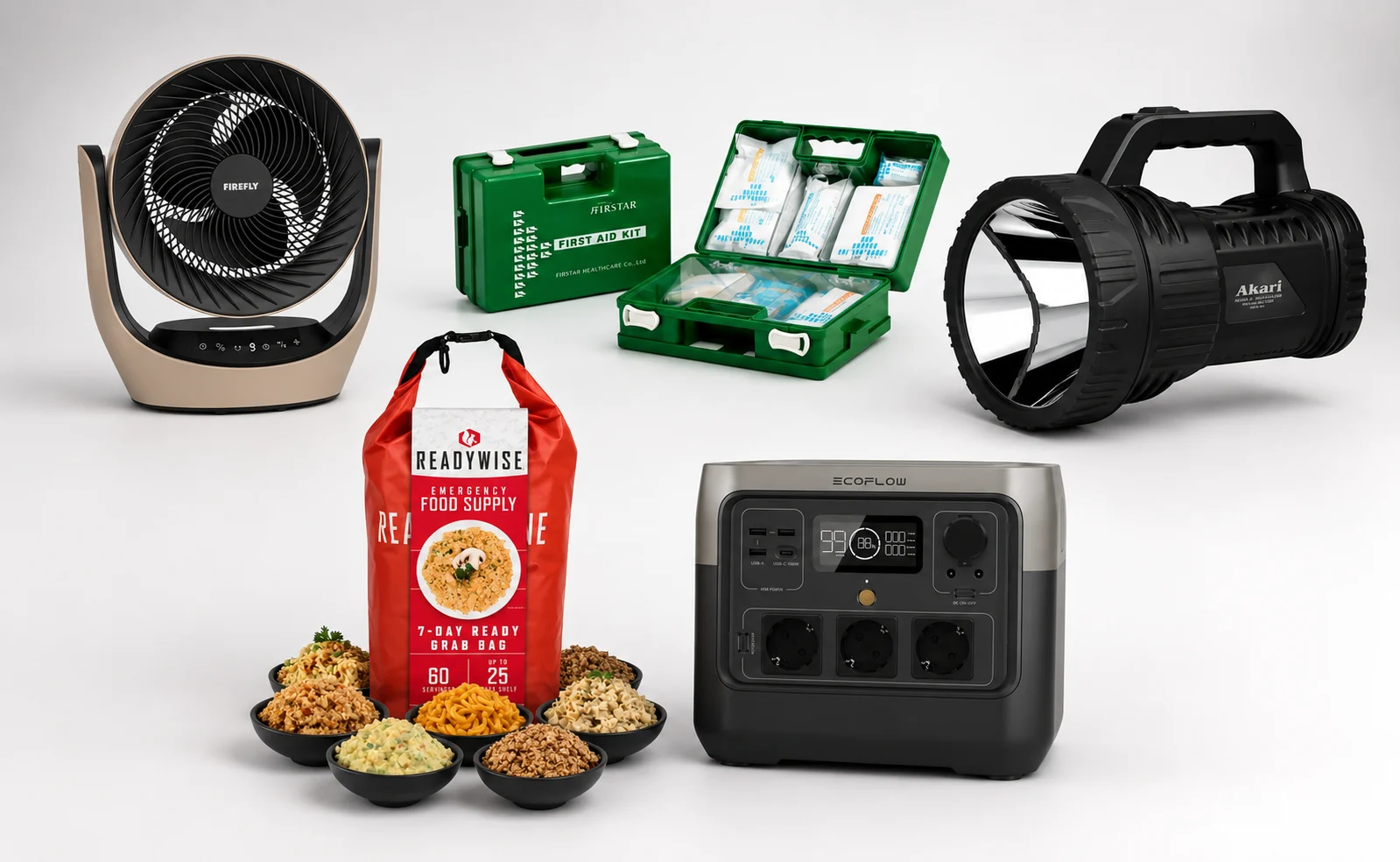


With emergencies happening all over the world, it helps to have the basics ready before you actually need them. Preparing doesn’t have to mean panic-buying or filling every cabinet with supplies. A few smart items can already make your home more ready for power outages, storms, and unexpected disruptions.
Here are five emergency essentials worth keeping at home.
A power bank is useful, but a portable power station gives the household more room to work with during an outage. This one can help keep phones, small devices, lights, and other essentials charged when regular outlets are unavailable.
The RIVER 2 has a 256Wh capacity, 300W output, and can recharge from 0 to 100% in about 60 minutes. It’s also fairly lightweight at around 3.5 kg, so it’s easier to move around the house when needed.
2. Rechargeable Circulator Fan
A blackout feels even longer when the air stops moving. A rechargeable fan is especially helpful in warm homes, particularly when there are kids, seniors, or pets around.
This Firefly fan has nine speed modes, a night lamp, timer settings, and built-in battery protection. It can run on AC power or battery power, making it useful for power outages, semi-outdoor use, or emergency setups at home.
Every home should have food that does not depend on a grocery run, refrigeration, or complicated cooking. This is especially important during floods, storms, or situations where leaving the house becomes difficult.
This 1-week food supply comes with 60 servings and is designed for long-term storage. It’s still best to keep it alongside bottled water, easy-open canned goods, crackers, biscuits, and familiar snacks that the household will actually eat.
A phone flashlight works in a pinch, but it also drains the battery you may need for calls, messages, and updates. A rechargeable light gives you a dedicated source of illumination when the power goes out.
This Akari searchlight has both searchlight and lantern modes, making it useful for rooms, hallways, staircases, and moving around safely at night. It can run up to 6 hours as a searchlight and up to 8 hours as a lantern.
A first aid kit should be easy to reach, not buried in a random drawer. Minor cuts, scrapes, and injuries can happen during storms, blackouts, cleanups, or evacuation prep.
This ready-made kit already includes basics like surgical tape, bandages, sterile gauze, wipes, gloves, scissors, tweezers, and plasters. You can build on it by adding personal medicines, maintenance medication, children’s medicine if needed, a thermometer, alcohol, and a list of emergency contacts.
Final Check
The best emergency kit is the one your household can actually find and use. Keep these items in one accessible spot, check batteries and expiration dates regularly, and make sure everyone at home knows where the supplies are. Preparedness doesn’t have to be dramatic. Sometimes, it simply means having the basics covered before you need them.