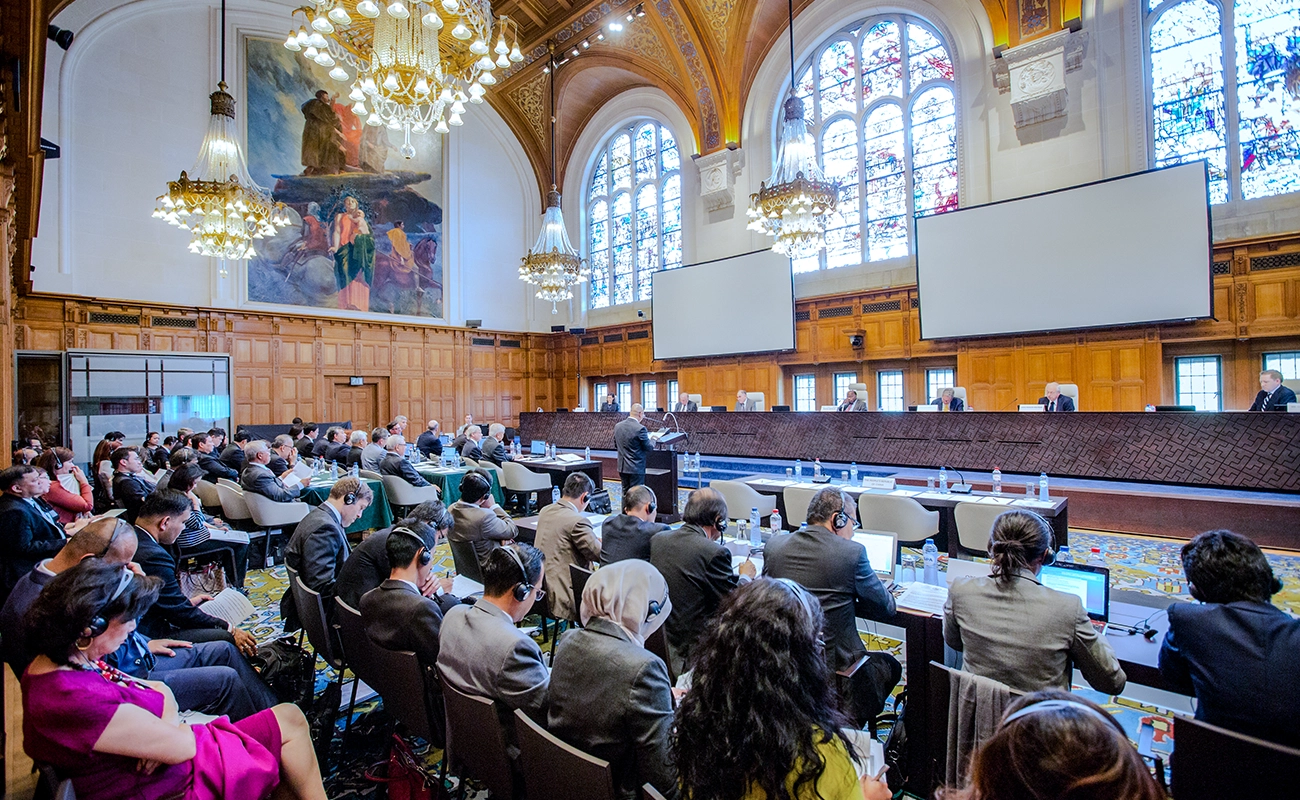


Metro Manila, Philippines – A decade after the Philippines secured a landmark legal victory against China at The Hague, the story of the West Philippine Sea is no longer simply about winning a case.
It is now about fulfilling a promise.
For many Filipinos, the answer lies in transforming a legal triumph into lasting action — protecting the country’s maritime inheritance, safeguarding livelihoods, strengthening food and energy security, and building a sustainable Blue Economy for generations to come.
In an interview for the documentary The Unsinkable Spirit’s “Our Inheritance, Our Promise,” Senior Associate Justice Antonio Carpio underscored the significance of the ruling, which invalidated China’s expansive Nine-Dash Line claim.
“The tribunal said that the Nine-Dash Line cannot prevail over our Exclusive Economic Zone,” Carpio said. “We have a full Exclusive Economic Zone of 200 nautical miles from our archipelagic baselines, unimpaired by China’s Nine-Dash Line.”
The decision remains one of the most consequential legal victories in modern Philippine history. According to security analyst Dr. Chester Cabalza, it has become a global model for the peaceful use of international law.
“In 2016, we won a landmark case that academies, military academies, and universities are studying,” Cabalza said. “The contribution that we gave to the world would basically be lawfare.”
But the ruling’s impact extends beyond legal textbooks.
Rear Admiral Rommel Jude Ong said the arbitral award now serves as the foundation for key Philippine maritime legislation, including the Maritime Zones Law and the Archipelagic Sea Lanes Law.
“The value of the arbitral ruling provides us the basis for the laws that we pass,” Ong explained. “It allows us control of the narrative when we deal with China.”
The victory has also strengthened confidence among the country’s defenders.
“Our assertion that this truly belongs to us has become even stronger,” said Philippine Coast Guard Commandant Lt. Col. Rommel Geli. “The West Philippine Sea is ours. It is our future. So we have to
defend it.”
Yet the defense of the West Philippine Sea is no longer confined to soldiers and diplomats.
In recent years, fisherfolk, youth leaders, artists, civil society organizations, and ordinary citizens have joined peaceful civilian missions to Scarborough Shoal through the Atin Ito Coalition.
For coalition convener Rafaela David, the movement represents a new chapter in citizen participation. “For the youth, the West Philippine Sea symbolizes our future,” David said.
In May 2024, the coalition organized a civilian mission involving around 100 fishing vessels to assert Philippine sovereign rights and celebrate the UNCLOS victory.
“It started with an idea,” David recalled. “Instead of protesting on the streets, why not do it in the West Philippine Sea itself? Let’s go there and show the Chinese vessels that the Filipinos are here, together.”
Despite facing the risk of harassment from larger Chinese vessels, volunteers pressed on.
“There was a 100 percent probability they would be confronted by the Chinese Coast Guard,” Ong said of the mission participants. “And yet, they went without hesitation.”
The missions have also highlighted the direct connection between maritime rights and everyday Filipino lives.
For fishing communities, the issue is deeply personal.
Philippine Rural Reconstruction Movement President Edicio dela Torre pointed out that the country’s maritime territory is far larger than many realize.
“Our Exclusive Economic Zone is 2.2 million square kilometers,” dela Torre said. “We are the 15th largest fishing nation in the world. We must defend it.”
Leonardo Cuaresma recalled the painful reality faced by fishermen near Scarborough Shoal.
“Our fishermen were described as ‘stealing in their own fishing grounds,’” he said. “The fishing grounds are ours, but foreigners dominate the area, and it is not the Filipinos who benefit from our own fishing grounds.”
Experts argue that the stakes go far beyond territorial claims.
“If you look at the West Philippine Sea issue, what we are talking about is food security and energy security,” said AFP Spokesperson Col. Francel Margareth Padilla.
Cabalza echoed the sentiment, noting that fisherfolk remain at the center of the country’s
maritime future. “Our fisherfolk feed the Filipinos,” he said. “And if they couldn’t fish, how could they
feed us?”
That future increasingly includes the development of a Philippine Blue Economy. It points to growing efforts to align maritime governance with sustainable development through the proposed Blue Economy Act, which seeks to strengthen ocean industries while protecting marine ecosystems.
Secretary Jose Francisco “Kiko” Benitez, who authored the Blue Economy Act during his time in Congress, believes Filipinos must develop a deeper appreciation for the oceans that surround them.
“As a people, we need to appreciate the ocean,” Benitez said. “Appreciate what it means to us as a resource; appreciate what it means to us as a patrimony — not one that we own, but one that we will pass on.”
As the Philippines marks nearly a decade since its victory at The Hague, many of those who fought for the ruling believe the country’s greatest challenge now is ensuring that future generations inherit not only legal rights but also the courage to defend them.
“MANA is to assert our rights,” dela Torre said, “but we will exercise these rights in a responsible way, as responsible stewards of our waters and our land.”
The third episode of The Unsinkable Spirit, “Our Inheritance, Our Promise,” explores what comes after the historic 2016 arbitral victory in The Hague. The episode shifts from legal triumph to the enduring responsibility of protecting the West Philippine Sea through presence, unity, and national action. It follows the growing movement of fisherfolk, youth leaders, civil society groups, and the Atin Ito Coalition as they assert the country’s sovereign rights through peaceful civilian missions to Scarborough Shoal.
Audiences can watch “The Unsinkable Spirit” online via Facebook and YouTube every Sunday at 6:00 PM Episode 1 on June 28, Episode 2 on July 5, and Episode 3 on July 12. The series will also air on free television via RPTV Channel 9 every Monday at 10:00 PM, beginning June 29 and continuing on July 6 and July 13, with replay broadcasts on succeeding days. It will likewise be shown on ALIW Channel 23 beginning June 29 and July 6, with additional replay schedules throughout July. With its powerful storytelling and timely message, “The Unsinkable Spirit” invites every Filipino to reflect on the nation’s past, understand the challenges of the present, and take part in shaping a stronger future for generations to come.