


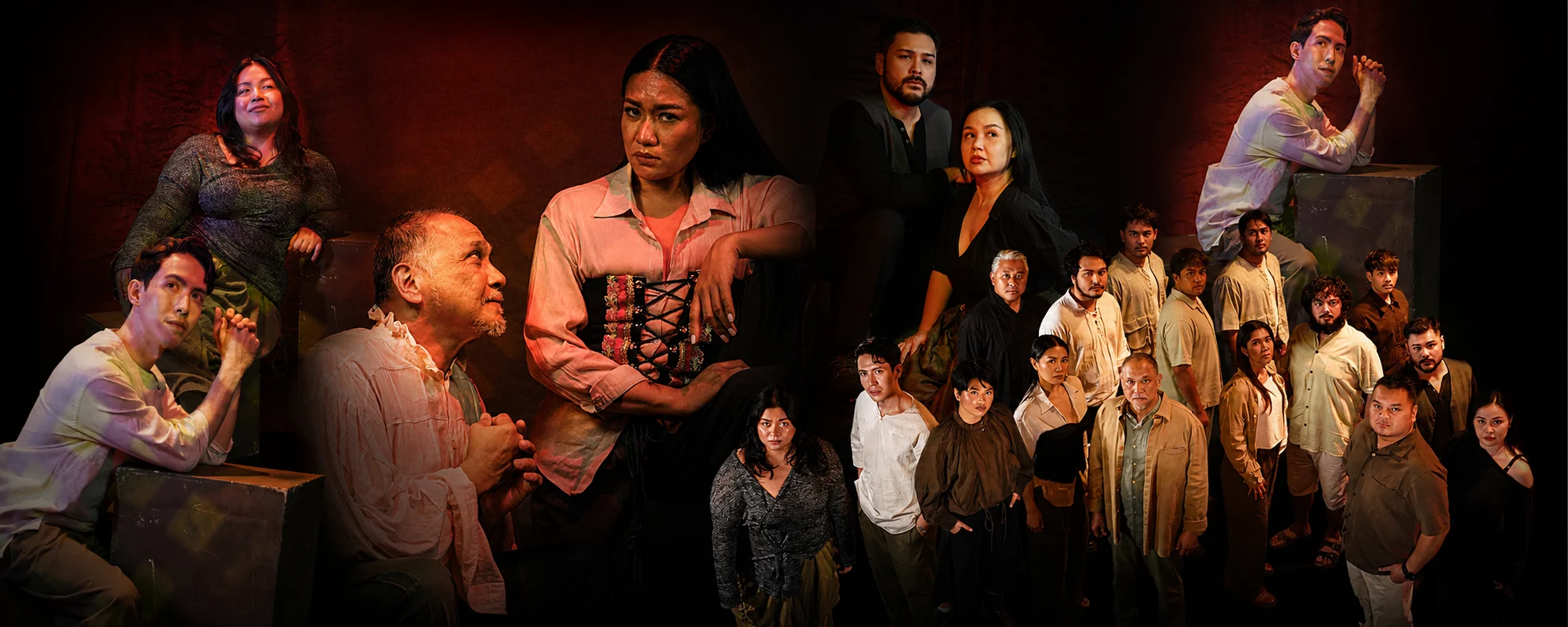


Man of La Mancha is, at its heart, a story about choosing hope even when the world gives you every reason not to. Inspired by Miguel de Cervantes’ Don Quixote, the musical follows a man who insists on seeing beauty, dignity, and goodness in a society that has largely surrendered to cynicism. Through the eyes of Don Quixote, windmills become giants, prisoners become noblemen, and impossible dreams suddenly feel worth fighting for.
This June, Repertory Philippines brings the beloved musical back to the stage in a new production directed by Nelsito Gomez and led by Nonie Buencamino. Part of why the show feels so relevant now is because the country itself feels caught between exhaustion and hope, between disillusionment and the stubborn belief that things can still get better.
Art has always reflected the moment it exists in, and staging Man of La Mancha now feels meaningful for exactly that reason.
1. It’s a story about holding onto hope when it feels easier to give up
The Philippines has gone through years of political tension, economic uncertainty, rising costs, online hostility, and collective fatigue. In many ways, Man of La Mancha speaks directly to that feeling.
Don Quixote is constantly mocked for believing in goodness, fairness, and compassion, yet he keeps going anyway. That persistence feels strikingly modern in a time where cynicism often feels safer than optimism.
2. The play reminds people why imagination matters
One of the most powerful things about Man of La Mancha is how it treats imagination not as escapism, but as survival. Cervantes uses storytelling to transform a prison into something larger and more human, showing how art can help people endure even the harshest realities.
That feels especially relevant today, when many people turn to films, music, books, and theater not simply for distraction, but to make sense of the world around them.
3. Staging a play like this says something about the role of theater itself
There’s something quietly significant about REP choosing to stage Man of La Mancha now. It’s not the safest or trendiest musical they could have picked. Instead, they chose a story about idealism, humanity, and refusing to lose faith in people.
In many ways, that’s what theater continues to do at its best. It reflects where society is emotionally while also asking audiences to imagine where it could still go.
4. Nonie Buencamino returning to musicals makes the production even more compelling
REP’s production also marks Nonie Buencamino’s return to musical theater as Don Quixote, a role that demands vulnerability, conviction, and emotional depth.
Buencamino has long been one of the country’s most respected performers, and casting him in a role centered on resilience and humanity adds another layer of weight to the production.
5. “The Impossible Dream” still resonates because the dream still feels impossible
Decades after it first premiered, Man of La Mancha remains best known for “The Impossible Dream,” a song that continues to endure because people still relate to what it’s saying. The dream of a kinder society, honest leadership, dignity, justice, and compassion still often feels frustratingly out of reach.
That’s exactly why productions like this still matter.
The role of art isn’t to pretend everything is fine. It’s to remind people that believing in something better still has value.