


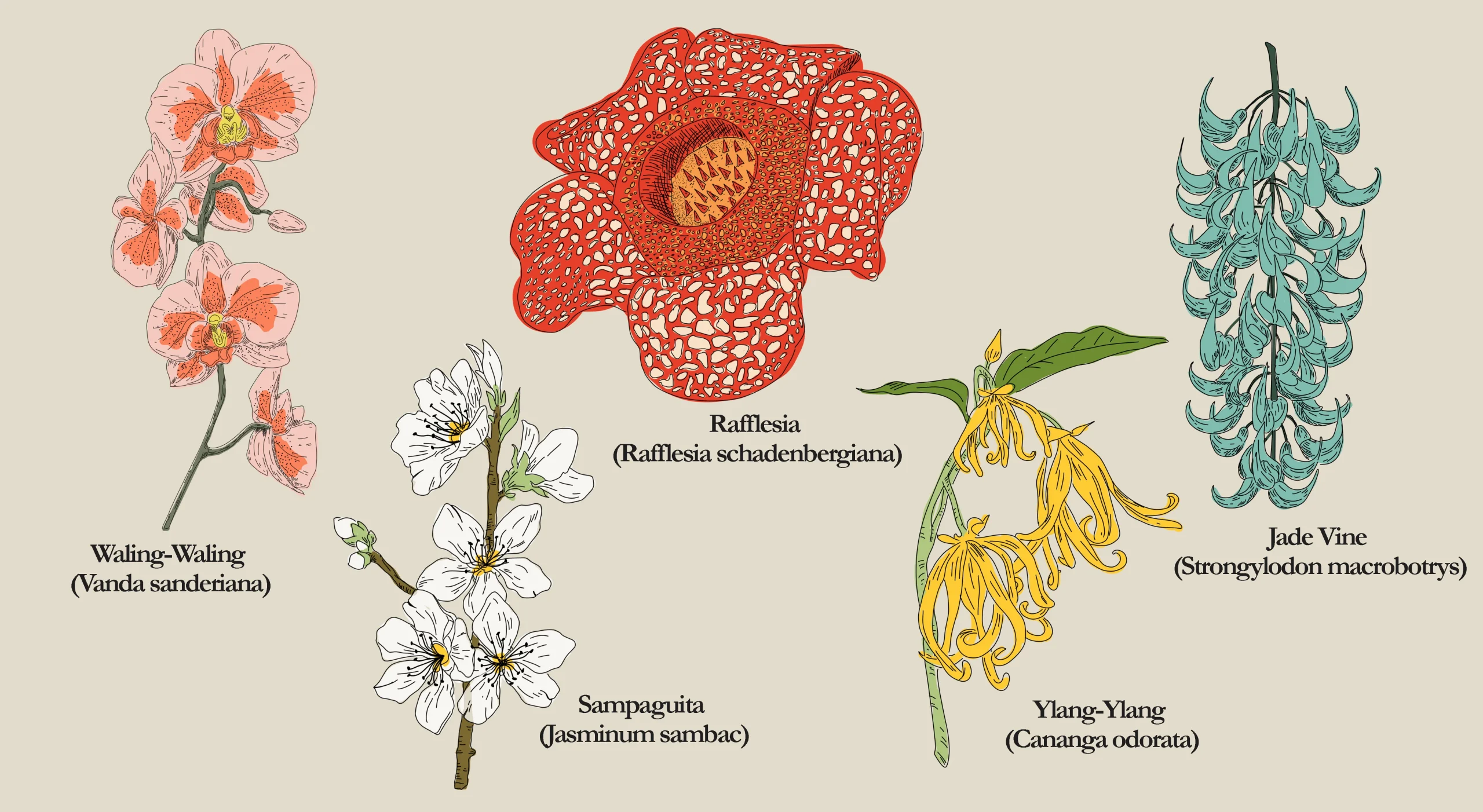


May is often associated with flowers in many parts of the world. In the Philippines, the month is marked by Flores de Mayo, colorful santacruzan processions, and gardens coming alive under the summer heat before the rainy season begins. It’s a time when flowers become part of everyday life, from church offerings and celebrations to local markets and family homes.
But beyond decoration, many Philippine flowers also tell stories about culture, identity, and biodiversity. Some are tied to tradition and folklore, while others have become symbols of the country’s rich natural heritage.
1. Sampaguita: The Symbol of Purity and Loyalty
The sampaguita is the national flower of the Philippines and one of the most recognizable flowers in the country. Small and delicate with a sweet scent, it is often associated with purity, humility, and loyalty.
For many Filipinos, sampaguita brings back memories of church visits, school graduations, and flower vendors outside busy streets. Garlands made from sampaguita are commonly offered to saints, guests, and loved ones as a sign of respect and affection.
There is also a popular belief that its name came from the phrase “sumpa kita,” or “I promise you,” giving the flower a long-standing connection to devotion and faithful love.
2. Waling-Waling: Mindanao’s Pride
Often called the “Queen of Philippine Flowers,” the waling-waling is a rare orchid native to Mindanao. Known for its large and colorful petals, it became a symbol of beauty, elegance, and Filipino pride.
Among some indigenous communities in Mindanao, the flower was once believed to hold spiritual significance and was linked to stories about forest spirits and nature.
Today, the waling-waling is also seen as a reminder of the importance of protecting Philippine wildlife and native plants. Because it is difficult to grow and increasingly rare in the wild, conservation efforts have become more important over the years.
3. Ylang-Ylang: The Flower Behind a Famous Fragrance
The ylang-ylang flower is known around the world for its rich and calming scent. It is commonly used in perfumes, oils, and wellness products, but it also has deep roots in Filipino culture.
For generations, Filipinos used ylang-ylang flowers to naturally perfume homes and coconut oils. In some provinces, the flower was believed to help people relax and sleep better because of its soothing fragrance.
Its sweet scent also made it associated with romance and courtship, especially in older Filipino traditions where flowers played a bigger role in daily life.
4. Jade Vine: A Rare Beauty Found in Philippine Forests
The jade vine is one of the most unusual flowers native to the Philippines. It is famous for its hanging clusters of bright turquoise flowers that almost look unreal in photographs.
Found mostly in tropical rainforests, the jade vine depends on bats for pollination, making it an important part of the local ecosystem. Because of deforestation and habitat loss, the flower has become harder to find in the wild.
Over time, the jade vine has become a symbol of the Philippines’ unique biodiversity and a reminder of why protecting forests matters.
5. Rafflesia: The Giant Flower of the Philippines
The rafflesia is known as one of the largest flowers in the world, with some species in the Philippines growing nearly a meter wide. Unlike most plants, it has no stems or leaves and survives by attaching itself to host vines in forests.
It is also famous for its strong smell, which attracts flies that help pollinate the flower. While its appearance and scent may seem strange, the rafflesia has become an important symbol of Philippine wildlife and conservation.
Several rafflesia species can only be found in the Philippines, making the country one of the most important places in the world for protecting these rare flowers.
As Flower Month comes to a close, these blooms serve as a reminder that flowers are more than just decorations or gifts. In many ways, they reflect the stories, traditions, and natural beauty that continue to shape life in the Philippines.