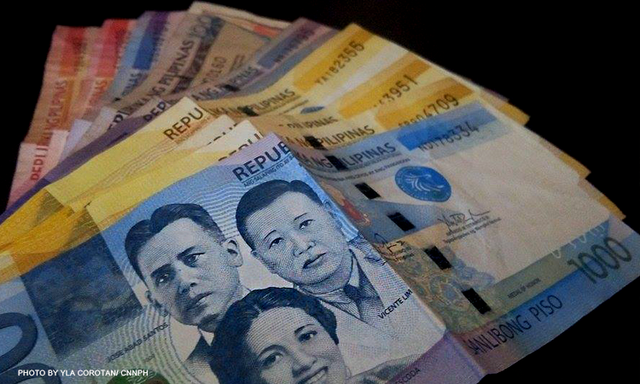


Metro Manila (CNN Philippines) — The Philippine peso slid to a five-year low on Wednesday (August 12), as China continued to allow the yuan to decline for a second straight day.
According to figures from Reuters, the peso closed at 46.26 against the U.S. dollar from Tuesday’s 45.93.
However, the effects were much worse for other Asia-Pacific countries. Indonesia’s rupiah and Malaysia’ ringgit fell to 17-year lows on Wednesday. Similarly, the Australian and New Zealand dollars also fell to six-year lows.
Countries will “seek weaker exchange rates in order to keep their own export sector competitive,” said Lindsey Piegza, an economist at Stifel Nicolaus & Co., in a CNN report.
The yuan’s fall has sparked fears of an Asian “currency war” — a scenario where countries purposely devalue their currencies in order to make their exports more competitive. A country that fails to do so could end up with more expensive exports than those who opted to devaluate.
Although the move benefits outgoing goods, a devalued currency can also lead to a price increase in imports — consequently reducing consumers’ purchasing power.
“The spectre of currency wars was worrying enough yesterday [August 11], but today [August 12] it looks real enough to touch,” said Chris Beauchamp, a senior market analyst at IG Group, in the same CNN report.
“A single move might have passed without reaction from China’s trading partners, but now it looks like a tit-for-tat move by others in the region is certain,” he added.
On Wednesday, China’s central bank said in a statement that there is currently “no basis” for persistent depreciation of the yuan.
“China is implementing the managed floating exchange rate regime based on market demand and supply. The fluctuation of exchange rate is a normal phenomenon, to which, we should take an objective view,” it added.
In a statement, the International Monetary Fund said that Beijing’s moves were a “welcome step” given the yuan’s greater exposure to influence from market forces.
“Greater exchange rate flexibility is important for China as it strives to give market forces a decisive role in the economy and is rapidly integrating into global financial markets.”