Metro Manila (CNN Philippines) — The Asian Development Bank (ADB) has pledged increased funding for the Philippines in a bid to support the country’s infrastructure, social, and economic needs.
The institution said on Tuesday (July 28) that it will boost its sovereign lending by about 66% to $3 billion between 2016 and 2018, from the current $1.8 billion between 2015 and 2017.
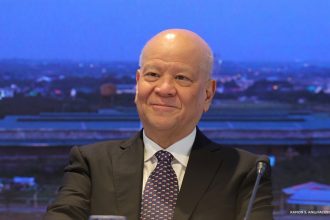
“ADB will continue to support infrastructure needs; programs to strengthen senior high school education, job creation for youth, and social protection; deeper capital markets; improved access to finance; and development in southern Philippines including Mindanao,” ADB President Takehiko Nakao said.
Nakao also remarked that that the institution will continue to support the Public-Private Partnership (PPP) program — the Aquino administration’s flagship project.
For example, the Mactan-Cebu International Terminal Project is partly financed by an ADB private-sector loan of $75 million. The airport’s construction began last June.
According to Department of Finance Secretary Cesar Purisima, the Philippines’ PPP Center has recently been upheld as a global model by the Asia-Pacific Infrastructure Partnership because of a strong track record and clear structure.
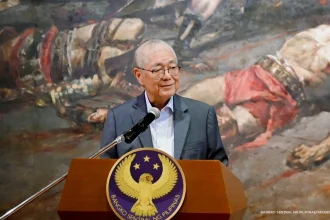
“We will continue innovating on the infrastructure financing front, knowing full well that our future growth rests on our ability to create mobility and connectivity networks to support our 100-million strong population,” Purisima said.
Last May, the ADB’s Office of PPP was appointed as Transaction Advisor for the government’s North-South Railway Project, which would link Manila to Legaspi with extensions to Batangas and Matnog.
The institution also plans to deepen its ties with the government on disaster risk financing, especially at the local government level. Likewise, out plans to conduct an Adult Literacy and Livelihood grant program in the Bangsamoro areas in Mindanao.
Over the next three years, the ADB also plans to implement two projects that aim to deepen capital markets and non-bank finance.
“A capital reform program in 2017 will help boost access to nonbank finance through bond market development, promotion of long-term savings, and improving Treasury operations. A financial inclusion project the following year will increase the number of poor and near-poor participating in the financial system, boosting their access to housing finance, small and medium enterprise credit, and microfinance credit,” the ADB said in a statement.
“Only when we have woven the most vulnerable households and enterprises at the margins of the country into the fabric of our economy can we attain shared prosperity under a stronger economy,” Purisima noted.
The Manila-based institution expects the country to outpace several Southeast Asian countries in economic growth for this year and the next.