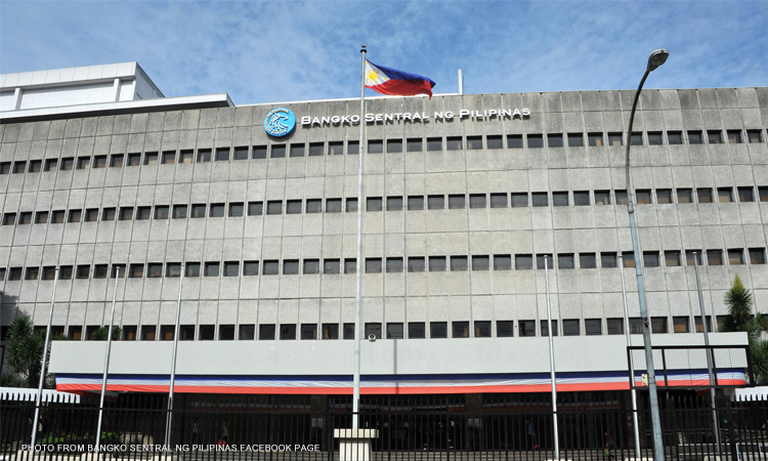


Metro Manila (CNN Philippines) — External debt — money owed by Philippine residents to foreign lenders such as commercial banks, governments, or international finance institutions — dipped by about 3% during the first three months of the year, according to the Bangko Sentral ng Pilipinas (BSP).
Such liabilities stood at $75.3 billion at the end of March — down $2.4 billion from the $77.7 billion registered in the end of 2014.
The BSP attributed the decline to net repayments of $2 billion, mainly by banks. The agency also cited two other factors for the debt stock’s decline: a negative foreign exchange (FX) revaluation of $220 million brought by a strengthening U.S. Dollar, and an increase ($100 million) in Filipinos’ investments in local debt papers.
Compared to March last year, the debt stock also declined 4.6% ($3.6 billion) from $78.9 billion. The contraction was also caused by negative FX revaluation adjustments ($2.2 billion), net repayments ($1.9 billion), and adjustments (-$220 million) due to audit findings and late reporting of transactions during the previous periods. However, the BSP noted that the downward pressure of such developments was offset by a rise in foreign investments in Philippine debt papers ($704 million).
“Key external debt indicators were observed to have remained at very prudent levels in the first quarter of 2015”, BSP Governor Amando Tetangco said in a statement. Tetangco pointed out that the country’s gross international reserves of $80.5 billion represent 6.1 times cover for short term debt under the original maturity concept. That’s larger than the 4.9 times and 4.7 times covers posted end-December and March 2014, respectively.
Likewise, the country’s external debt ratio, in terms of its gross national income (GNI), improved to 21.5% in the first three months of the year from 23.9% during the first quarter of 2015 and 22.5% a quarter ago.
The country’s debt service ratio (DSR) also slightly improved to 6.3% in March 2015 from 6.4% in Dember 2014 and 7.3% In March last year, due to higher receipts and lower payments during the year. The BSP said that the DSR — or total principal and interest payments as a percentage of exports of goods, receipts from services and primary income — is a measure of the adequacy of the country’s FX earnings to meet maturing obligations.
External public sector debt accounted for a little over a half (52% or $36.2 billion) of the total debt stock. It is nevertheless slightly lower than the $39.3 billion level incurred during the end of 2014
Private sector debt also declined to $36.2 billion from $38.3 billion a quarter ago, on the heels of net repayments of bank liabilities.