

Metro Manila (CNN Philippines, August 4) – An estimated ₱600 million to ₱1.5 billion was spent on covert political influencers to campaign for top national candidates in the 2022 elections, according to an Internews-funded report.
The recently published study, “Political Economy of Covert Influence Operations in the 2022 Philippine Elections,” showed thousands of political influencers were presumed to have been commissioned to perform covert political campaigning in the last elections.
Internews defined covert influence as “organized and well-funded operations that orchestrate concealed, disguised, or opaque activities intended to manipulate public opinion.”
Based on the retainer model provided in the study, influencers on Facebook are the highest paid at ₱311 million followed by Youtube at ₱213 million.
But unlike commercial influencer marketing, political influencers set their prices based on social capital, political notoriety, and ability to promote their clients’ agenda.
“Politicians are the main clients of this industry, and this client list is expanding from national to local politicians looking for political advantage,” the study read.
It added that higher offers are available for influencers who are willing to change political camps, as well as those who agree to support the candidate during the peak of the campaign season.
There were 1,425 influencer accounts identified in the report that are presumed to engage in covert political campaigning across Facebook, Twitter, YouTube, and TikTok. It also found out at least 584 unique influences who might operate multiple accounts.
The clients
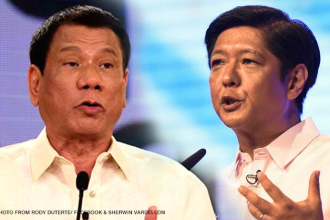
The study claimed that President Ferdinand Marcos Jr. spent the largest amount on covert political influencers for his campaign last election at ₱351 million, followed by Leni Robredo at ₱135 million, Isko Moreno at ₱ 42 million, and Manny Pacquiao at ₱1 million.
“Marcos Jr’s propaganda operations expanded across platforms, exploiting the long-form videos of YouTube and the trendy short videos of TikTok to reach audiences of different ages and different attention spans,” it noted.
Marcos previously denied allegations of paying troll accounts to boost his public image and campaign.
However, Fact-check coalition Tsek.PH reported in February that Marcos is the biggest beneficiary of fake news, while his opponent in the presidential race, Robredo, is the top victim of disinformation.
READ: Robredo top victim of disinformation; Marcos being promoted by misleading content – group
The study also named former president Rodrigo Duterte as the creator of propaganda and disinformation campaigns within the government through in-house social media workers during his term.
In a 2017 news conference, Duterte admitted paying online trolls during his presidential campaign but denied that this continued even after he was elected.
Internews said background on the backend operations of political influencers in various platforms enabled the Marcos-Duterte tandem to dominate online discourse during the presidential polls.