

Metro Manila (CNN Philippines) — When Ferdinand Marcos Jr. was inaugurated as the 17th President of the Philippines, he immediately set an agenda to tackle climate change.
In one of his engagements abroad, Marcos described the fight against the climate crisis as a “race against time to conserve and prevent habitat and biodiversity loss.”
A year into his presidency, has the administration made significant progress when it comes to green issues?
Of spills and gaps
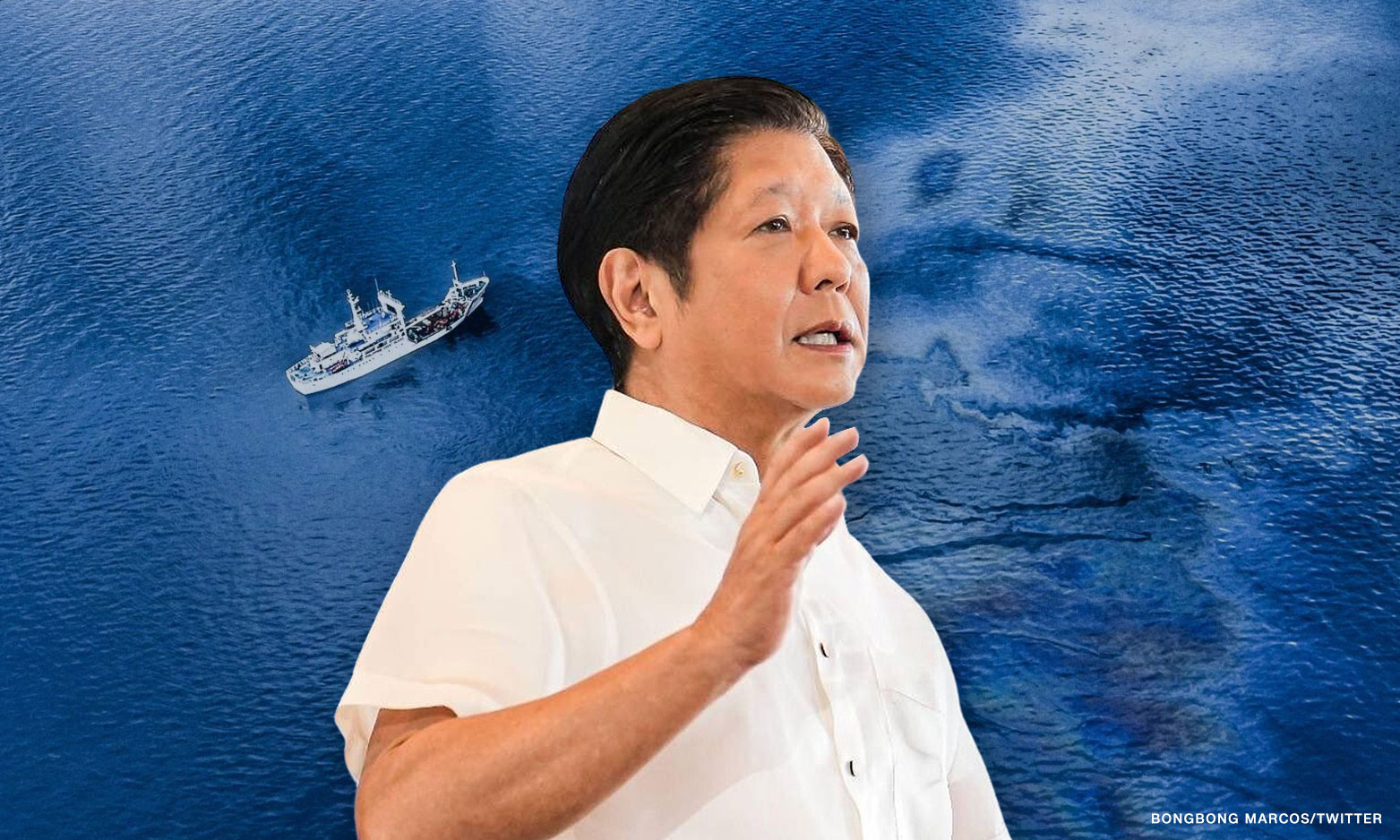
One of the main environmental disasters during Marcos’ first year was the massive oil spill in the waters of Oriental Mindoro on Feb. 28.
He wanted authorities to only take four months to complete the cleanup. On June 17, the Philippine Coast Guard (PCG) announced it has completed extracting oil from the MT Princess Empress.
The tanker was carrying around 900,000 liters of industrial fuel oil when it sank off Naujan. Its wreckage was found near Pola town.
The Department of Environment and Natural Resources (DENR) has yet to determine the actual cost of damage to marine biodiversity. It earlier estimated the value at around ₱7 billion.
The oil spill reached Antique, Palawan, and the Verde Island Passage — considered the “center of marine shore fish biodiversity.” It also halted the work of around 27,000 fishers, with disaster management officials reporting the country lost nearly ₱5 billion worth of fish production.
RELATED: DENR, five provinces want Verde Island Passage declared as ‘protected area’
Advocates revealed that fishers in Calapan told them this week there is less catch even after the lifting of the fishing ban in their area, which they said was an experience observed in past oil spills.
Fishing bans have been lifted in all of Oriental Mindoro’s towns, Governor Humerlito Dolor said on July 20.
But in a news conference a day earlier, Pola Mayor Jennifer Cruz said she is still not signing the PCG’s declaration that her town’s coast is \”100% clean,\” as they still see traces of oil along the shoreline. Considered as \”ground zero,\” Pola was hit the hardest by the oil spill.
‘116’: ‘image’: ‘jcr:e241d495-8b9b-42b9-ad7a-493a7f7c9ecc’ ‘imageCaption’: ‘On April 22, oil spill-affected fisherfolk are clearing the shores of Pola, Oriental Mindoro of oil slicks as part of their tasks in the

Residents and groups are still calling for justice and the swift processing of claims, as they considered the effect of the oil spill worse than that of COVID-19.
For Tony La Viña, an environmental policy expert and former DENR undersecretary, the marine disaster response is a good example of the gaps within Marcos’ environmental agenda.
La Viña told CNN Philippines that the country’s response and rhetoric, along with the efforts of Environment Secretary Toni Yulo-Loyzaga, were “okay,” but “there’s nothing that has changed in the way we respond — mabagal [slow].”
\”In the first place, bakit pinayagan, bakit nangyari [why was the ship allowed to sail, why did the disaster happen]?\” he added.
Rhodora Azanza, professor emeritus of the University of the Philippines Marine Science Institute (UPMSI), also told CNN Philippines the country is still not ready for such calamity as the government remains “land-focused” in its disaster management program.
For Fr. Edwin Gariguez, Protect VIP Convenor, the completion of the oil spill cleanup was a “hollow victory.” He said “no one is held accountable and the government remains quiet about what it plans to do to prevent similar incidents in the future.”
READ: Marina, PCG staff, MT Princess Empress owners face criminal complaints over oil spill
Adjusting the footing
To set her agenda, the DENR chief followed Marcos’ rhetoric in his first State of the Nation Address (SONA) on environmental preservation, environmental law implementation and compliance, and climate change mitigation.
‘117’: ‘image’: ‘jcr:e1bb66ba-b32f-4ef2-ad9e-b37b5d8ec8e7’ ‘imageCaption’: ‘President Ferdinand Marcos Jr., along with Environment Secretary Toni Loyzaga and Sen. Cynthia Villar, plants a Molave tree at the Department of Environment and Natural Resources Heroes Park to celebrate the 160th anniversary
Loyzaga deemed engaging with the private sector and introducing the National Natural Resources Geospatial Database Office (GDO) and the Water Resources Management Office (WRMO) as some of her accomplishments in her first year.
Carlos David is leading these two offices as part of his tasks as undersecretary for integrated environmental science.
In a Palace briefing, Loyzaga said the GDO would establish a \”physical baseline\” of the country’s natural resources to properly account for, value, and manage them, as well as a basis to identify priority areas for forestation, reforestation, and afforestation, for example.
She bared that data from the GDO showed out of the 15 million hectares of classified forestland, only 7 million hectares were actually forested.
‘118’: ‘image’: ‘jcr:41f5d6db-ac20-4650-9e91-0c183fda8c8e’ ‘imageCaption’: ‘The map, provided by the Department of Environment and Natural Resources-Geospatial Database Office, shows current areas of open and closed forests in the Philippines. The agency says there are around 7.9 million hectares of open forests (light green) and around 3.9 million hectares of closed forests
\”In the past, areas that were targeted for reforestation are actually not ideal areas…so this time, we made sure that these are areas that will have trees that can be sustained,” David told CNN Philippines, stressing that the data can improve the department’s programs to maximize its \”small budget.\”
RELATED: DENR to prioritize reforestation of 2M hectares of land
David said the current 10-member GDO will use its data to detect encroachment on public coastal areas, illegal mining activities, and industries without necessary permits.
It can also be used to pinpoint water systems that can be developed for hydropower and water supply — arguably helping another office under his belt, the WRMO, which stands as an umbrella office for all water-related functions of the government.
His office will be tested this year as the El Niño phenomenon threatens the country’s water supply.
The path ahead
\”Policy-wise, rhetoric-wise, generally okay…From the point of view of outcomes, the Marcos government has not yet produced good outcomes sa [in the] environment. And there’s much to be done,\” La Viña said, admitting it may take three to four years for policy changes in the DENR to reflect on the ground.
David said the DENR’s first year can be summed up as \”trying to solve problems from before, at the same time trying to advance things as we see fit.\”
For Marcos, he may continue talks on nuclear energy this year, given that he already mentioned it during his first SONA.
The Philippine National Nuclear Energy Safety bill, which seeks to provide a comprehensive atomic regulatory framework, is up for interpellation in the House of Representatives after the approval of the newly formed special committee on nuclear energy.
RELATED: Energy chief: PH can build nuke plant ‘within the decade’
But critics raised that nuclear power is a problematic, expensive, and dangerous energy source — urging the president to instead focus on renewables to truly address the climate crisis.
“If this bill becomes law, it will only serve the interests of private nuclear companies and investors waiting to suck us dry financially and use our country as a testing ground for their untested and dangerous technologies,” Greenpeace Philippines said.
Another issue Marcos previously mentioned was the country’s responsibility to “clean up,” being the world’s third biggest plastics polluter.
Just three months ago, the Commission of Audit (COA) found the country’s Solid Waste Management Program did not achieve its goals.
COA reported that in 2020, the country produced 16.6 million of waste, which was 2 million higher than six years prior. It is seen to rise to 19 million metric tons by 2030, and around 24 million metric tons by 2045.
Loyzaga knows that this is a \”great challenge.\”
\”We are not winning the war definitely against single-use plastic,\” she told reporters.
The DENR said plastics account for 30% to 40% of the current daily waste generation.
In an earlier interview with CNN Philippines, Loyzaga shared the DENR is launching a \”very concerted campaign\” to encourage companies to register and comply with the Extended Producers Responsibility Act – requiring them to recover their plastic packaging waste.
For Robert Borje, vice chairperson and executive director of the Climate Change Commission (CCC), climate change action is a priority of the current administration as it reflects on increased budget allocation for climate change mitigation this year.
He said the CCC’s priorities include the implementation of the National Climate Risk Management Framework, the integration into the national agenda of the country’s self-defined national climate pledges to limit the increase of the global average temperature, and the development of the National Adaptation Plan.
La Viña, on the other hand, said the DENR should prioritize the issues of reclamation and illegal land-use conversion, which groups have also been raising.
Advocates from the Kalikasan People’s Network for the Environment (Kalikasan) said they question the administration’s intentions to expand the mining industry, despite long-standing issues with the existing mining framework. They claimed that one year of Marcos was an \”ecological disaster\” for Filipinos.
“The case of Sibuyan Island and the struggle against Altai Philippines Mining Corporation’s operations — a company granted [with] permits under the Marcos Jr. administration — reveals the backward nature of mining policies Marcos Jr. [commits] himself to continuing at all costs,” the group said.
In a television interview, Loyzaga acknowledged that there are gaps in the Mining Act of 1995, but said the mining industry under Marcos will be open to responsible miners who consider the environmental aspects of mining and promote social development.
But aside from policy change, the administration must also ensure that grassroots and civil society have \”the democratic space to operate,\” and their initiatives recognized, to combat climate change locally, said Kalikasan national coordinator Jon Bonifacio.
‘119’: ‘image’: ‘jcr:91a74d53-6fac-4832-bdbc-e40d666eae32’ ‘imageCaption’: ‘Climate advocates and other groups hold a protest in Makati on Feb. 28, to urge developed nations and major polluters to “pay up” to countries
“Until the crisis that environmental defenders face in the Philippines has been recognized by the DENR or the Marcos Jr. administration (as we are the worst country in Asia in terms of killings for a decade now), a big part of the problem has not been addressed,” he told CNN Philippines.
Coming into Marcos’ second year in office, La Viña reiterated that the government has the opportunity to catch up with the environmental issues — with Loyzaga, Energy chief Raphael Lotilla, and Science and Technology Secretary Renato Solidum Jr. sitting in the Cabinet.
For Marcos, he has his eyes set on attending this year’s United Nations Climate Change Conference set for November in Dubai to show his commitment to the fight against climate change.