

Metro Manila (CNN Philippines, July 18) — The Office of the Secretary General (OSG), the legal defender of the national government, expressed disappointment over the International Criminal Court’s (ICC) decision to proceed with its investigation into the Duterte administration’s bloody war on drugs.
In a press conference on Tuesday after the court announced its ruling, the OSG maintained that the ICC “brushed aside” data on the country’s investigation and prosecution activities with regard to the anti-illegal drug campaign.
And worse, according to the OSG, the ICC refused to consider the Philippines’ jurisdictional challenge on the ground that the court’s ruling is “not a decision on jurisdiction.”
“The majority decision does not alter the fact that the Republic, through its various national and local agencies, remains fully committed to the internal investigation and prosecution of allegations connected to the anti-illegal drug campaign,” the OSG said in a statement. “The Philippine Government will not be deterred by today’s outcome.”
Philippine foreign legal counsel Sarah Bafahdel pointed out that the ICC has no police powers, therefore, it could not enforce laws or execute warrants without the cooperation of the state parties, to which the Philippines is no longer a member.
The Department of Justice previously said it will not execute any arrest warrants from the ICC in relation to the drug war as it stressed that the country has its own legal system.
Senators Francis Tolentino, Bato dela Rosa, and Bong Go maintained that the ICC has no business interfering in the domestic affairs of the country.Dela Rosa, the former national police chief at the forefront of the Duterte drug war, insisted that he will not participate in the ICC probe as he does not acknowledge its power over the country.The ICC insists it has jurisdiction over crimes committed during a state’s membership period, in this case, from the time the drug war began in 2016 to 2019, when the Philippines’ withdrawal from the Rome Statute took effect.
Decision to resume drug war probe welcomed
In the hopes of receiving justice, the drug war victims, their families, and advocates welcomed the ICC’s rejection of the national government’s appeal to block its investigation.
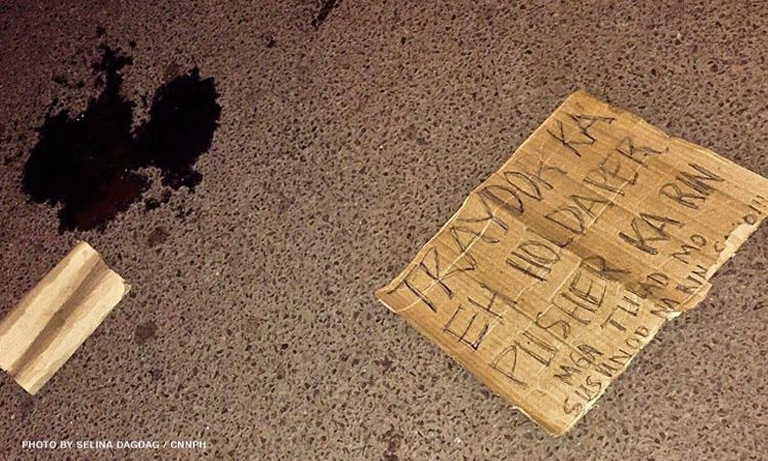
The campaign claimed over 6,000 lives, according to the government. However, local and international human rights groups estimate a tally of between 12,000 and 30,000 deaths.
“Patuloy po kaming magsasalita, patuloy po kaming maghahanap ng hustisya, patuloy po kaming lalaban,” said Amy Jane Lee of Rise Up For Life and For Rights, speaking for families who lost loved ones in the drug war.[Translation: We will continue to speak, we will continue to seek justice, we will continue to fight.]Although they hail the ruling, Lee said the families’ pain would only be relieved once those “most responsible” for the drug war are held accountable for the deaths.The victims have asked to be represented by an independent legal representative, according to the National Union of Peoples’ Lawyers, and intend to speak with both the prosecutor’s office and the office of the public counsel for victims.For Human Rights Watch deputy Asia director Bryony Lau, the ICC’s ruling marks the “next step toward justice” as he called on the Marcos administration to follow through with its “international legal obligation” to cooperate with the probe.Meanwhile, human rights advocacy group Karapatan said there is an “urgent need” for the ICC to interfere because all domestic investigation mechanisms by the Duterte and Marcos administrations “are ineffective and only meant to window-dress the current dire human rights situation.The In Defense of Human Rights and Dignity Movement (iDefend), along with Bagong Alyansang Makabayan president Renato Reyes, widened the call for President Ferdinand Marcos Jr. to order the government to cooperate with the ICC.
“It’s time for Mr. Marcos and the Philippine government to stop invoking sovereignty every time those in power wish to escape accountability, particularly for human rights violations and crimes against humanity,” Reyes said.
Human Rights Watch senior researcher Carlos Conde said many international countries which are big advocates of human rights have mechanisms such as the Generalised Scheme of Preferences Plus (GSP+) that can indirectly pressure the administration to cooperate with the ICC.
Under the GSP+, the country benefits from EU tariff perks, including duty-free entry for 6,200 local products such as fruits, animals, textiles and metals. As a beneficiary, the Philippines is bound to address key concerns such as those under human rights violations to continue enjoying the GSP+ benefits.
\”There are mechanisms to do that but they are giving the Philippine government, President Ferdinand Marcos, the benefit of the doubt. They are waiting for him to act on his promises,\” Conde told CNN Philippines’ The Final Word.
\”I think that the continued insistence of the President to not cooperate with the ICC will harm his credibility with the international community, the international business community in the long run,\” he added.