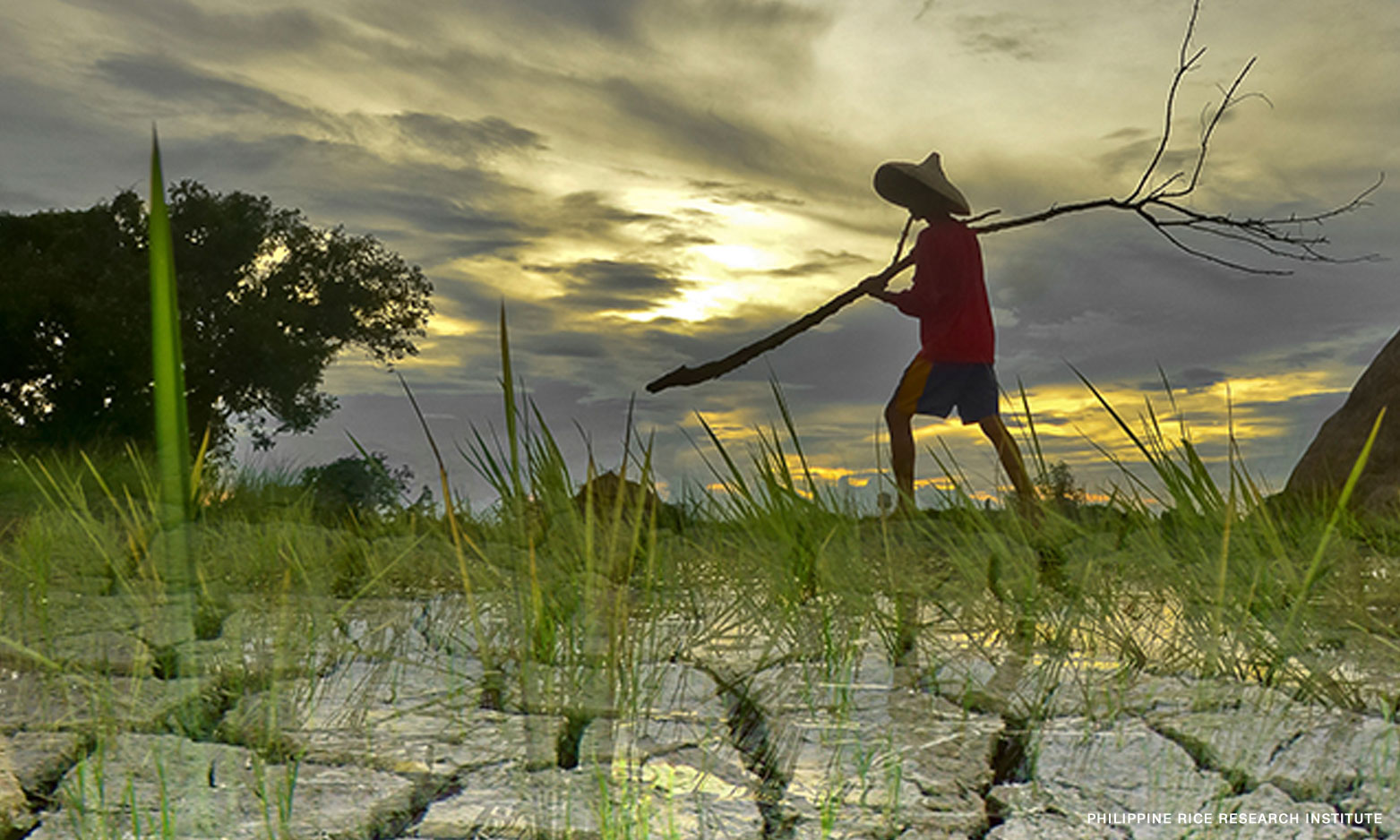


Metro Manila (CNN Philippines, December 12) – President Ferdinand Marcos Jr. on Tuesday directed concerned government agencies to craft an updated National Action Plan as the Department of Science and Technology (DOST) said 65 provinces or about 77% of provinces in the country may experience drought by the end of May.
“Based on the recent condition, moderate to severe drought conditions are likely from February to May 2024,” DOST Sec. Renato Solidum Jr. told reporters.
Solidum did not specify the areas that could be affected, but DOST’s graphics showed that that drought could cover most parts of Luzon, the entirety of Visayas and some areas in Mindanao.
Malacañang said the president ordered government agencies to undertake a coordinated implementation of the plan of action during the sectoral meeting in the palace on the effects of the dry spell on water, agriculture, energy, health, security, education and other effects.
“The plans are divided into five sectors: water security to ensure sufficient water supply; food security to make sure that there is stable supply of key food commodities; income losses are minimized and access to affordable food would be expanded,” Solidum said.
“On the energy security, power interruptions should be minimized; for health, outbreak of diseases and other illnesses would be managed and minimized; and for public safety, [fire] incidents due to El Niño especially for the dry… a grassy or forested areas would be reduced; and there will be safe, peaceful and orderly communities that would be maintained all over the country,” he added.
The Philippine Atmospheric, Geophysical and Astronomical Services Administration (PAGASA) defines drought as a phenomenon where there are three consecutive months of below normal rainfall or over 60% reduction from average rainfall.
The state weather bureau declared the start of El Niño last July.
https://www.cnnphilippines.com/news/2023/7/4/-Weak–El-Ni-o-starts-Tropical-Pacific-PAGASA.html
The president earlier directed concerned agencies to provide agricultural production support to areas that are less likely to be hit by El Niño, in a move to achieve food security amid the ongoing phenomenon.