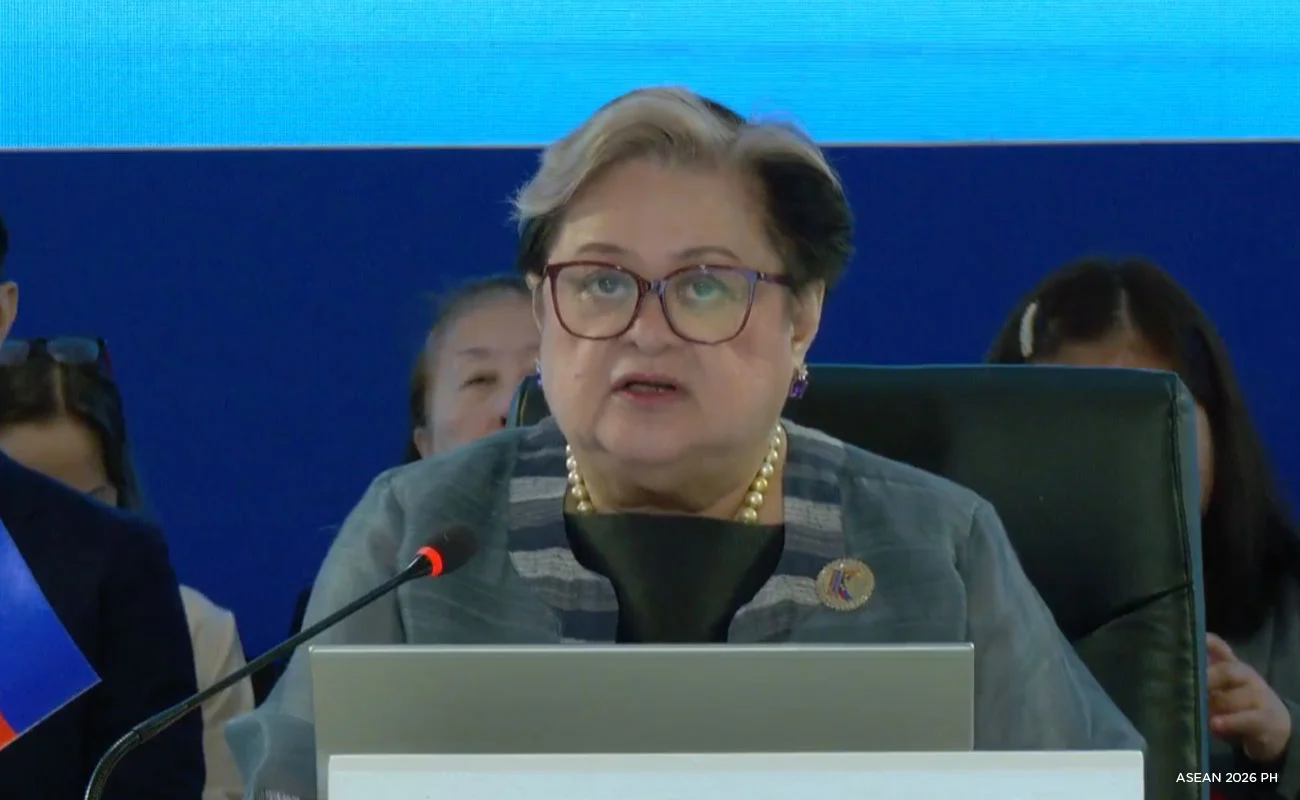


MANILA, Philippines — Economic leaders attending the 48th ASEAN Summit convened on Thursday, May 7, to coordinate a regional response to rising fuel and food prices and a worsening energy outlook as Middle East tensions continue to ripple across global markets and supply chains.
Foreign Affairs Secretary Tess Lazaro and Trade Secretary Cristina Roque opened the ASEAN Foreign and Economic Minister’s meeting in Cebu.
“The impacts of this prolonged conflict have now blurred the lines within the political and economic to gradually affect and is gradually affecting the lives of millions of people across ASEAN,” Lazaro said.
“Our energy security, food security and safety of ASEAN nationals have been brought out as the most urgent priorities for our region to address,” she added.
Lazaro said uncertainty remains high two months after military strikes involving the United States, Israel and Iran escalated conflict in the region, severely restricting activity in the Strait of Hormuz – a key artery for global oil shipments.
The secretary told the delegates that the Philippines has declared a national energy emergency, prompting austerity measures as the country chairs ASEAN this year.
She said ASEAN leaders are expected to release a joint statement at the summit focusing on the Middle East crisis response and strengthening the region’s ability to handle future shocks.
Meanwhile, Roque noted that the conflict has quickly translated into higher fuel and food prices, increasing costs for families and businesses across the region.
She said micro, small, and medium enterprises are among the most vulnerable, as they face rising operating costs and growing uncertainty.
“These are not isolated effects. They remind us that our economies and vulnerabilities are closely linked,” Roque added.
The trade chief said the current challenges cannot be addressed separately by foreign and economic policymakers, as energy supply, trade flows and supply chain resilience are increasingly shaped by geopolitical developments.
Among the priorities raised were improving coordination to stabilize energy supply and manage price pressures, addressing risks to food security and supply disruptions early, and supporting businesses so they can continue operating and growing.
“Our responses must be coordinated, practical and timely,” Roque said.
The open session concluded with ministers moving into closed-door discussions to develop recommendations for ASEAN leaders.
The 48th ASEAN Summit is happening in Cebu from May 6 to 8.