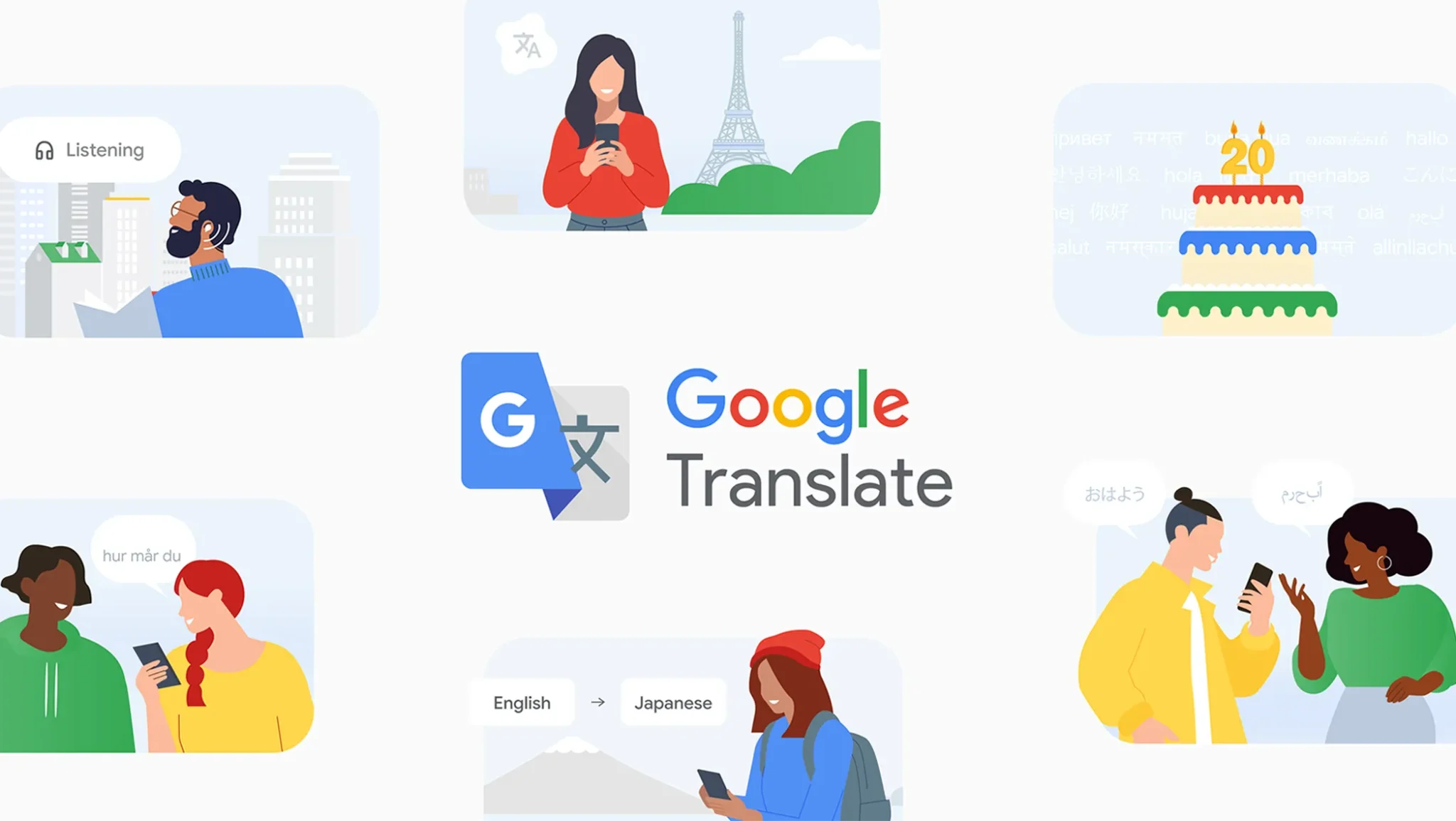


Metro Manila, Philippines – Google is marking the 20th anniversary of its Translate service with new artificial intelligence-powered features, underscoring how the tool has evolved from a basic experiment into a widely used global communication platform.
Launched in 2006, Google Translate now supports nearly 250 languages and is used by more than 1 billion people each month, according to the company. It processes about 1 trillion words monthly, reflecting its role in everyday communication, travel and language learning.
Google said recent upgrades focus on making translations more natural and conversational, powered by its latest AI systems, including its Gemini models. These allow real-time, audio-to-audio translation that preserves tone and context, enabling more fluid conversations.
Among the newer tools is a pronunciation feature that provides instant feedback to help users improve spoken language skills. The company said many users now rely on the app not just for translation but also for language learning, with about a third of mobile users using it as a study aid.
Other features include live translation through headphones, offline access for travelers and visual translation using a smartphone camera, which can overlay translated text on menus, signs and other printed material.
Google said demand for translation continues to grow globally, with language pairs beyond the most common ones — such as English to Indonesian and English to Bengali — seeing increased use.
The company also noted rising interest in translating slang and informal language, driven in part by younger users and online culture, as well as increased searches related to sign language translation.
Despite advances in AI, Google said the goal of Translate remains the same: helping people understand one another across languages.
After two decades, the most commonly translated phrase is still simple — “thank you.”
This is a news release from Google Philippines