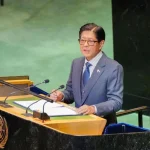


Metro Manila, Philippines – The government is preparing to impose a ₱50 per kilo price cap on imported rice as it moves to cushion the impact of rising fuel costs on food prices.
President Ferdinand Marcos Jr. said the proposed cap was recommended by the National Price Coordinating Council and will be implemented through an executive order once finalized.
“Kapag tumaas kasi ang presyo ng langis, sumusunod ang presyo ng pagkain. Iyon ang ayaw naming mangyari,” Marcos said in a video statement on Tuesday.
[Translation: When oil prices rise, food prices follow. That is what we want to prevent.]
The move comes as the government steps up its response to the economic impact of the Middle East conflict, which has driven up global oil prices and raised concerns over rising costs of basic goods.
Alongside the proposed price cap, the administration is expanding access to subsidized rice, with the number of distribution centers now reaching 627 nationwide.
“May 627 na ng center sa buong bansa… mula 600 tons ay ngayon umakyat na sa 2000 tons dahil tumaas ang demand,” the president said.
[Translation: There are now 627 centers nationwide… supply has increased from 600 tons to 2,000 tons due to higher demand.]
More than four million farmers, fisherfolk, and vulnerable families are set to receive ₱2,325 each in April from the government’s financial assistance program.
Fuel subsidies are likewise being extended to tens of thousands of farmers and fisherfolk to help ease production costs, while monitoring of prices of more than 200 basic and prime commodities continue.
“Sa ngayon, ang presyo ng Basic Necessities at Prime Commodities ay nananatiling nasa Suggested Retail Price levels,” Marcos said.
[Translation: At present, prices of basic and prime commodities remain within suggested retail price levels.]
Authorities are also in talks with manufacturers and retailers to hold off price increases, at least in the short term, as part of efforts to stabilize prices.
Marcos said all of this is being coordinated through the government’s crisis response mechanism, as officials work to prevent the oil price surge from triggering broader inflation.